
Boxing isn’t the only sweet science
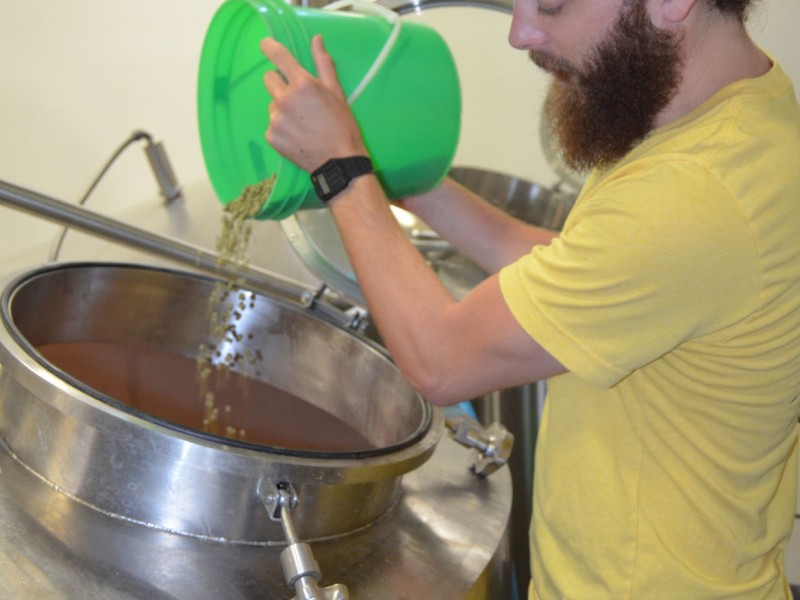
Staff Photo: Alan Mauldin
By Alan Mauldin
[email protected]
ALBANY — It’s impossible to pin down the first time a man sat down on the couch and had a cold one after a long day tilling the soil behind a team of oxen or hunting mammoths, but the origins of fermented beverages are thought to reach back well beyond 10,000 years.
Albany’s Pretoria Fields Brewery hasn’t been around that long, but its products share a kinship with the culture of using yeast cultures to turn grain enzymes into an alcoholic beverage.
“Unfortunately, I don’t make the beer,” said Travis Slaughter, a brewer at the brewery in downtown Albany. “I make the sugar; the yeast makes the beer.”
On Wednesday, Slaughter was making the first of two 30-barrell runs of mash that, upon completion, would be piped to a fermentation tank. The craft brewery has been in operation in Albany for about a year and a half.
Slaughter said he planned to add a third run to the largest tank in the facility on Thursday.
It is the “maiden voyage” for the fermentation tank, the largest at the facility, which will see its first use with those three runs that total its capacity of 90 barrels.
The brewery has recently used strawberries, with employees spending an afternoon cutting the leaves from pounds of the fruit, prickly pear and lime in the fermentation process, but on Wednesday Slaughter was producing one of the company’s most popular brands, Skywater.
“It’s easy-drinking,” he said of the product. “It’s a craft beer for people who want to get into drinking craft.”
Pretoria Fields has a laboratory, and the use of berries and other local farm offerings hints of art, but the act of brewing itself is a science, said Slaughter, a North Carolina native who received a degree in fermentation science from Appalachian State University.
“It’s science from the very beginning,” he said.
A mash of crushed grains, or malt, is mixed with hot water, which activates enzymes that are converted into sugar. The “sugar water” is boiled in a kettle with hops until it is time to transfer into a whirlpool tank.
“That is just what it sounds like,” Slaughter said. “It will drop any particles and other solids out.”
The sugar water then passes through a heat exchanger that reduces the temperature to 68 degrees — the temperature the yeast likes — and then flow into the huge fermenting tank, where the yeast does its job for a week or two.
Brewers then drop the temperature to 32 degrees and transfer it to a tank where it’s carbonated and conditioned.
“After that, it’s ready to go into a keg or a can,” Slaughter said.
Author

Related Articles

Albany recycling center enacts material separation rule
Mixed items will no longer be accepted at the Albany recycling center at its 2521 Meredyth Drive facility. Individuals will now be required to separate items befor they will be accepted.

Wild Game Dinner marks 34 years as South Georgia Scouting reaches for next generation
More than a century after organized Scouting first took root in Southwest Georgia, local leaders say the program is working to preserve its traditional mission while adapting to a new generation of young people.
Albany City Commission takes action on proposed downtown hotel, two theater renovation projects
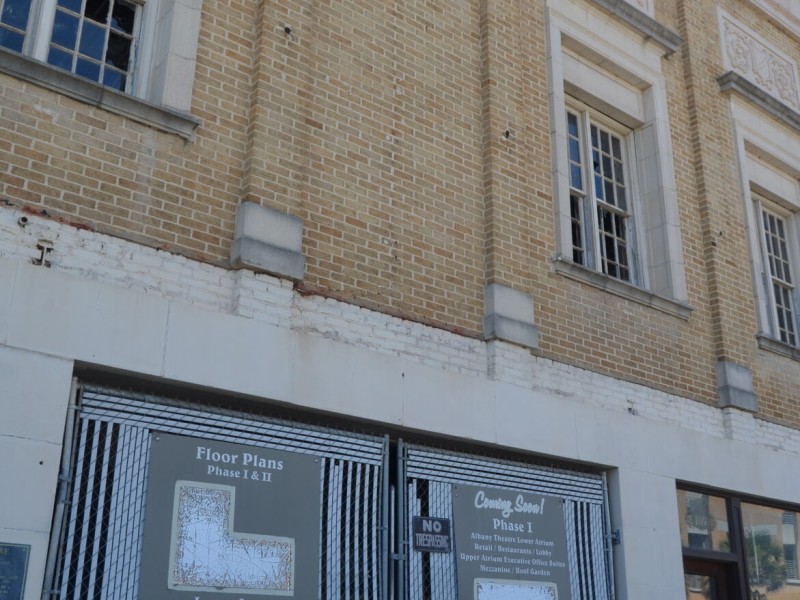
“We’re taking the original building back to, hopefully, it’s glory days. One of the cool things about the project is we are going to restore the balcony. It’s going to have a balcony, so it’s going to be super cool.”
