
Buzzing, dancing imports: Area beekeeper shares facts with Albany civic club
“What this does to the bees, it doesn’t kill them straight out. (It has) brain effects. They have problems finding their way back to the hive. It is important these pollinators find their way back home.”
ALBANY – In what has to be the largest U.S. winter break trip each year, inhabitants from all over the country are packed up for cross-country rides to sunny California in numbers that boggle the mind.
Honeybees in the tens of billions are loaded up in semi trucks in states all over the country for transport to the Golden State’s almond-growing country to pollinate the multibillion-dollar crop each year. The massive transport involves more than 2 million individual hives, about 85% of those commercially available.
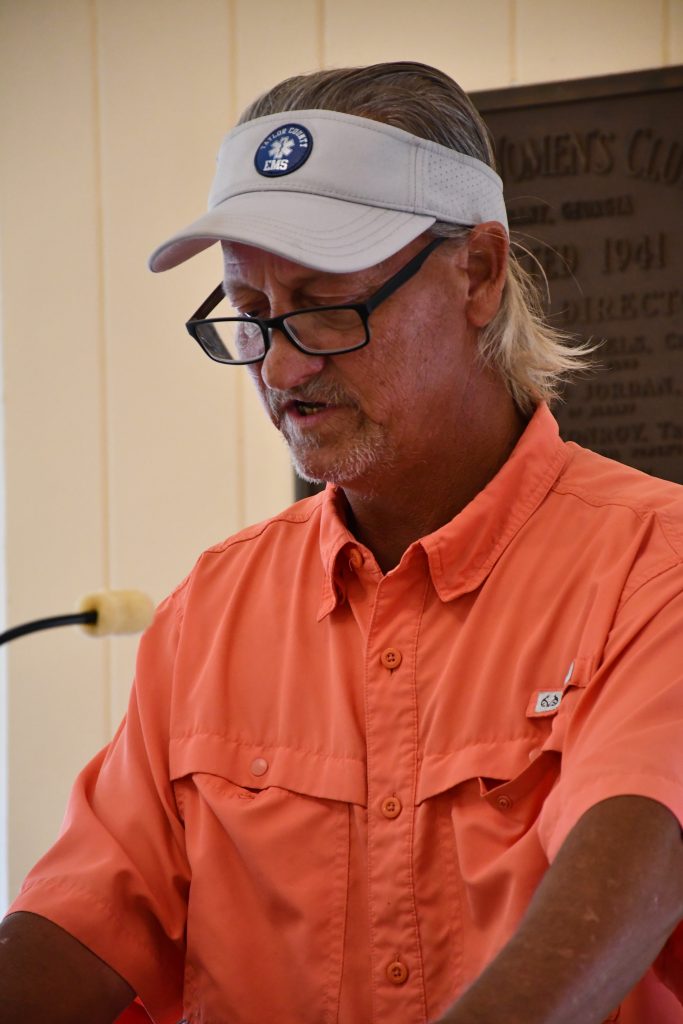
Left to their own devices, however, bees tend to stick closer to home, rarely venturing more than about 3 miles from their home hive, according to SOWEGA Beekeepers Club President Frank Killebrew. The Butler beekeeper, whose bee operation is based in Mitchell County, recently gave a presentation on the prolific pollinators to a Women’s Federated Guild audience in Albany.
A large number of those honeybees that make the annual trip to California are from Georgia, as the state is in the top four in bee numbers.
“Without honeybees, there would be no almonds,” Killebrew said.
In Georgia, honeybees pollinate crops ranging from berries and melons to other food plants including cucumbers and tomatoes and also are one of the top pollinators of cotton.
Like many of the early non-native settlers of the United States, honeybees made the trip on boats, with the first reportedly arriving in Virginia in 1622.
“A lot of people don’t realize it, but honeybees are not native to the United States,” Kilebrew said. “They were brought here by Europeans. That’s how they got to the United States.
“Honeybees were an important resource, even in Biblical times. It’s always amazing to me to go look and see how many Bible verses refer to honeybees or honey.”
The honeybee is not the only flying species that pollinates plants in the state, the SOWEGA club president said. Winged pollinators include bees native to the United States, like bumble bees and the bees’ ill-mannered cousins in the wasp family, including yellow jackets and hornets.
“We have a lot of native pollinators,” Killebrew said. “They’re still here, just not in big numbers. Native bees are very different from honeybees. Wasps and hornets are great pollinators.”
One of the facts from the secret lives of bees the beekeeper shared was that bees returning from a nectar source will do a dance for their fellow honeybees. The first part of the dance imparts a direction in relation to the sun for the others to take and the second part gives the distance.
“I’ve watched them doing it,” he said. “To the other bees, it means something.”
But it’s not all nectar and honey and dancing for the pollinators, no matter which species.
All of them face threats from the chemicals that help farmers grow healthy crops, the beekeeper said. The ground-dwelling species like yellow jackets are more vulnerable to pesticides used around the house and can be impacted by mowing, but farm chemicals pose a threat to honeybees.
“That is one of the biggest issues we run into, is pesticides,” Killebrew said.
One particular threat comes from nematocides, which are used to coat some seeds and also applied to crops. The substances make their way into the soil and water.
“What this does to the bees, it doesn’t kill them straight out,” Killebrew said. “(It has) brain effects. They have problems finding their way back to the hive. It is important these pollinators find their way back home.”
For the average person, there are steps to take to help protect the important pollinators, he said. One way is to be careful when applying pesticides around the home.
Another is to grow a variety of plants, as south Georgia’s temperatures rarely dip low enough for long enough to keep bees in the hive for more than a few days at a time.
“There are plants you can actually grow and have a nectar source year-round,” Killebrew said.
Author

Related Articles
Adult leadership group spreads concept to high school students
“The purpose of Albany Junior Leaders is to pull together leaders from all over the community. We wanted to give these youth the same experience and the same exposure we’re getting in Leadership Albany.”

PHOTOS: Albany State President’s Speaking Series: Rosie Allen-Herring
Photos by Reginald Christian, Albany State University
Albany/Dougherty County among local governments looking at data centers
“Our understanding is that data center developments look like an easy fix for the problems that face rural America, but this is a Faustian deal at best. You can see the effects in communities across the state and country.
