
CAR REVIEW: Kia Sorento is strong overall with a notable flaw, some quirks
ROBIN TRAJANO
By JOE PARKER
The Kia Sorento’s bigger sibling, the Telluride, has become an SUV sensation with automotive journalists singing its praises from the mountaintops — I can include myself in that camp — and buyers have followed suit, leading to dealer shortages and notable markups.
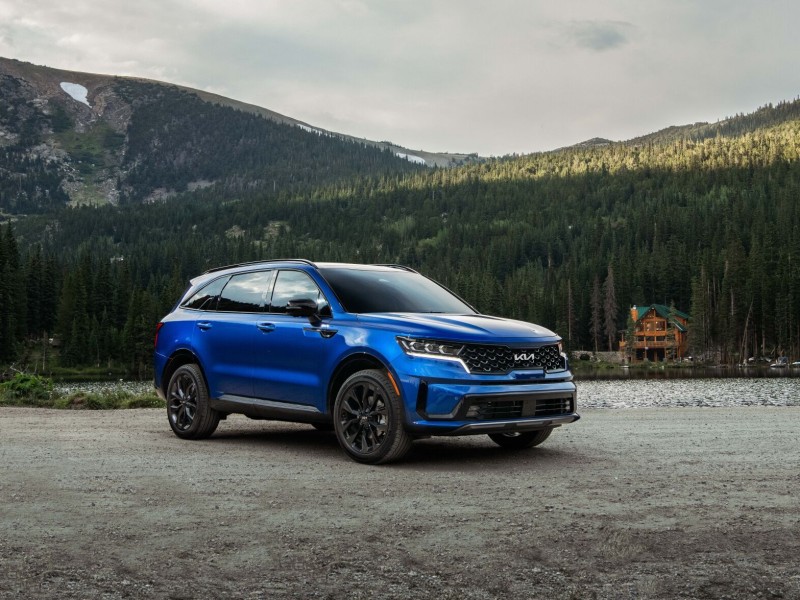
But for those who don’t want or need the Telluride’s sizeable footprint, the Sorento offers much of the same positive qualities in a slightly smaller package. The Sorento doesn’t lead its rivals at quite the same length as the Telluride against its competition, but it offers a range of models and powertrains, a standard third row of seats, a long list of features, agreeable driving characteristic and engaging style. It should be placed on the shortlist for those in the midsized market who can deal with some of its foibles for the sake of overall competency.
After being overhauled for 2021, updates to ’22 models are relatively limited, but a few are notable. EX and S trims with all-wheel drive have been rebranded as “X-Line” models with additional features like unique wheels and roof rack, and a plug-in hybrid model is now available offering 79 MPGe and 32 miles of electric-only range.
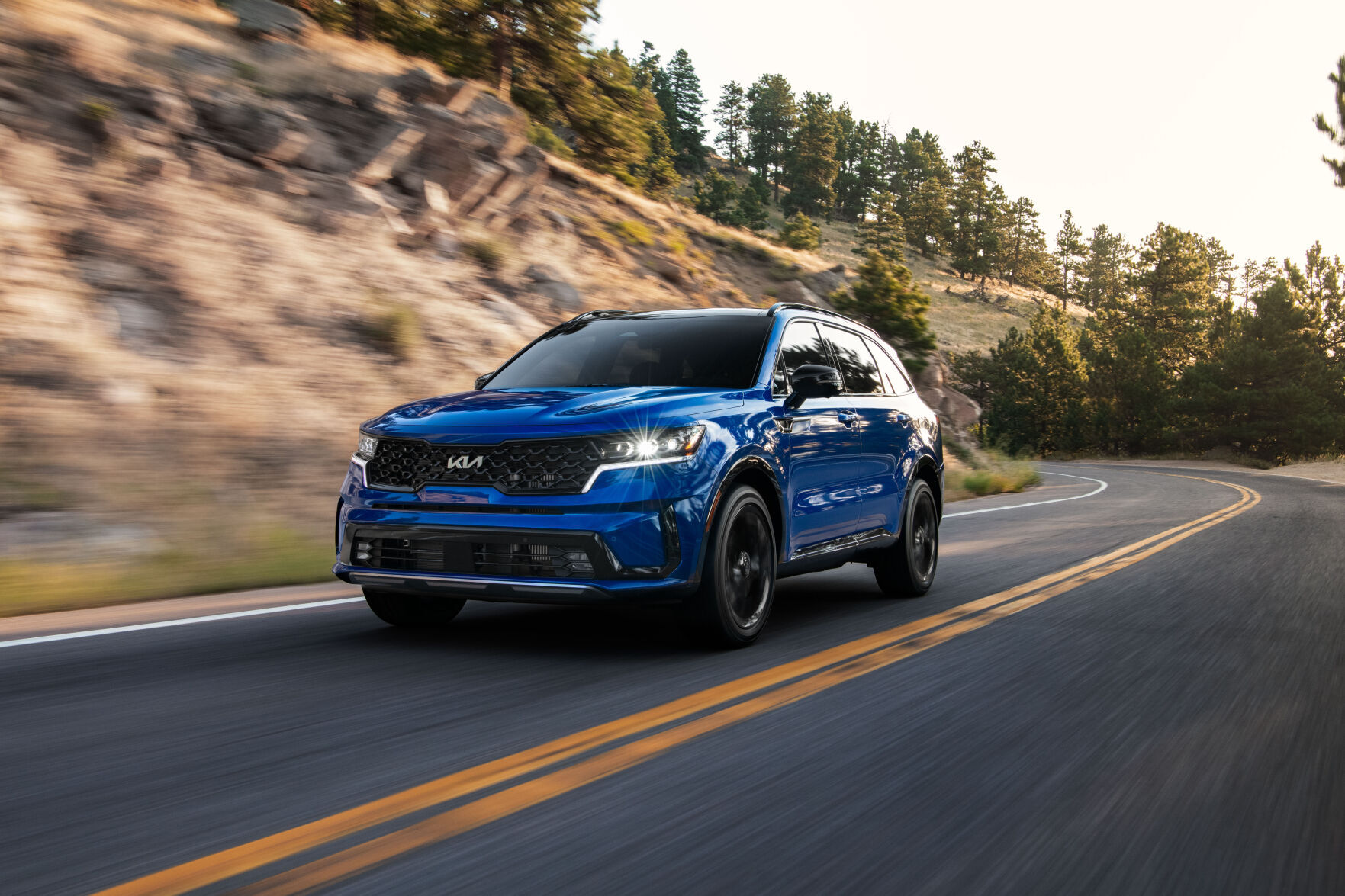
Gas-only Sorentos are powered by a 2.5-liter four-cylinder. Lower trims receive a naturally aspirated powerplant rated for 191-hp and 181 pound-feet of torque while range-topping models get a turbocharged version offering 90 more horses and over 300 ft.-lbs. of torque.
I haven’t had a go with the Sorento’s standard engine, but the turbocharged version provides plenty of pep. Though slow to react on throttle tip-in, the powerplant provides satisfactory acceleration and passing power with predictable, consistent delivery.
With either engine, the Sorento returns admirable fuel economy: 26 combined mpg with the naturally aspirated motor and 25 combined with the turbo.
Though it provides more than enough gusto for a family hauler or commuter, the optional engine pairs exclusively with a dual-clutch transmission. While Hyundai’s DCT is a welcome addition in other Hyundai models, it can be a nuisance in the Sorento. It provides sublime gear changes at cruising speeds, but it’s dopey at a lower clip. The transition from first to second gear under mild acceleration or in stop-and-go traffic will cause passengers to slightly headbang. The DCT is also too eager to back up in reverse, lurching rearward unless the driver has the brake mashed to the floorboard.
The standard engine is paired with a traditional eight-speed automatic. Is it worth a sacrifice in power to quell these issues? Not for me, but it does put a monkey on the back of those extra 90 ponies.
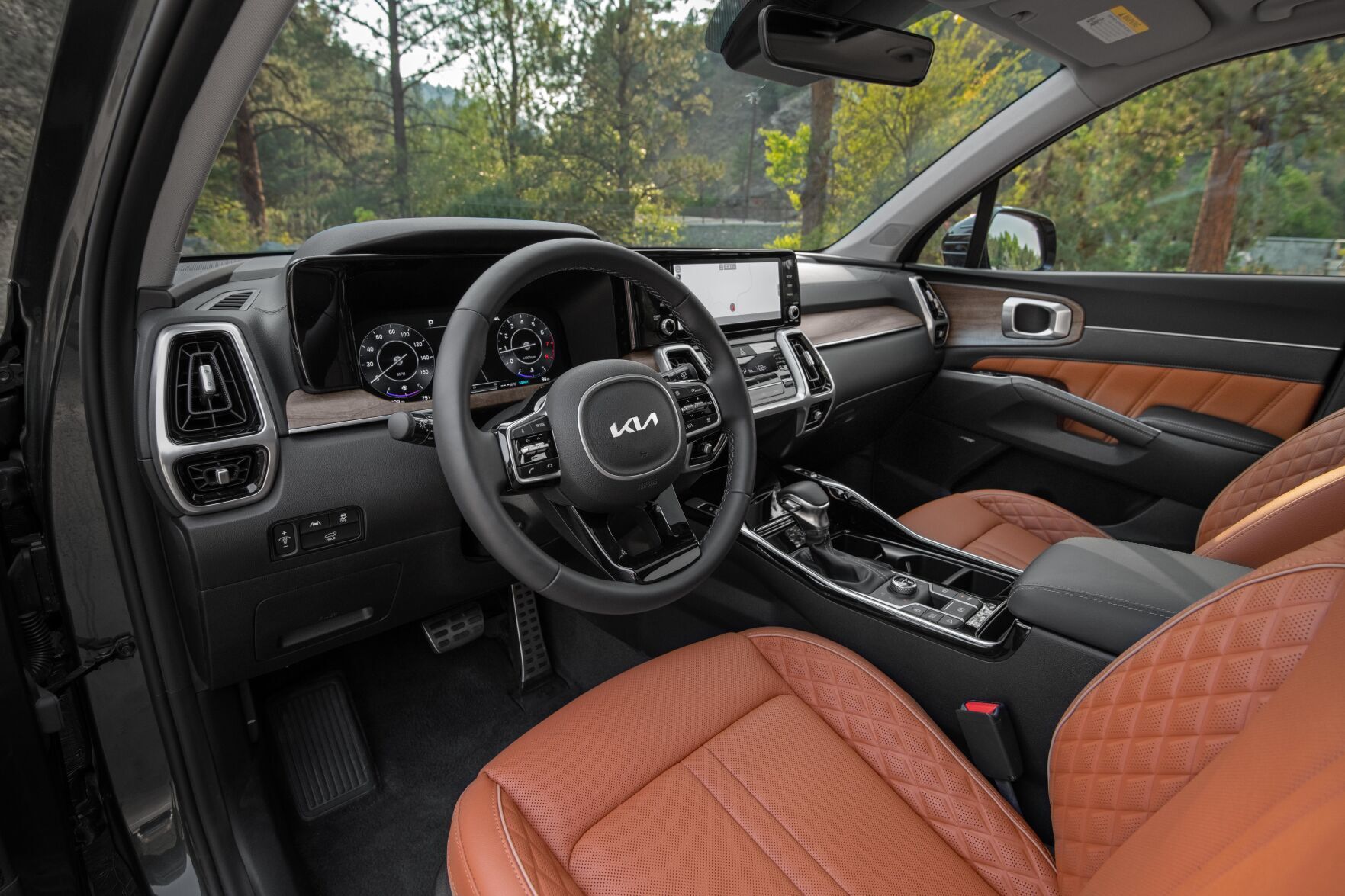
The Sorento’s cabin blends functionality with innocuous styling and, particularly in higher trims, an upmarket feel. The dash is clean in its presentation, though the climate control vents are a bit busy.
Cloth seats are standard in the base model, but all other trims sport either synthetic or genuine leather. All trims receive attractive interior trim with a selection of embossed plastic, fake-but-convincing wood or textured metal.
Kia’s infotainment system reacts quickly to inputs after start-up and comes with an intuitive layout bolstered by plenty of knobs and buttons flanking the 10.25-inch touchscreen for common inputs. A 12.3-inch digital gauge cluster comes in the top two trims while a 4.2-inch display and traditional gauges are fitted in other trims.
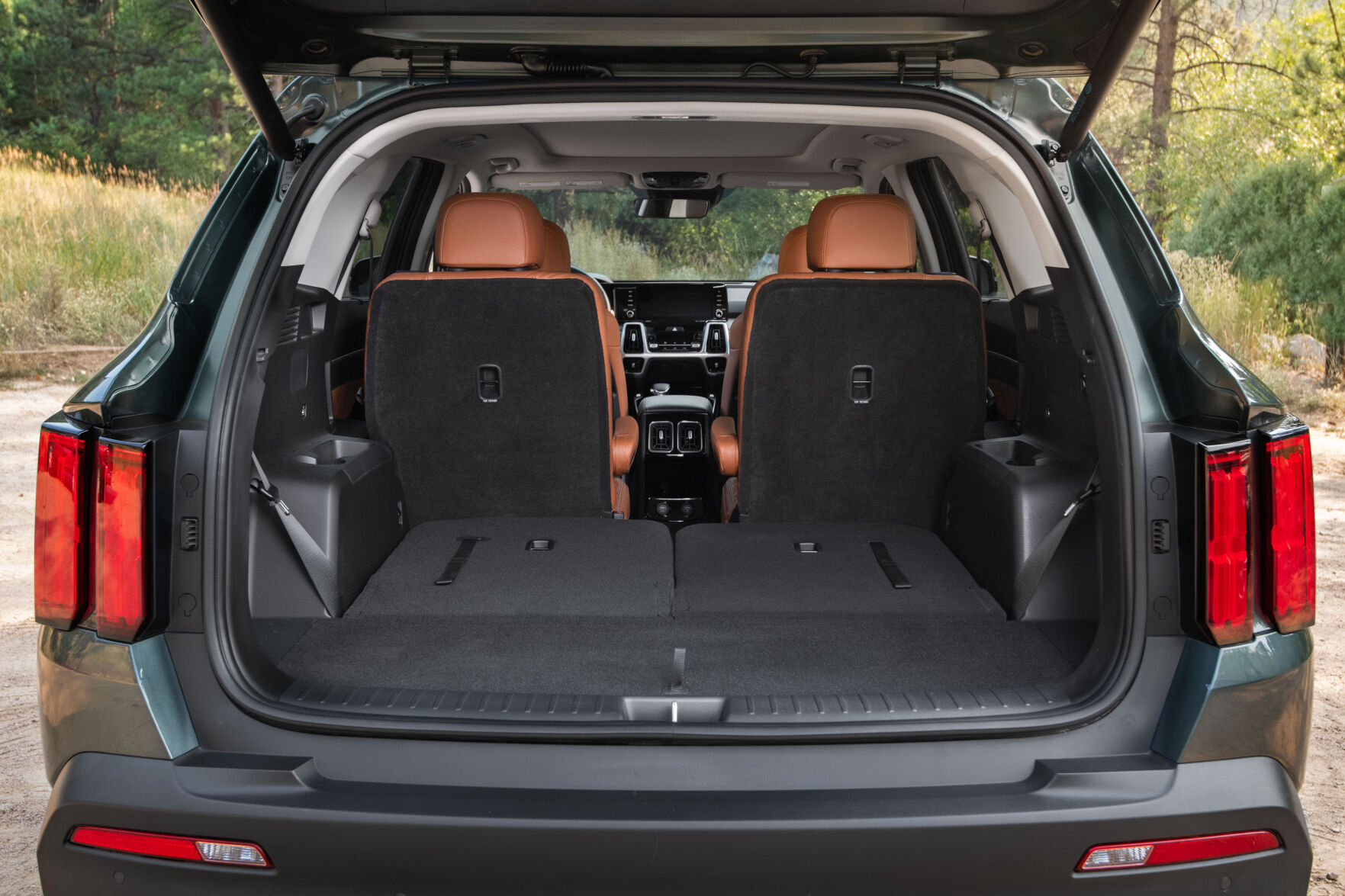
The Sorento joins an extremely limited group of compact SUVs offering a standard third row of seats, but that does create a conundrum. The rear row is expectantly small and only suitable for smaller kids. And if you want the features of upper trims, captain’s chairs in the middle row are standard and limit seating to six, but realistically given the rear proportions, only enough seats for four adults and two cramped kids.
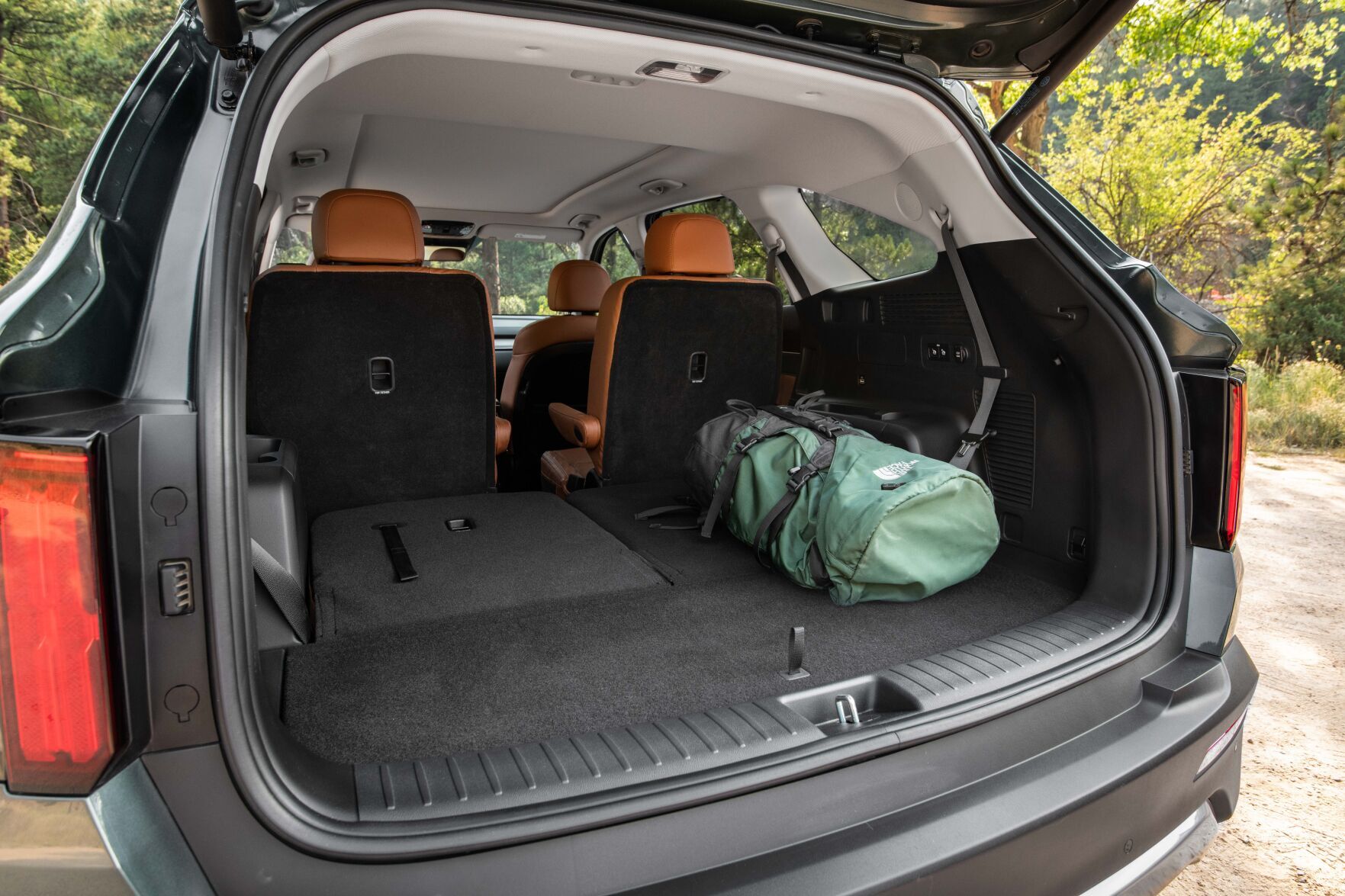
Lower trims receive three seats in the middle, but continuing a theme of sacrifices, you have to miss out on the turbocharged engine and some notable amenities for seven seats.
With the rear seats in place, the Sorento offers a paltry 12.6-cubic feet of cargo space, but that figure swells to 45 cubes behind the second row, just one less than the Telluride with its rear seats folded away.
So, the Kia is best suited for those who only occasionally need the third row or a spacious four- or five-seater. Passenger space is ample in either guise in the front and middle seats.
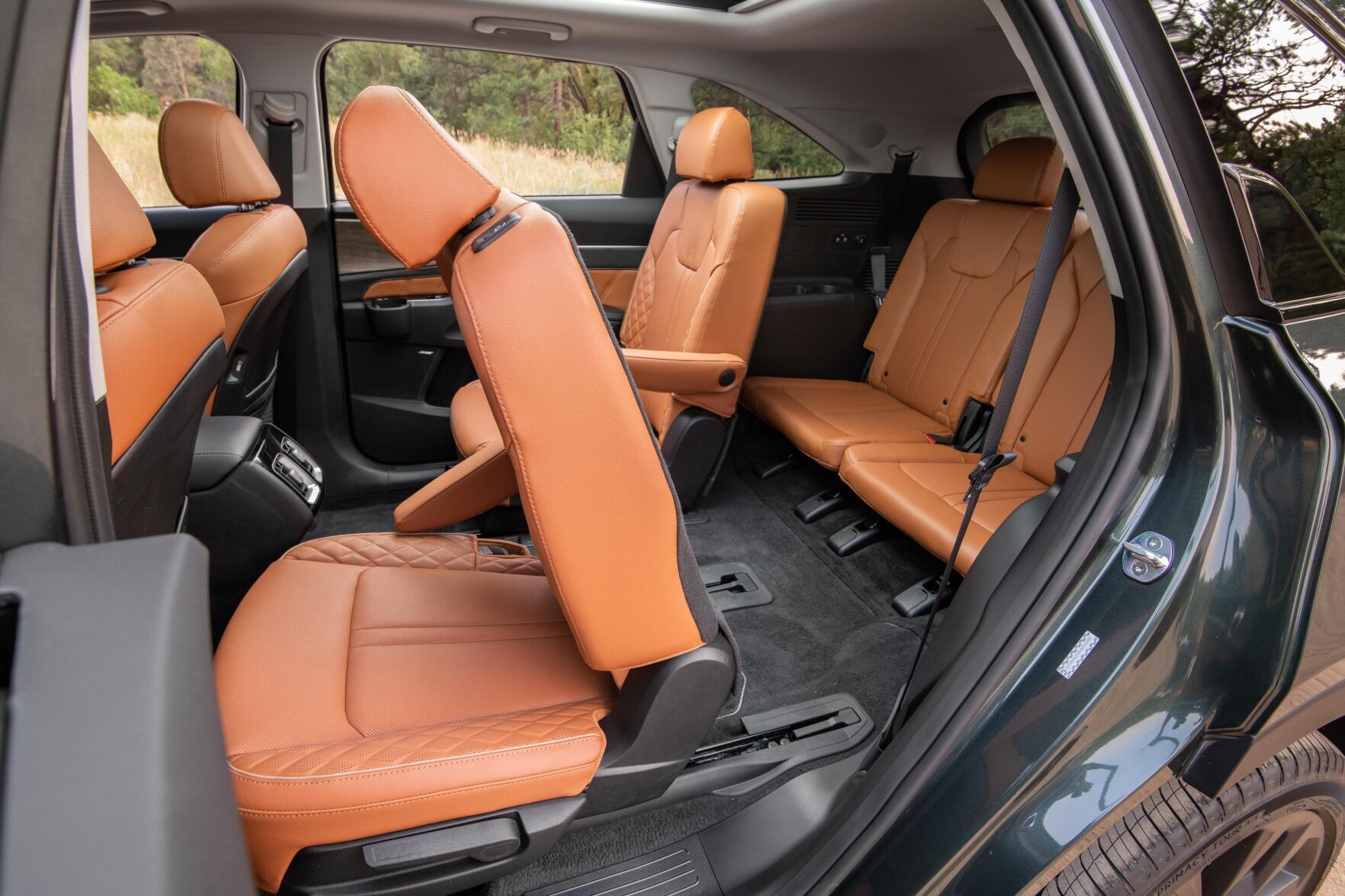
While its seating arrangement is a bit puzzling for a family-forward SUV, the Sorento ticks the right boxes for agreeable road manners.
Its suspension irons out road imperfections, and it is composted through corners with minimal body roll. Steering feel is light but still provides connection to the road and mashing the firm brake pedal will bring the Sorento from 39 mph to a stop in a satisfactory 132 feet.
With a starting price of $30,885, the Sorento is a sizeable SUV for the money, but most buyers will want to start with either S or EX models that carry much more standard features. But again, the Sorento’s quirks come to a head where price is concerned. The SX and SX Prestige with their turbocharged engines ring in at over $40,000, surpassing upper-trim Telluride territory while offering less passenger and cargo space.
Therefore, the EX appears to be the best bet, offering sought-after features like a power liftgate, 10-way adjustable driver’s seat with lumbar support, wireless phone charging, additional driver’s aids and the turbo engine. But then again, seating is limited to just six.
The Sorento has plenty of quirks with its pricing and seating structure, and its DCT is bunglesome at low speeds, but for those who can look beyond its faults, the Sorento is a strong player in the compact SUV market. It offers plenty of pragmaticism, a myriad of models, plenty of creature comforts, notable fuel economy and it is neither boring to view or pilot. Chalk up its downsides to “having character,” and its hard to fault overall.
Pros and cons
Pros: Eye-catching style, many models to choose from, competent and comfortable drive
Cons: Dual-clutch transmission can be clunky, third row is cramped, seating limited to six in upper trims
Overall: The Sorento is a solid compact SUV that shares many positive attributes with its heralded sibling, the Telluride, but some sacrifices must be made depending on the choice of trim
Starting prices:
LX: $30,885
S: $33,685
EX: $36,785
SX: $39,585
SX-Prestige: $42,485
MPG figures (city/highway/combined):
Standard 2.5-liter FWD: 24/29/26
Standard 2.5-liter AWD: 23/25/24
Turbocharged 2.5-liter FWD: 22/29/25
Turbocharged 2.5-liter AWD: 22/27/24
Related Articles

Albany Herald – June 6, 2026
The boy who drove the bus and helped,,, Property owner removes debris from northwest… POWERFUL PERFORMANCES DRIVE THEATRE…

Classifieds – June 6, 2026
CLASSIFIEDS: JUNE 6, 2026

Squawkbox – June 6, 2026
SQUAWKBOX: JUNE 6, 2026

