
Court of Appeals panel hears Rails to Trails arguments
Watson Spence attorney Chris Cohilas offered a three-judge panel of the Georgia Court of Appeals a vivid scene to consider.
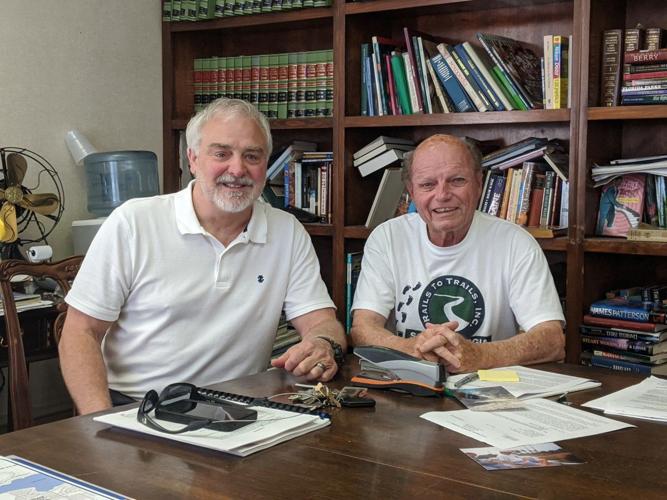
ATLANTA — Watson Spence attorney Chris Cohilas offered a three-judge panel of the Georgia Court of Appeals a vivid scene to consider.
“Right now, in Lee County, a citizen is watching TV in his home,” Cohilas said. “He’s drinking water and cooking on his stove; using gas, electricity and water supplied by Albany Utilities. Every month he sends a check to the city to pay for these utilities.”
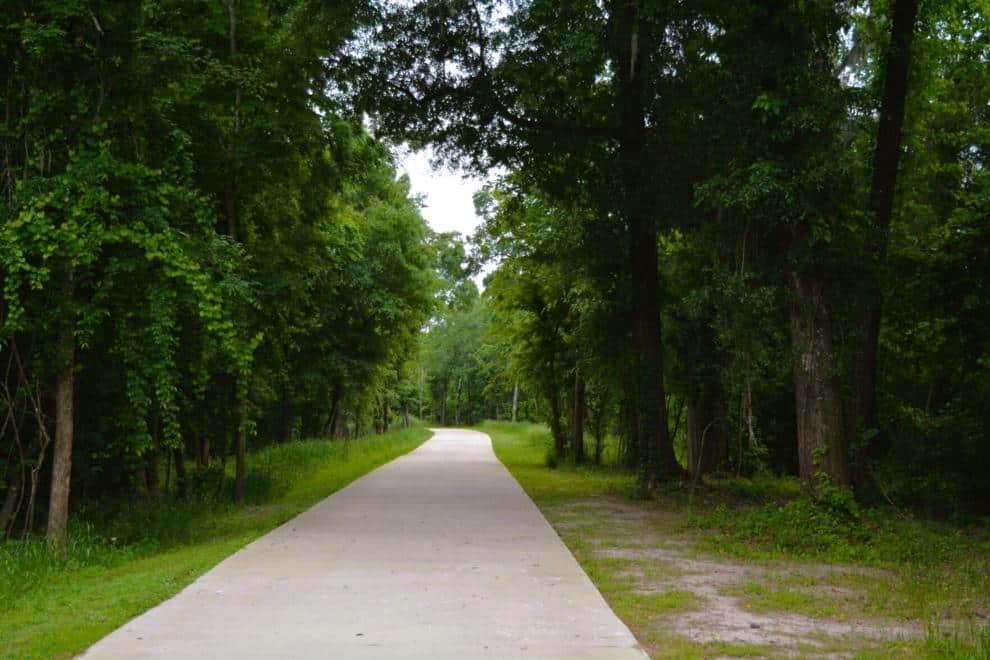
Cohilas’ point to the panel of judges — Stephen Dillard, Benjamin Land and Amanda Mercier — was clear: The city of Albany continues to make money off the land it purchased as part of an agreement with South Georgia Rails to Trails in 2015, but it has steadfastly refused to hold up its end of a contract in which city officials agreed to build a 13-mile trail from downtown Albany to the city of Sasser in Terrell County.
Cohilas was arguing the case on behalf of SGRT after the city appealed a Superior Court ruling not to dismiss a $7 million lawsuit filed by the trail group after the city refused to continue work on the trail that it had agreed in April of 2015 to finish within five years.
It was obvious from the judges’ responses that they had difficulty following the logic of opposing attorney Jacob Daly with the large Atlanta-based Freeman, Mathis, Gary firm, who served as the city of Albany’s representative. Daly essentially told the judges the city is not bound by the contract it signed, citing, among other reasons, “one government panel cannot bind another” to such a contract.
“Tell me, how can a city ever finish a significant project if it’s not bound to honor a contract from year to year?” Mercier asked.
Land followed up.
“Who is even going to enter into a contract that says a five-year project can be terminated every year?” he asked.
Dillard asked Daly point-blank: “If the contract is voided, is the city going to go onto that land it bought and take out the utilities lines it put in for people in Lee County?”
When Daly replied “if it comes to that,” Dillard asked, “So, has the city estimated the cost to remove those lines? What this sounds like to me is buyer’s remorse. The city took control of the property, put in the utility lines, and now they’re saying the contract is void.”
Cohilas said the city is not only reneging on the deal it made with South Georgia Rails to Trails, it is breaking the promise it made to Albany citizens.
“The citizens of Albany voted to tax themselves an extra penny to get the trail and other projects; it was something they were promised,” he said. “So the city is not just breaking its promise to SGRT, they’re breaking a promise to the voters in the city and county. I was the (Dougherty) County Commission chairman at the time. I know what the citizens were promised and what was approved.
“And what really makes me angry is that the city is paying a considerable amount of money to try and break the promises it made. They’ve admitted this is just a case of buyer’s remorse, but the mayor simply has said, ‘We are not building this trail.’ The city has not properly managed the money that’s been collected for this project. I’d like to know how much of the taxpayers’ money they’ve spent to try and break these promises.”
New City Manager Terrell Jacobs, who has been in that position only a short time, said he would like for cooler heads to prevail in the matter.
“I’m kind of waiting for the oral arguments to wrap up and see where we are,” Jacobs said. “I was hoping that we’d be able to sit down and mediate an agreement, work this out before it got this far in the courts. My ambition is to do that before this ruling comes down.
“I don’t think a ruling will be made before the first of the year, so I hope we can sit down and come to an agreement that will please everyone.”
Cohilas said he expects the Court of Appeals panel to make a decision on the case within the next three months.
“I’ve been humbled enough times to know you never use the term ‘slam dunk’ when you’re talking about a case,” he said. “But I feel good about the interactions with the court. I think we’ve got a great case. I really, really, really, really, really would not want to be the city’s attorney.”
Author

Related Articles
PHOTOS: Albany State’s How To Dress For Success Forum
Click the arrow to scroll through the photos.
PHOTOS: Albany State Principal Investigator Appreciation Day
Click the arrow to scroll through the photos.
PHOTOS: Albany State President’s Speaking Series Forum
Click the arrow to scroll through the photos.
