
COVID-19 death toll falls dramatically in Dougherty County, but Phoebe sees slight increase in hospital admissions
File Photo: Carlton Fletcher
By Alan Mauldin
[email protected]
ALBANY — Re-opening Dougherty County — and southwest Georgia — after the initial round of the coronavirus won’t be like flicking a light switch; it will be more akin to building and testing the entire electrical grid.
Even as Dougherty County officials have expressed optimism at curbing one of the largest waves of COVID-19 in the world, they remain cautious about the future.
The number of patients hospitalized for COVID-19 has decreased by a third since the peak in April but has increased slightly in the last few days.
And during a Thursday news conference, Albany Mayor Bo Dorough cast doubt on whether the city has met the first benchmark for a widespread return to a more normal lifestyle: that the disease be under control.
“I would put a question mark here,” the mayor said.
The number of deaths has slowed considerably as well, and remained at 127 on Thursday. So far this week there has been one death on Sunday and one confirmation of the coronavirus in a patient who died in April.
Phoebe is keeping a close eye on the uptick in new admissions that has been a trend over the past week or two, said Dr. William Sewell, the hospital’s chief medical information officer.
“We are closely monitoring the number of admissions,” he said. “It is starting to climb, and we will be monitoring that every day.”
If there is a virus rebound, which is a slow climb in new cases, or a resurgence, marked by the massive number of cases like the one that inundated Phoebe’s hospital in Albany and at Phoebe Sumter Medical Center, hospital officials will notify the public and leadership, Sewell said.
On Thursday, there were 64 patients being treated for COVID-19 at Phoebe Putney Memorial Hospital in Albany and 13 in Americus. Some of those in Albany are now at a modular hospital unit set up by the Georgia Emergency Management and Homeland Security Agency on the Phoebe North campus behind the former Palmyra Park Hospital with the assistance of the Georgia National Guard.
“The trends are positive, but we still have (64) patients in our hospital,” Dorough said. “When you compare that to where we were three weeks ago, when we had three times that many, that is how far we’ve come.”
Positive tests make up less than 10 percent of those being tested now by the Georgia Department of Public Health and at a National Guard site behind the Albany Civic Center, but that still indicates the virus is being transmitted in the community, he said. The Albany mayor also was optimistic that more resources will become available to trace contacts of people who test positive and have those people isolate themselves to prevent further transmission.
“We know with the ability to contact trace we’ll be able to identify clusters and isolate them,” he said. “I do believe we have resources to deal with another (cluster), whether it is a rebound or a second wave.”
Whether or not the increase in hospital admissions is a blip or indication of increased transmission, life won’t return to a semblance of normal for some time, Dougherty County Commission Chairman Chris Cohilas predicted.
The county will have to be smart as it enters the “new normal,” he said, and that means individuals and businesses going above and beyond recommendations from the Centers for Disease Control and Prevention. By some accounts, Albany, with its much smaller population, was hit harder than New York City has been
“We got an extremely (large) amount of infections at one time,” Cohilas said. “You literally had an overwhelmed hospital, exhausted doctors, first responders running around the clock (with a) 70 or 80 percent extra volume of calls.
“We have flattened the curve in many, many ways. Does that mean the drill is finished? No, it is not. I’ve said this many times: This is not a sprint; this is a marathon.”
Cohilas encouraged residents to take advantage of no-cost testing at the site behind the Civic Center to give officials accurate data about the presence of the virus in the county and region. Residents who are at high-risk should continue to shelter in place at least through the June 12 date set by the state.
“How we deal with this literally impacts how other communities are going to deal with this,” he said.
As has been the case throughout, the black community has been the hardest hit, Dougherty County Coroner Michael Fowler said. Of the 127 deaths, 99 victims — 78 percent — are black, 27 white and one Latino. Forty were in their 60s, 35 in their 70s and 10 in their 90s, but three were in their 30s and eight in their 40s.
“We have had one death since Sunday,” Fowler said. “That’s amazing, and I thank God for that. We do not want to see a resurgence of deaths.”
The worst week of the crisis was the week of March 29 through April 4, when 29 county residents died, Fowler said. There were 25 the following week. More recently, there were seven deaths the week beginning April 19, and 13 the week after that.
According to public health, there have been 1,558 confirmed cases of the coronavirus in Dougherty County through Thursday afternoon. Statewide, the agency reported a total of 1,340 deaths.
Other southwest Georgia counties have had large outbreaks, including Mitchell County, where there had been 339 confirmed cases and 31 deaths, Lee County with 338 cases and 22 deaths, and Sumter County with 387 cases and 29 deaths.
Author

Related Articles
Albany Herald – July 11, 2026
Putting on the Ritz… Food, mini menagerie provide… Albany City Commission set to vote on… Following Lee’s lead, Terrell County hits…

Classifieds – July 11, 2026
Albany Classifieds and Legals: Real Estate; Merchandise, Misc…
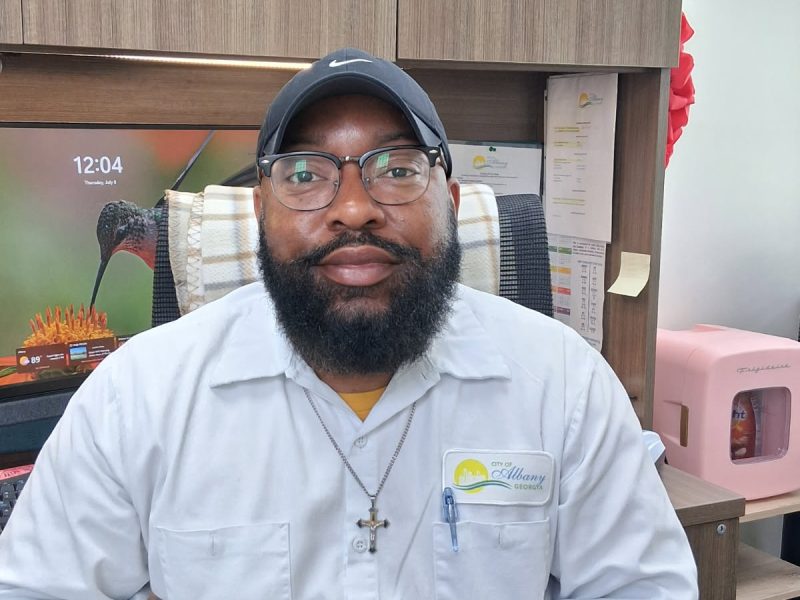
Small actions can help save big on utility bills
The high temperatures of July and August can bring scorching utility bills as air conditioners hum to keep houses cool. Albany Utilities Residential Conservation Auditor Willie Jackson offered some tips on making summer cooling bills more manageable.
