
CREEDE HINSHAW: Hero of one age, villain of another
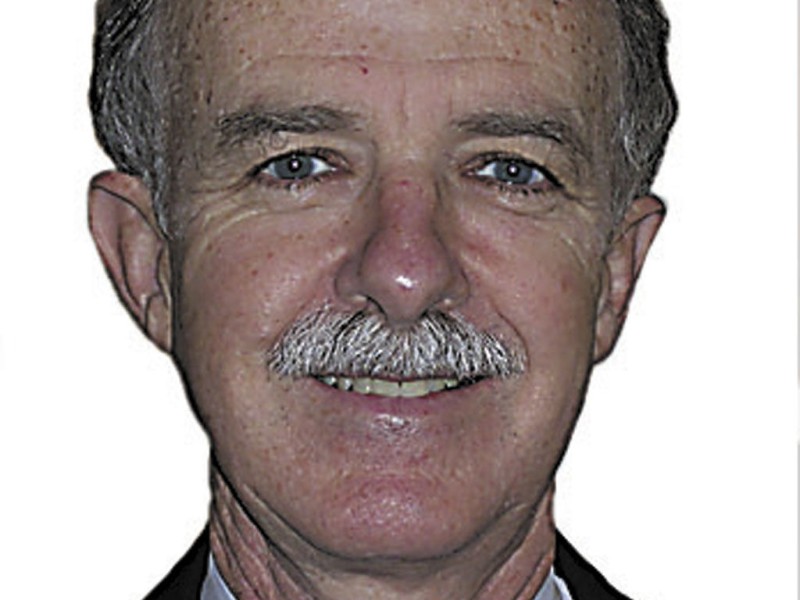
Creede Hinshaw
The debate over the meaning of history will never end. One age’s heroes are another era’s goats; villains become sainted and vice versa, frustrating some and inspiring others. Consider the following items:
First, Pope Francis recently announced he is moving toward the canonization of Father Junipero Serra, a Franciscan priest who arrived in San Diego in 1769 and led to the colonization of what is now California. Serra has long been one of my distant heroes, having first been introduced to him through a beautiful Christmas Eve story about him in the Willa Cather novel “Death Comes the Archbishop.” He has long represented to me the very best of courageous, sacrificial mission work among the Native Americans.
The pope’s announcement, however, has not met with universal acclaim. Many Native American tribes in California see Father Serra as representing much that was – and is – wrong with the clash of cultures. Native Americans were forced to abandon their way of life, decimated by disease, beaten and executed and forbidden to maintain their community life. Serra’s proposed sainthood, detractors claim, would sanctify harsh methods of evangelism.
Second, studying the statues in Congress’ National Statuary Hall often provides a mirror to our continuing debate over history. Each state can display only two statues to commemorate their citizens, a limitation that means that one generation’s heroes eventually may end up in a warehouse. (Georgia’s two statues were placed 75 years ago honoring Dr. Crawford W. Long, who first used ether in surgery, and Alexander Stephens, vice president of the Confederacy. Some might argue it’s time for an update.)
Arizona, for instance, recently replaced the statue of an obscure Arizonan with one of Sen. Barry Goldwater. And in Oregon, Methodist missionary Jesse Lee, another one of my early heroes, lost his place in Washington, to be replaced by Chief Joseph, the leader of the Nez Perce tribe and a gifted leader of those people, a man who reasoned with U.S. presidents and was sent into exile in the faraway Oklahoma Indian reservations. As much as I hate to see this Methodist removal, there is something noble and right about acknowledging Chief Joseph.
A third story concerns the movement by many conservatives to condemn the Advanced Placement (AP) history curriculum. Adam Lerner (Politico, Feb. 21) describes the debate this way: “Is America a uniquely virtuous country or a flawed nation like any other?” Conservatives are sure that America has an exalted status with special responsibilities; they are equally convinced that the new curriculum (which is optional) is teaching our students to join ISIS. The Georgia Senate this year overwhelmingly passed a conservative, non-binding resolution demanding that Georgia schools drop what is to them an offensive curriculum.
Is history in the eye of the beholder or do events actually happen the meaning of which can never be debated? It’s a good question of both secular and sacred history, all of which is under the watchful care of God. One generation’s heroes will not necessarily be that of the next.
Creede Hinshaw, of Macon, is a retired Methodist minister.
Related Articles
Albany/Dougherty County among local governments looking at data centers
“Our understanding is that data center developments look like an easy fix for the problems that face rural America, but this is a Faustian deal at best. You can see the effects in communities across the state and country.

Albany Herald – July 14, 2026
In Lee County, they saw it… Bigger budget will mean improvements at… Small actions can help save…

Classifieds – July 14, 2026
Albany Classifieds and Legals…
