
CREEDE HINSHAW: Spirituality hollow without religion
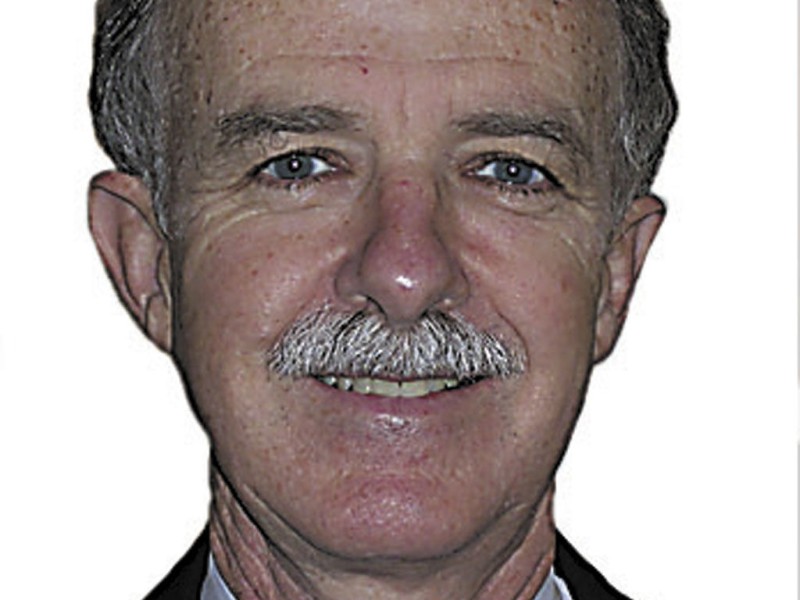
Creede Hinshaw
There’s likelihood you’ve heard somebody disdain the church by this commonplace observation, “I am spiritual but not religious.” Having spent my entire life in the church, I can understand where such misplaced sentiment comes from.
How much easier life would be without the rigor rigmarole, and repetitiveness of the church. Turn your head or turn the page of practically any periodical and — bingo — another report about how a church has disappointed, defiled or defrauded. Church folk, who should know a hypocrite when they see one, often fail to look in the mirror. Our critics are often on target.
But this dreamy, fuzzy notion of achieving spirituality without religion, whatever this means, is nonsense. There is no such thing as spirituality without religion unless one has very broad definition of the key terms.
If “being spiritual” means doing whatever a person wants, feeling a momentary flutter in the heart, petting stray dogs and using happy face emoticons liberally in one’s emails or texts, then, granted, you don’t need to be religious for that. This kind of spirituality is mostly another way of saying, “I want to feel dreamy about what I want to feel dreamy about; be selective in the causes I want to support; be a free agent in this matter of goodness unencumbered by other sluggards who might drag me down.”
And if being religious means the things referenced in the second paragraph of this column, then granted, such behavior or attitudes are drags on drawing closer to God.
But you can’t be spiritual without being religious. Or at least you can’t do it for very long. Or at least you can’t do it well. Or at least you can’t do it in any but the most self-serving fashion.
While reading the Acts of the Apostles this morning, I was reminded that wherever Paul, the great apostle of the faith, went he preached about Jesus, the forgiveness of sins, the depth of God’s love and the power of the cross and resurrection, subjects presumably designed for spirituality. But before he left town, he appointed elders to superintend the ministry of the gospel, keep the people ardent in their faith and ensure that the new converts were organized for mission and ministry. He combined spirituality and religion.
Paul refused to abandon the individual to invent and practice his or her own brand of spirituality. He appointed Spirit-filled men and women to guide, to teach, to lead, to exhort, to encourage, to chastise, to serve, ensuring that converts were shaped in Christ through the nitty-gritty reality of working, worshiping, fasting, praying and serving with others.
Organizational life is rarely easy or simple. Some churches have more committees than the federal government and more contentiousness than that between Congress and the president. Being spiritual feels like an easy shortcut. But solitary spirituality quickly becomes self-serving and, eventually, vestigial. The church, even with its deficiencies and failings, inculcates faith and spirituality, serves others, stands in the breach, takes difficult, painful, courageous positions and dies to self for the sake of others. That’s called religion and it’s a good thing.
Creede Hinshaw of Macon is a retired Methodist minister.
Related Articles

Albany Herald – July 23, 2026
2026 Dougherty County tax notices could… Dougherty Board of Tax Assessors plans for… Third time’s the charm?…

Classifieds – July 23, 2026
Classifieds and Legal Notices
Albany, Dougherty County looking at data center regulations
“Data centers are going to come to Georgia. Data centers are already in Georgia. Property owners have a right to sell their property. It is the responsibility of local government to zone and protect the community you are in.”
