
DARREL EALUM: Crossover Day may mean lengthy session Friday
Darrel Ealum
President Obama visited us in Atlanta on Tuesday and spoke at Georgia Tech. An excited crowd packed the arena, many students came and our Caucus enjoyed excellent seats down near the podium. His primary theme was the need to develop creative ways to help students pay for their college degree without saddling them with excessive college debt that takes them years and years to repay.
During this legislative session, we have been privileged to recognize key leaders in the House chamber from across Georgia. Recently, we enjoyed updates on the House floor from Congressman Sanford Bishop and Senator Johnny Isakson and were honored to have Albany Mayor Dorothy Hubbard and Dougherty County Chairman Chris Cohilas join us at the podium. Last week, we honored the great Atlanta Braves pitcher John Smoltz with House Resolution 343. Smoltz was an eight-time All-Star selection, was the only major league pitcher to compile 200 wins and 150 saves, and was just selected to the National Baseball Hall of Fame on the first ballot.
The next few days will be extremely busy in the House. Today is Crossover Day, which is the 30th legislative day of the session. Crossover Day is the last date in which a piece of legislation must pass at least one of the two chambers of the General Assembly. With this deadline set, we will work well into the night to pass legislation and send it on to the Senate.
Last week, we passed the Transportation Funding Act of 2015 (HB 170); a comprehensive bill to address the critical and urgent funding needs for Georgia’s transportation infrastructure. Passed with bipartisan support, HB 170 seeks to raise just under a billion dollars for maintenance and repair of our state’s bridges and roadways, many of which have been deemed functionally obsolete and structurally deficient. The additional funds will position Georgia to lead the Southeast in business and job creation, halt the degradation of our transportation infrastructure, and enhance our import/export capabilities through our seaports.
Armed with the Georgia Department of Transportation (GDOT) study that documented our transportation needs and plans, consensus began to build in the House for action; however, the quintessential question was how to craft a transportation bill that would ultimately pass. Although not on the Transportation Committee, I attended the hearings to better understand the gravity and impact of the estimated $1 billion to be raised. Working continually on HB 170 as it evolved through the legislative process was surely educational and enlightening. Firsthand knowledge from the hearings helped me quickly realize the bill had numerous foreboding sections that I did not have the requisite knowledge to interpret. After several informative conversations with Dougherty County Administrator Richard Crowdis and Deputy Superintendent Ken Dyer of the Dougherty County School System, we concluded the initial bill would be detrimental to Albany and Dougherty County, and our school system could lose approximately $2.2 million from future revenue.
Many local leaders from across the state joined us in a united front to voice concerns about the bill. Displaying exceptional leadership, Transportation Chairman Jay Roberts listened and eagerly made changes to minimize the bill’s negative impact. In the final draft, he presented a modified House bill that restored school system funds, proactively expanded the definition of transportation, and revised sections to favor local government revenue streams.
During the legislative process, HB 170 truly endured the full examination of the House. It survived double scrutiny in both the Transportation Committee and the Rules Committee and arrived on the House floor with two adversarial amendments. The first amendment would have significantly reduced its revenue stream and would have eviscerated its impact. During a lengthy floor debate that often appeared to favor the two amendments, the bill appeared in jeopardy; however, in the final votes, it passed unscathed. The second amendment failed by a scant three-vote margin of 87 to 84.
If passed by the Senate and signed by the governor, HB 170 will replace our present motor fuel sales tax, which is an unpredictable revenue stream. We see gasoline prices changing almost daily, and every time the price changes, the revenue projection changes. HB 170 will convert the sales tax to a flat 29.2 cents per gallon excise tax that will be solely dedicated to transportation. This tax conversion will provide a dedicated, predictable, and steady funding source for transportation. Not only will this conversion provide the necessary funding for transportation maintenance and improvement, it will help ensure gas taxes remain constant between our counties.
Please contact me with issues of your concern and stop by and visit me at the Capitol if you are in Atlanta during the legislative session.
State Rep. Darrel Bush Ealum, D-Albany, represents Georgia House District 153 in the General Assembly. Contact him at [email protected] or (404) 656-0116.
Related Articles
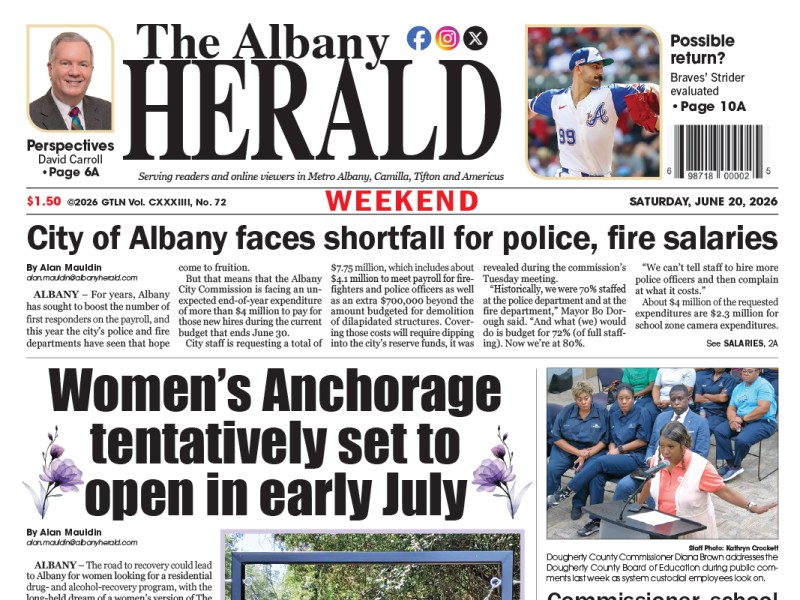
Albany Herald – June 20, 2026
City Albany faces shortfall for police… Women’s Anchorage tentatively set to… Commissioner, school leaders clash over…
Classifieds – June 20, 2026
ALBANY HERALD CLASSIFIEDS JUNE 20, 2026
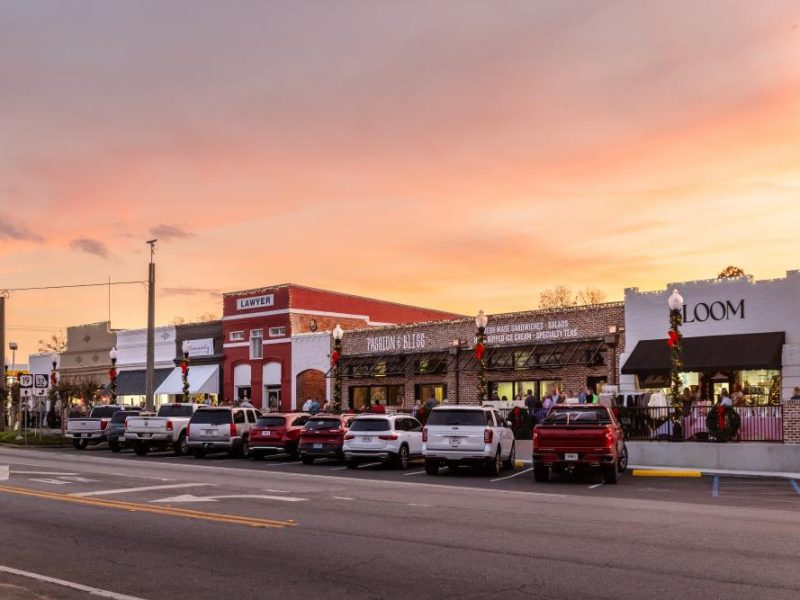
Public safety drives Leesburg’s $4.2 million Fiscal Year ’27 budget
The adopted spending plan reflects modest growth in city revenues and continued emphasis on maintaining core municipal services, particularly public safety and sanitation, which together account for a significant share of general fund expenditures.
