
Dawson proposes borrowing up to $420,000 to stay afloat as finances unravel
Documents obtained by The Dawson News show city officials are proposing to balance the budget through a transfer from the Public Utilities Fund while simultaneously seeking authority to borrow as much as $420,000 from a private financial institution to continue meeting payroll and other operating expenses as Dawson works to complete financial audits that have remained unfinished since 2023.

DAWSON — The city of Dawson is operating with a structural budget deficit of at least $300,000, according to its proposed Fiscal Year 2026-27 budget, which projects $5.88 million in recurring revenue against $6.18 million in planned spending.
On a monthly basis, the city estimates recurring operating revenue of about $448,000 while carrying approximately $441,703 in recurring payroll, insurance, retirement, utility, vendor and solid waste obligations before accounting for many other routine operating expenses, leaving little room for unexpected costs or declining collections.
Documents obtained by The Dawson News show city officials are proposing to balance the budget through a transfer from the Public Utilities Fund while simultaneously seeking authority to borrow as much as $420,000 from a private financial institution to continue meeting payroll and other operating expenses as Dawson works to complete financial audits that have remained unfinished since 2023.
During last week’s budget presentation, City Manager Roxie Powell told the mayor and council that a review of the city’s finances uncovered a budget built on revenue the city never actually received.
“As we’ve reviewed our revenue, we’ve found that some of the revenue listed in the Fiscal Year 2026 budget has never actually been collected,” Powell said. “I don’t know where some of those numbers came from, but our revenue was overstated.”
Powell said the city now expects to miss at least $200,000 in revenue included in the current year’s budget.
“Because of that, the Fiscal Year 2027 budget will be significantly smaller,” she said.
Those statements closely mirror findings contained in the city’s proposed budget summary.
“The proposed budget is balanced only through the inclusion of an authorized interfund transfer from the Public Utilities Fund,” the report states. “Without this transfer, General Fund revenues would not be sufficient to support current operating expenditures.”
The report further states that city officials rebuilt revenue estimates using actual collections after determining previous budgets had significantly overstated anticipated revenues.
“During the budget preparation process, it was identified that previous budgets had significantly overstated anticipated revenues,” the report states. “In addition, certain one-time transfers, including Right-of-Way (ROW) proceeds from the Utility Fund, had previously been budgeted as recurring General Fund revenue, resulting in unrealistic revenue expectations.”
The city’s financial presentation also revealed mounting cash-flow concerns.
Powell told the council monthly revenue has ranged from approximately $451,000 to $349,000, while payroll alone averages roughly $200,000 every month.
“As a result, we’re running a deficit for July,” Powell said. “We’re also projecting deficits for August, and likely into September.”
City records presented with the budget show total monthly collections falling from $543,934 in February to $349,020 in June. Property tax collections dropped from $54,078 in February to just over $4,000 in June following the primary tax collection season. Utility billing collections also declined sharply, from $365,979 in February to $267,622 in June.
As officials discussed improving cash flow, Powell acknowledged problems with the city’s utility collection practices.
“We discovered that some customers who should have been disconnected for non-payment were not being disconnected, so we’ve changed those assignments,” she said.
The budget proposal attributes the city’s financial condition to rising personnel costs, inflation, aging infrastructure, increasing maintenance expenses, stagnant local revenue growth, water loss, declining operational efficiency and utility rates that have not been adjusted since 2011.
“We’re still operating on revenue levels established approximately 15 years ago, while inflation and operating costs have continued to increase,” Powell told the council.
To address the shortfall, Powell recommended immediate spending controls.
“We’re also recommending a hiring freeze and a freeze on discretionary spending unless it’s an emergency repair or replacement that’s necessary for operations,” she said.
The proposed recovery plan recommends monthly budget monitoring, restructuring departments, improving utility collections, identifying water leaks, strengthening purchasing controls, pursuing additional grant funding and exploring new revenue sources, including stormwater utility fees and fire service fees. It also recommends immediately liquidating certificate of deposit reserves held at Georgia Community Bank and Bank of Dawson for payroll and accounts payable while authorizing a short-term Revenue Anticipation Note to finance operating costs until additional funding becomes available.
During the council discussion, Powell formally requested authorization to pursue outside financing, without which the city will not be able to maintain current daily operations, including payroll, through September.
“Because of that, we’re requesting authorization to either apply for a short-term loan, for 12 months or less, or use our certificates of deposit as collateral,” she said.
Mayor Robert Aaron then pressed staff for additional details.
“Do we know exactly how much we would need to borrow?” Aaron asked.
Powell replied the city anticipated borrowing “probably around $400,000 to $420,000.”
The discussion then shifted to the city’s incomplete financial audits. One council member asked, “How are we going to move forward with the loan when we still haven’t completed the audit?”
Powell then responded that because the proposed financing would be secured through the city’s certificates of deposit rather than a state or federal lending program, completed audits would not be required.
“We can do that with the CDs because it’s not a state or federal loan,” she said. “It’s through our local bank, and the CDs serve as the collateral. We don’t have to have the audit completed for that.”
Powell also recommended leaving the vacant city clerk position unfilled for the coming fiscal year as a cost-saving measure.
“The two of us can split those duties at no additional cost to the city,” she said, referencing herself and finance director, Dawn Williford. “That would save approximately $70,000 when you consider salary, taxes, training and the other associated expenses.”
Despite the scope of the proposed recovery plan, a detailed line-item budget had not been publicly presented as of publication, and requests submitted by The Dawson News under the Georgia Open Records Act seeking supporting financial records, budget documents and related materials had not received a response.
The budget summary itself recommends that the mayor and council hold a dedicated work session before adopting the Fiscal Year 2026-27 budget “to review departmental budgets and ask questions to gain a clearer understanding of the city’s financial plan before the final approval.”
The city’s stated goals include stabilizing cash flow within 12 months, rebuilding operating reserves within one to three years and restoring structurally balanced budgets within three to five years.
Whether those objectives can be achieved — and independently verified — will largely depend on the city’s implementation of the proposed recovery plan, completion of overdue audits and public access to the financial records needed to measure its progress.
Related Articles

Beyond the bushel: Value-added products give southwest Georgia growers a second paycheck
Across the exhibit halls at Spence Field, farmers and small manufacturers showed how they turn raw crops into finished products. They bottle sauces, box gifts, print shirts, and they find new income and new customers along the way.
Small fish make big business for Southern farmers
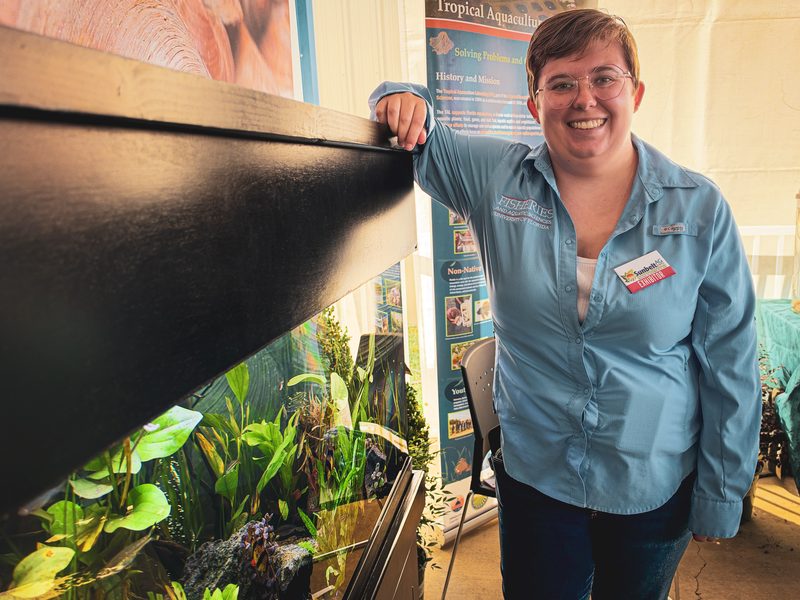
The fish in a University of Florida display at the annual Sunbelt Ag Expo this week were more than technicolor aquarium pets. They are farm products, representing a multimillion-dollar industry that depends on breeding, feeding and keeping some very small livestock alive.

Pelham farmers turn hardship into a regenerative mission
When serious health problems disrupted April Workman’s career, she and her husband, James, began reconsidering how they earned a living, raised their family and cared for their farm.
