
Dawson prepares to establish Historic Preservation Commission; Historic Society bids farewell to Carnegie Library
About 40 people filled the grand front room of the Dawson Carnegie Library, June 17, to share stories and swap tidbits of building history as the Terrell County Historic Preservation Society prepares to hand over the reins of the building’s operation to the city.

DAWSON – About 40 people filled the grand front room of the Dawson Carnegie Library recently to share stories and swap tidbits of building history as the Terrell County Historic Preservation Society prepares to hand over the reins of the building’s operation to the city.
“This building, when it was a library, was the hub in the community,” Shawn O’Connor-Veazie, the TCHPS president, said, “We want to see these buildings preserved and continue to be hubs in the community.”
The Carnegie Library in Dawson was just one of about 2,500 libraries across the world established with funds from the Andrew Carnegie Foundation. Construction was completed in 1914, and the building operated as a library until 1999. It stood empty until the TCHPS took it over and acquired funds to preserve it and turn it into a community event center. However, the TCHPS was notified at the beginning of June that the city would end this long-standing agreement.
The TCHPS got together to “honor the past and help shape the conversation about what lies ahead,” on June 17. Dawson Mayor Robert Aaron attended and listened in.
“A lot of money, time and love was invested by the Historic Society,” O’Connor-Veazie said. “We don’t know what’s next, but we remain hopeful that this treasured landmark will continue to serve our community.”

Just a few days before this farewell event, Dawson’s city Council moved forward with efforts to formally establish a Historic Preservation Commission. In accordance with the Georgia Historic Preservation Act, an HPC would enable local governments to protect historically significant structures and neighborhoods through “legal, consistent and enforceable review standards,” Cherysh Green-Caldwell, Dawson’s city manager, wrote in an email.
These standards would help prevent “inappropriate alterations, incompatible development or demolition of culturally valuable sites.” Forming an HPC includes the adoption of a local preservation ordinance, the appointment of commission members and the formal designation of historic resources.
“A Historic Preservation Commission is a legal entity created by the city and sanctioned by state statute,” Green-Caldwell wrote. “Its formation, responsibilities, and decisions are guided by law and carried out with accountability to the public. While the city welcomes and appreciates citizen-led efforts that express interest in our collective history, it is important to clarify that this is separate from those private groups of individuals which are not affiliated with, nor sanctioned by, cities as an official body.”
There are currently 152 Georgia cities with established Historic Preservation Commissions.
“By establishing a formal HPC, the city gains access to enhanced planning tools, technical assistance, educational resources, and potentially state and federal preservation grants — all of which can support economic development, neighborhood revitalization, and civic identity,” Green-Caldwell wrote.
O’Connor-Veazie said creating an HPC would save a lot of at-risk buildings.
“Nothing in Dawson’s protected,” he said. “Even our courthouse, which is on the National Register … it’s not actually a landmark. We’ve had several historic homes get torn down recently that were not needing to be torn down. We have such a wealth of architecture … we don’t want to lose too many.”
Still, many members of the TCHPS are wary of the city’s plans, especially for the old Carnegie Library – a building that was well-loved from its start.
Dawson’s residents worked hard to establish the library, dating back to the 1870s. They hosted performances and debates to raise funds. The Dawson Library Association was formed out of a women’s club called the Wednesday Afternoon Club.
The Carnegie Foundation came along in 1913, but it didn’t choose just any city to help build libraries.
“Number one, you had to show a need, and it was always contingent upon the fact that the community had a plan to man the library, to pay for the staff, to keep it maintained and to provide books,” Robin Harrell, a Parrot resident and TCHPS member, said.
Pearlie Bishop, the Terrell County Library’s library manager, began her career at Dawson’s Carnegie Library in the 1990s.

“Coming here tonight, it’s like coming back home because this is where I first started,” Bishop said to the crowd seated in the old library. “This is where I first fell in love with libraries.”
Bishop said through her work at the Carnegie Library, she grew to love public service and the way the library helped transform lives.
“A library is more than just books,” she said.
When the library moved to a new building in 1999, the TCHPS took it over in an effort to preserve the building and maintain it as a community space. Over the years, it hosted proms, theater programs and family gatherings as community members paid the TCHPS to use the space for events. The Historic Society also invested money into restoring the building’s facade and installing a kitchen and commercial bathrooms.
However, O’Connor-Veazie said it became a struggle to break even, especially after the city required event holders to pay an off-duty officer to monitor events.
“Instead of making money with the building and being able to reinvest it in the community and the building … we lost $2,000 on the building last year, but we kept it open because it was important to the community to have an event center,” he said.
No formal notice was given to the TCHPS that the city would take over the Carnegie Library. Members found out when a person who booked the space for an event tried to obtain a permit from the city and instead was told the building was out of code compliance and was closed down.
“We know it needs work, but we haven’t been told anything and we didn’t get a chance to rectify anything,” O’Connor-Veazie said.
He and other members of the TCHPS society worry that under the city, the Carnegie Library will fall into neglect and not be used to its full potential. It would join a growing trend of businesses and community spaces moving away from Dawson’s downtown.
“EMS was moved out of downtown, the County Fire Department, the library,” O’Connor-Veazie said. “It’s not helpful for the health and development of downtown.”
Dawson Mayor Robert Aaron said there’s been a burst of interest in Dawson’s downtown buildings, but many need to be brought back into code compliance before real growth happens.
The city introduced its new Code Enforcement Officer during its June 12 meeting.
“About two or three years ago, we had about five or six individuals that really wanted to buy buildings but because of the price and the condition, they backed off,” Aaron said. “We’re working to get those buildings up to code, and I think once we get them up to code, we’ll see buyers coming in.”
He applauded the Historic Society’s work in maintaining the Carnegie Library over the years.
“I don’t want the city to control,” he said at the gathering. “I want you guys to continue doing what you all do. We need to come to the table to see how we can make it better … make improvements needed here … like a ramp to put up for handicapped accessibility.”
Author

Related Articles
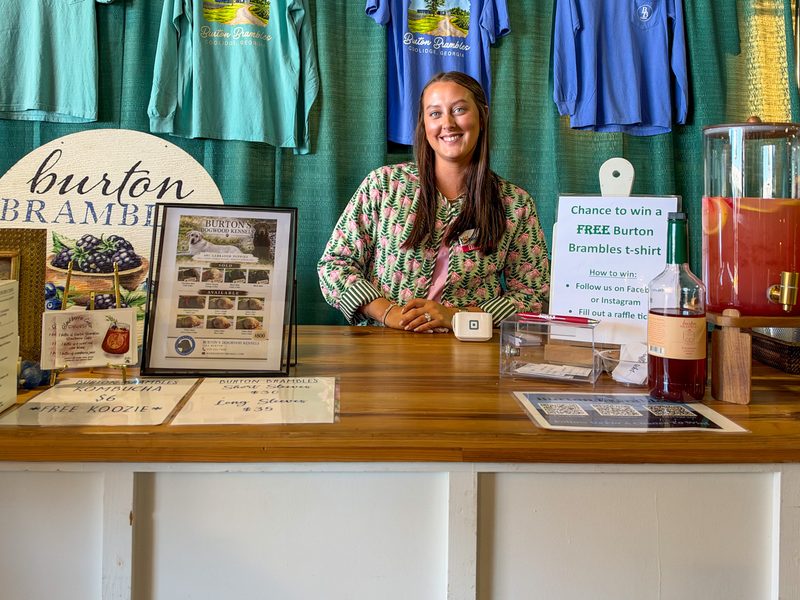
Beyond the bushel: Value-added products give southwest Georgia growers a second paycheck
Across the exhibit halls at Spence Field, farmers and small manufacturers showed how they turn raw crops into finished products. They bottle sauces, box gifts, print shirts, and they find new income and new customers along the way.
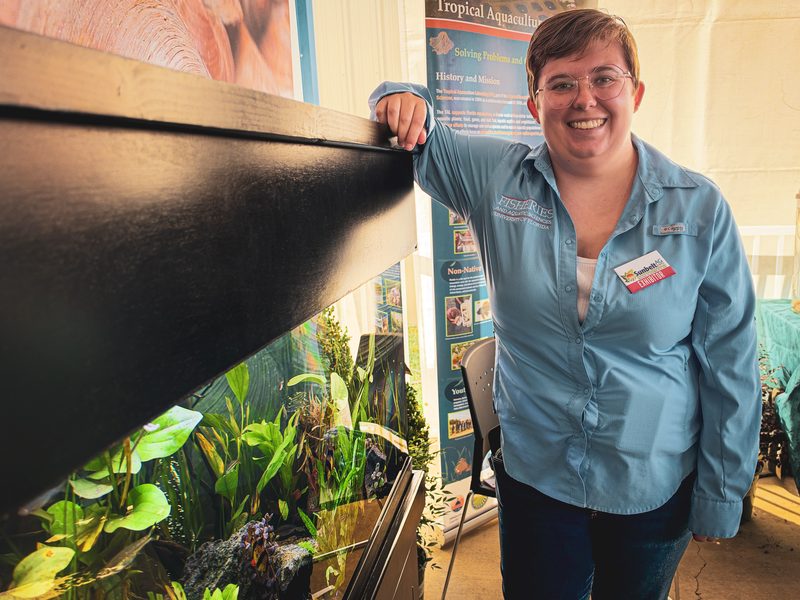
Small fish make big business for Southern farmers
The fish in a University of Florida display at the annual Sunbelt Ag Expo this week were more than technicolor aquarium pets. They are farm products, representing a multimillion-dollar industry that depends on breeding, feeding and keeping some very small livestock alive.
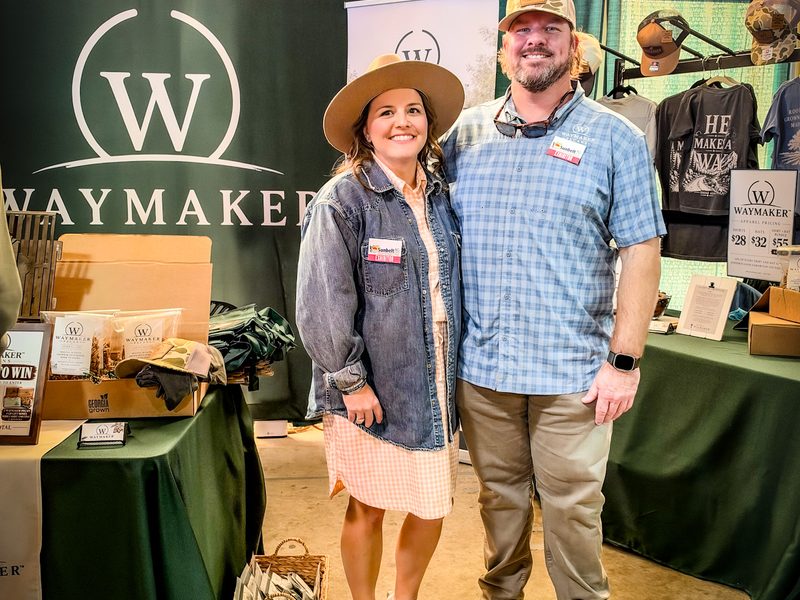
Pelham farmers turn hardship into a regenerative mission
When serious health problems disrupted April Workman’s career, she and her husband, James, began reconsidering how they earned a living, raised their family and cared for their farm.
