
Discovery of yellow-legged hornet confirmed in Georgia
From staff reports
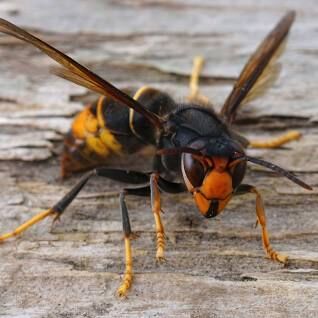
ATLANTA — The Georgia Department of Agriculture has announced, in coordination with USDA and the University of Georgia, confirmation of the detection of a living yellow-legged hornet in Georgia for the first time. This is the first detection of a live yellow-legged hornet in the open United States.
GDA is asking the public to report any sightings of the insect a non-native hornet species, that, if allowed to establish in Georgia, could potentially threaten honey production, native pollinators, and our state’s No. 1 industry — agriculture.
Earlier this month, a beekeeper in Savannah, found an unusual hornet on his property and reported it to the GDA. On Aug. 9, the U.S. Department of Agriculture’s Animal and Plant Health Inspection Service confirmed the University of Georgia’s identification of this insect as a yellow-legged hornet.
“Georgians play an important role helping GDA identify unwanted, non-native pests, and I want to thank the beekeeper who reported his sighting to us, as well as our partners at the University of Georgia and USDA’s Animal & Plant Health Inspection Service for working swiftly to confirm its identity,” Georgia Ag Commissioner Tyler Harper said. “Our experienced team of professionals will continue to assess the situation and are working directly with USDA APHIS and UGA to trap, track, and eradicate the yellow-legged hornet in Georgia. “
The yellow-legged hornet is a social wasp species that constructs egg-shaped paper nests above ground, often in trees. These nests can become large, housing an average of 6,000 workers. The yellow-legged hornet is native to tropical and subtropical areas of Southeast Asia. It is also established in most of Europe, parts of the Middle East, and parts of Asia where it isn’t native.
The GDA has a team of experienced scientists in its Pest Program, and is actively collaborating with USDA and academic experts. Together, they are developing an operational plan to trap, track and eradicate the yellow-legged hornet in Georgia. The plan will begin with trapping, and APHIS and GDA will set out traps and survey for this pest to determine if additional yellow-legged hornets are in the area. If a colony is discovered through reporting, trapping or tracking, the colony will be eradicated.
APHIS is providing technical expertise, technology, and outreach support as well as analyzing the hornet’s DNA to determine if it is related to European populations of this species.
“The foundation of this response is the strong relationship USDA has developed with the Georgia Department of Agriculture and the University of Georgia over many years,” Mark Davidson, Deputy Administrator of APHIS’ Plant Protection and Quarantine Program, said. “Our partnership is already paying off as our teams come together to apply the science and technology in our response planning. The public can also play a critical role by reporting potential sightings of the hornet to help eradicate this pest.”
The GDA and APHIS will continue to provide public outreach and education about the hornets and encourage the public to document and report hornet sightings. However, yellow-legged hornets can be dangerous, and officials urge caution in the event of a sighting.
GDA’s website has been updated with additional information regarding the yellow-legged hornet and an easily accessible form to report potential sightings. This information is prominently displayed on the homepage of the website. Georgians with additional questions or concerns are encouraged to email us at [email protected].
Here is what to include with your report, if possible:
♦ Your name and contact information.
♦ The location of the sighting.
♦ Date of sighting.
♦ If you can, safely take photograph(s) of the hornet.
♦ Location and approximate height of the nest if found.
♦ If you have no photo, include a description of the size of the insect, the color of the head and body, and what it was doing.
♦ Description of the hive loss/damage.
♦ The direction the hornet(s) flew when flying away.
Please note: There are many domestic lookalikes that are native to the United States and do not pose a threat to honeybees. Many of them are valuable pollinators. USDA has a photo gallery of lookalikes. To get to the gallery, go to www.aphis.usda.gov, and search for “yellow-legged hornet.”
Author

Related Articles

Terrell County invites community to celebrate Independence Day with July Fest
Families from across Southwest Georgia are invited to gather in Dawson on July 4 for an afternoon of food, fellowship and fireworks as the Terrell County Recreation Department hosts its annual July Fest celebration.

DOT says delay in Oglethorpe Bridge opening should be brief
“We know it’s not going to be July 22. We don’t think it’s going to be much later than that.”

City of Albany has big July 4 celebration planned for Saturday
“It’s going to be a lot of moving and shooting them off in a short time. It’s going to be a big show.”
