
District 151 challengers Wolfe, Lockhart offer plans for schools, rural jobs, health care
Two challengers seeking to unseat state Rep. Mike Cheokas are proposing different approaches to Southwest Georgia’s needs, with Democrat Ethan Wolfe emphasizing changes to state funding and health policy and independent Travis Lockhart focusing on partnerships among local governments, schools and employers.
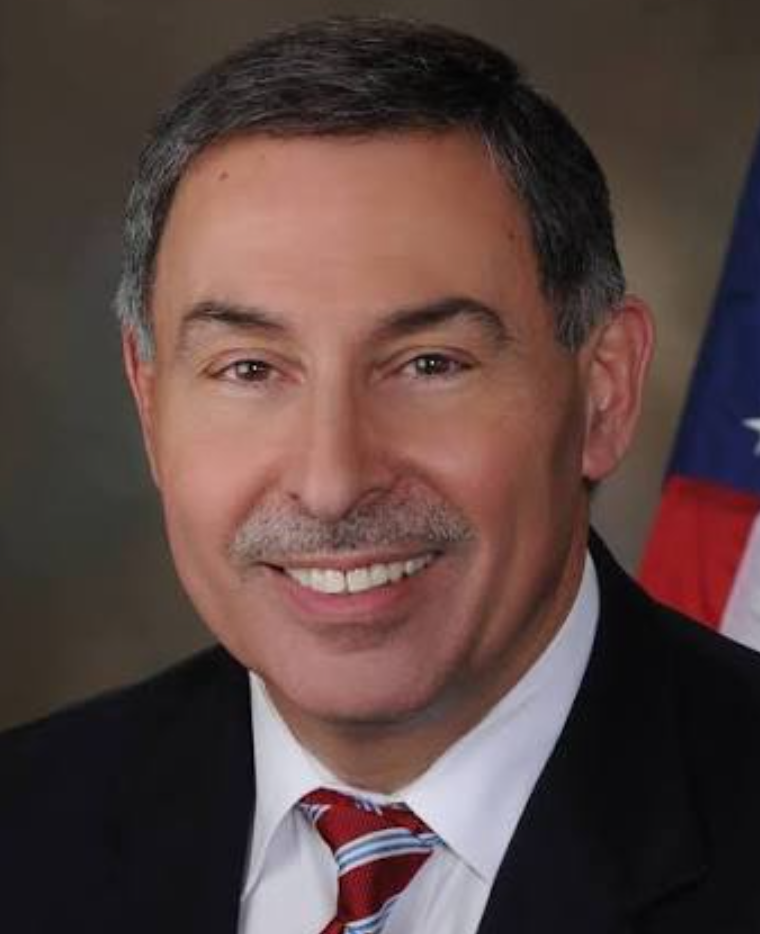
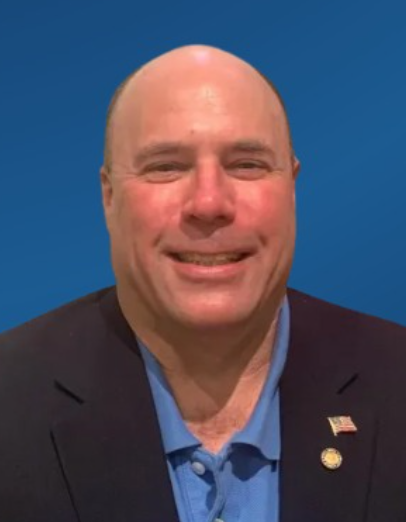
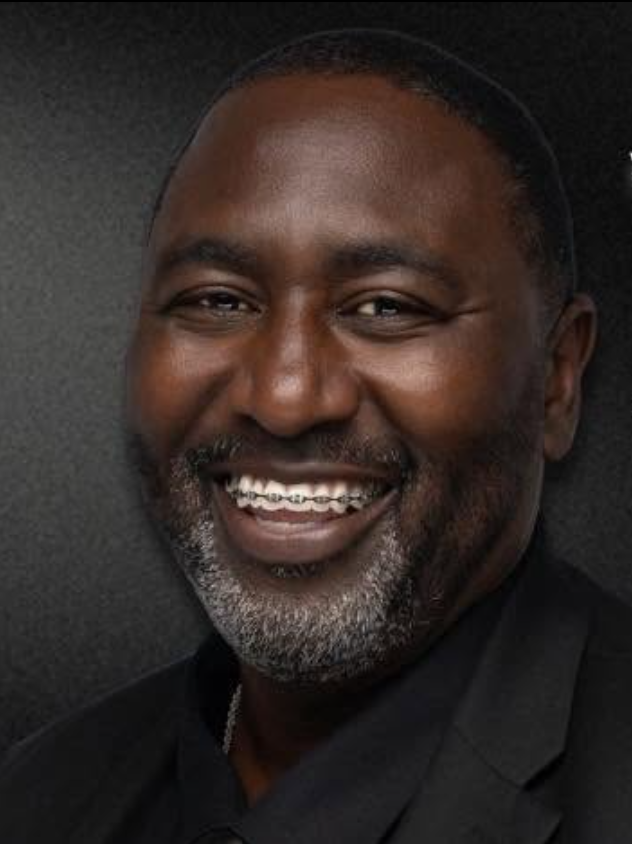
AMERICUS — Two challengers seeking to unseat state Rep. Mike Cheokas are proposing different approaches to southwest Georgia’s needs, with Democrat Ethan Wolfe emphasizing changes to state funding and health policy and independent Travis Lockhart focusing on partnerships among local governments, schools and employers.
In separate interviews with The Albany Herald, Wolfe proposed infrastructure grants that small towns could afford to use, a revised school funding formula and Medicaid expansion.
Lockhart called for closer consultation with school superintendents, recruiting employers suited to the region’s college programs and building trust between residents and elected officials.
The candidates are competing in the Nov. 3 midterm Elections for House District 151, which includes territory in Chattahoochee, Dougherty, Marion, Schley, Stewart, Sumter, Terrell and Webster counties, according to the Georgia House member directory.
Cheokas, R-Americus, did not respond to interview requests submitted by The Herald for this story. His campaign website emphasizes tax reductions, teacher and law enforcement pay raises, health care legislation and funding for South Georgia Technical College and Georgia Southwestern State University.
Where the challengers stand
For communities such as Dawson, Wolfe said, receiving a grant does not necessarily mean a project is affordable.
Some grants require a local match — money the city or county must contribute — while reimbursement grants require communities to spend their own money before receiving repayment.
“A lot of these small towns cannot match some of the grants that are offered because a lot of grants (require matching funds), meaning they have to put up 10 or 20% of the total cost, or they have to spend the entire amount and then get reimbursed,” Wolfe said.
He proposed grants requiring no local match, with at least half the money available up-front and additional payments as work progresses. He did not identify a particular program he would change or estimate the cost.
Wolfe also called for help with municipal budgeting and stronger connections to organizations that assist local governments, including the Georgia Municipal Association and ACCG, Georgia’s county commission association.
“They provide a lot of help, but I know some counties and some cities probably don’t know what help they offer,” he said.
Lockhart said he had spoken with Dawson’s mayor, a council member and a county commissioner. His starting point, he said, would be restoring trust and connecting communities with outside expertise.
“You have to build that relationship of trust. That’s the first thing. Once that person trusts you, they can work with you,” he said.
Lockhart said his campaign had begun working with a U.S. Department of Agriculture program that could connect rural communities with grants, leadership support and skills. He did not identify the program or a specific project it would finance.
He also emphasized household financial education, saying residents need help understanding how to budget as their housing circumstances and monthly expenses change.
Keeping jobs and graduates in the region
Wolfe said Georgia should direct more investment south of Interstate 16, pairing infrastructure repairs with business incentives for communities that need jobs and a stronger tax base.
“That money needs to be released below I-16,” he said. “Why are we giving tax breaks to businesses to go to Atlanta, when we should be giving them tax breaks to go to these counties that need it, that need that tax base, that need that support, that need those jobs?”
Lockhart’s approach starts with the education already available in the region. He says he wants local governments, colleges and development authorities to recruit employers whose needs match the skills students are learning.
“What jobs and opportunities can we bring back to southwest Georgia that fit us?” he said.
He pointed to Albany State University, Georgia Southwestern State University, Albany Technical College and South Georgia Technical College as resources for that effort. The goal, he said, is to give graduates reasons to stay.
For residents who need work now, Lockhart said communities should improve how they advertise existing vacancies and help applicants prepare for interviews.
“But a lot of people don’t know that those opportunities exist,” he said.
School funding and school choice
Wolfe called for rewriting the Quality Basic Education formula, commonly called QBE, which Georgia uses to calculate the main portion of state funding for public schools.
The formula assigns different funding amounts to student programs, reflecting differences in the cost of instruction. A poverty weight would add funding specifically for students from low-income households.
“We need to redo the QBE, the Quality Basic Education Funding Formula,” he said. “We need to reinvent what that means and how we’re going to do it.”
Wolfe argued that the formula does not adequately account for poverty and that state requirements can leave local taxpayers responsible for costs.
Georgia’s Fiscal 2026 budget included about $15.3 million in targeted support for economically disadvantaged students. That was a separate grant allocation outside the QBE formula, not the addition of a poverty weight to the formula itself.
Lockhart proposed reviewing the state budget for outdated or unused spending and redirecting money to education. He did not identify a specific expenditure to eliminate or estimate potential savings.
He said lawmakers should begin by listening to the people running school systems.
“We cannot leave the superintendents out, but the superintendent knows what’s going on,” the candidate said. “You have to go sit with people who know it, who understand it, who breathe and sit with it every single day.”
Lockhart differed on how decisions about school choice should be made.
The Georgia Promise Scholarship provides eligible students with up to $6,500 for the 2026-27 school year for approved nonpublic education expenses, including private school tuition and home-study expenses. It is administered by the Georgia Education Savings Authority.
Wolfe said counties and school boards should have more control over whether to participate in voucher arrangements.
“I think that really needs to be a local-level issue in the counties and the school boards as to whether they want to give their money over to any type of voucher for another child to go somewhere else,” he said.
That would represent a different approach from the current state-administered Promise program. Lockhart said he supported families’ ability to choose while arguing that public schools deserve recognition and support.
“Everyone should have a right to go where they want to go, but we also must realize that we have to celebrate the public school,” he said. “But I’m an advocate for public education. I’m a public education kid. I went to public education, public schools.”
Cheokas voted for Senate Bill 233, the legislation establishing the Promise Scholarship, when it passed the House on March 14, 2024, according to the roll call reproduced by legislative tracking service FastDemocracy.
Health care and household costs
Wolfe identified Medicaid expansion as a first-term priority.
Full expansion under the Affordable Care Act would broaden eligibility for low-income adults up to an effective income limit of 138% of the federal poverty level. Georgia’s existing Pathways program covers certain adults up to 100% of that level and requires qualifying activities.
“We need to do Medicaid expansion,” Wolfe said.
He said he also supports eliminating certificate-of-need requirements, the state review process that applies to certain new or expanded health care facilities and services. The state describes the program’s purposes as assessing need, controlling costs and protecting access. Wolfe argued that removing the requirements would encourage competition.
He said expanding coverage must be accompanied by payments that make providing care financially viable.
“It’s not only about helping people to make sure they have health care at affordable cost. It’s also making sure that the service providers are reimbursed at a reasonable rate,” he said.
Wolfe acknowledged that some payment issues would require action at the federal level and others at the state level.
Lockhart did not state whether he supports full Medicaid expansion. Asked about expanding Medicaid and food assistance, he discussed the importance of assistance to his own family and his view that support should help people move toward employment.
“We’ve got to believe in temporary. This is a temporary avenue,” he said.
He emphasized jobs, education and financial literacy but did not offer a specific health coverage proposal.
On everyday expenses, Wolfe proposed eliminating taxes on food and paper hygiene products.
Agriculture
Wolfe also said he wants to broaden the purchases eligible under the Georgia Agricultural Tax Exemption program, or GATE, and lower its qualifying income threshold to help smaller and beginning farmers.
GATE allows qualified agricultural producers to avoid sales tax on eligible farm purchases. The program generally uses a $5,000 annual agricultural revenue threshold, with provisions covering circumstances such as long-term production. It is not a general exemption from income taxes.
“We need to start making that GATE card apply to some other things real quick,” Wolfe said.
Lockhart described agriculture as connected to the region’s other economic needs but did not outline a separate farming proposal during the interview.
Experience and accessibility
Wolfe, an Americus native and retired Air Force lieutenant colonel, served for 30 years. He said his military work included presidential communications, overseas deployments and training other air battle managers.
He said that experience shaped how he would approach political differences.
“Everything else was secondary to the mission. That’s my mission right now: to make southwest Georgia better,” he said. “So it doesn’t matter whether you’re Republican, Independent or Democrat.”
Lockhart said running as an independent would allow him to focus on policies and build relationships across party lines.
“We’re going to work with the Republicans. We’re going to work with the Democrats. We’re going to work with the best policy that fits southwest Georgia,” he said.
Cheokas chairs the House Small Business Development Committee. His other assignments include Education, Public and Community Health and the Higher Education subcommittee of Appropriations.
His campaign website credits him with helping secure tax refunds, teacher raises and funding for the region’s colleges.
Both challengers emphasized staying connected to constituents.
Lockhart said explaining plans and maintaining relationships would help residents understand what could be accomplished and how long it might take.
“It’s all about relationships. It’s all about working together. It’s all about understanding and trusting one another,” he said.
Wolfe proposed regular town hall meetings throughout the district, along with online communication and newspaper updates during legislative sessions. He said meetings should allow questions and answers.
“I don’t have all the solutions. I don’t know all the problems really. I need to keep talking to folks,” he said.
Cheokas has represented District 151 since 2023 and has served in the Georgia House for most of the past two decades. He declined The Albany Herald’s request for an interview. The Herald will update this story if he responds.
Early voting runs Oct. 13-30. Election Day is Nov. 3, with polls open from 7 a.m. to 7 p.m. Voters can check their district, sample ballot and voting locations through Georgia’s My Voter Page at mvp.sos.ga.gov.
Related Articles

Albany considers battery storage system to address electricity surplus
“For me, this is all about ratepayers. Will this keep our rates low? That’s my biggest concern on a project like this.”

Lee County denies mother’s home day care plan despite staff support, corrections to objections
A day after Lee County commissioners voted down her plan to care for five young children in her home, Sharemer Jones returned to the county planning office with her infant daughter to ask how to appeal.
Lee County proposes tax rate cut as homestead cap reshapes tax digest
Lee County commissioners plan to lower the county’s property tax rate for 2026. The new rate would reduce what the county collects for day-to-day operations for the first time since 2022.
