
District 4 incumbent Strother makes case for continuity in School Board race
Strother, who is seeking reelection to represent her district seat against challenger Adam Inyang, described her leadership style in a recent interview as collaborative, solutions-oriented and rooted in long-term work rather than short-term political fights. If returned to office, she said, voters should expect a continued focus on early childhood education, responsible budgeting and clearer communication with a public that is often vocal online but largely absent from board meetings.
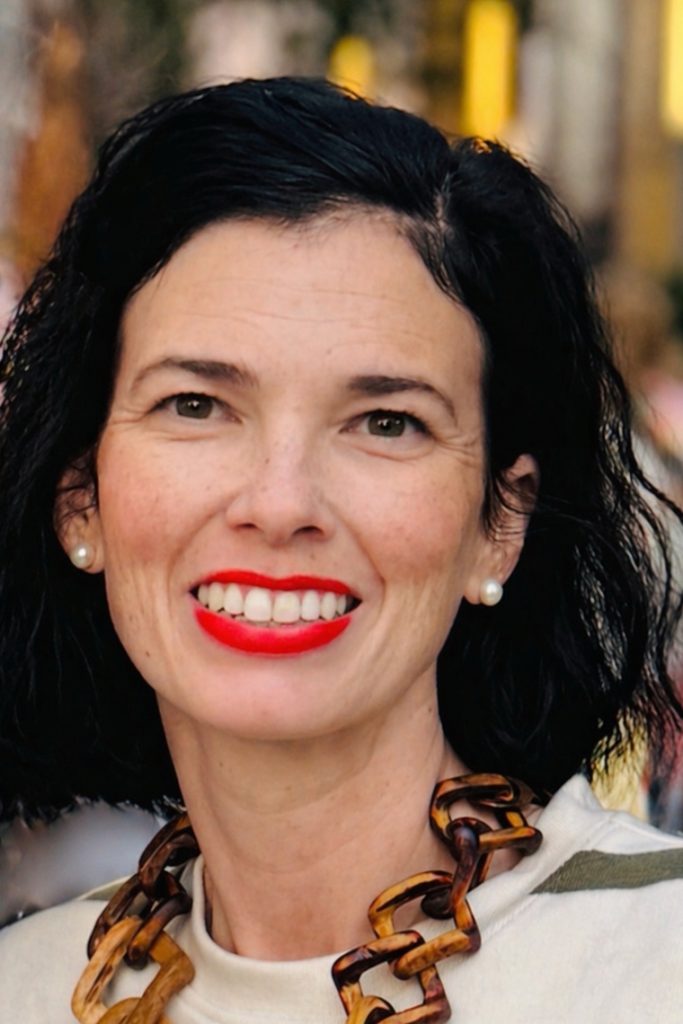
ALBANY — Incumbent District 4 Dougherty County School Board member Melissa Strother says her case for another term rests less on campaign rhetoric than on continuity, preserving momentum on early literacy, maintaining financial stability and pushing for stronger public engagement in a district she says is too often judged from a distance.
Strother, who is seeking re-election to represent her district seat against challenger Adam Inyang, described her leadership style in a recent interview as collaborative, solutions-oriented and rooted in long-term work rather than short-term political fights. If returned to office, she said, voters should expect a continued focus on early childhood education, responsible budgeting and clearer communication with a public that is often vocal online but largely absent from board meetings.
“I have a passion for this community,” Strother said. “I have a passion for children and making sure the ones who really don’t have a voice, that we’re their voice.”
Her comments come as public frustration over taxes, government spending and finances has sharpened the focus on local officials, including school board members. Strother said some of the criticism aimed at the district reflects a misunderstanding of how public school finances work, particularly the limits placed on state, federal and grant dollars.
“People don’t understand: You have all this money, but you can’t really spend it exactly where you want to because it all has strings attached to it,” she said.
Strother, who previously served on the board’s Finance Committee, said the district is in a stronger financial position than when she first joined the board, when furlough days were still part of the conversation. Now, she said, the system has reserves that have helped cushion steep increases in mandatory costs such as employee health insurance and retirement contributions.
She pointed specifically to rising benefit costs as an example of why maintaining reserves matters, comparing the district’s fund balance to a savings account that can absorb sudden financial shocks. What some residents view as excess, she suggested, is in part a safeguard against costs the board cannot control.
At the same time, Strother acknowledged that financial documents can raise legitimate questions, especially when budget reports appear to show deficits or fluctuations. In some cases, she said, those changes may reflect timing issues, updated projections or construction-related adjustments rather than a deeper structural problem.
Still, she said the district must do a better job of explaining those dynamics to the public.
“Every election season kind of gives you a window into what people know and what they don’t know,” Strother said. “If they’re saying some of these things, they don’t know what we’re doing. We need to do a better job of telling our story.”
That emphasis on communication emerged as one of the clearest themes in Strother’s interview. She said the board has tried to operate transparently, with budget discussions held in public and opportunities for citizens to speak at meetings, but she also conceded that transparency on paper does not always translate into public trust.
For Strother, part of that disconnect lies in what she described as a gap between criticism and participation.
“Are you willing to pull up your bootstraps and come help?” she said, referring to critics of the school system. “Are you willing to do something about it, or are you just willing to talk about it?”
She argued that many of the system’s challenges mirror broader community issues and cannot be solved by schools alone. In her view, a stronger culture of volunteerism, local involvement and direct engagement would do more to improve public education than online criticism.
If there is one issue Strother points to as central to her time on the board, it is literacy.
She described the district’s expanded prekindergarten efforts as one of the most important developments during her tenure, arguing that early learning access is essential in a community where children can arrive in first grade with vastly different levels of preparation. Some students, she said, may come in already recognizing sight words, while others may have had little or no classroom experience at all.
“When I came on the board, the pre-K program was not what it is now,” Strother said. “We are playing a long game.”
She said the district’s investment in pre-K reflects a broader understanding that academic gains, especially in literacy, are built years before standardized outcomes show up in upper grades. That long-view approach, she said, is the kind of momentum she would want to protect in another term.
Strother also addressed a question that sometimes surfaces around school board candidates: where their own children attend school.
She said her children have attended Dougherty County schools, but one is now homeschooled and another splits time between home instruction and a private Christian school. Strother said the decision was based on family circumstances and religious conviction, not dissatisfaction with the public school system.
“Ultimately, it was just what the Lord told me to do,” she said. “I do not think that it affects my ability to serve as a school board member.”
In fact, Strother said, her experience teaching her own children has given her an added perspective on curriculum and student stress, particularly in the area of testing. She pointed to efforts during her board service to reduce excessive testing in early grades, saying the district had at times unintentionally placed unnecessary pressure on young children.
Rather than viewing that outside perspective as a liability, Strother framed it as part of what she brings to the board: a combination of parent experience, committee work and familiarity with both district operations and alternative learning environments.
Throughout the interview, Strother returned repeatedly to the idea that school board service is less about individual credit than shared direction. She described the current board as collaborative and said disagreements are rare and often worked through before votes reach the dais, making meetings appear smoother.
Strother did not identify herself as a political outsider or combative reformer; instead, she presented herself as a steady hand, someone focused on preserving progress, asking practical questions and supporting initiatives she believes serve students over the long haul.
If re-elected, Strother said that work would continue with the same priorities: literacy, communication and a deeper push to connect the public with what the district is actually doing.
“There’s more good than we’re seeing,” she said. “It’s just a matter of looking for it.”
Related Articles
Judges denies residency challenge; Edward Brown to claim Senate District 12 seat
An email ruling issue this week paves the way for Albany businessman Edward Brown to enter the Georgia Senate next year. A Superior Court judge denied candidate Corey B. Morgan’s challenge to Brown’s residency in the District 12 race.

Dougherty County to mail 2026 property assessment notices this week
Dougherty County will mail 2026 Notices of Assessment to property owners this week.

Albany animal trainer seeking to fulfill dream of establishing a pet food pantry
“(If) you lose a job, you have a healthcare crisis, what do you do with the cat? What do you do with the dog? Now you will at least have someone who can help you with the food.”
