
DNR investigating presence of diseased trout in state
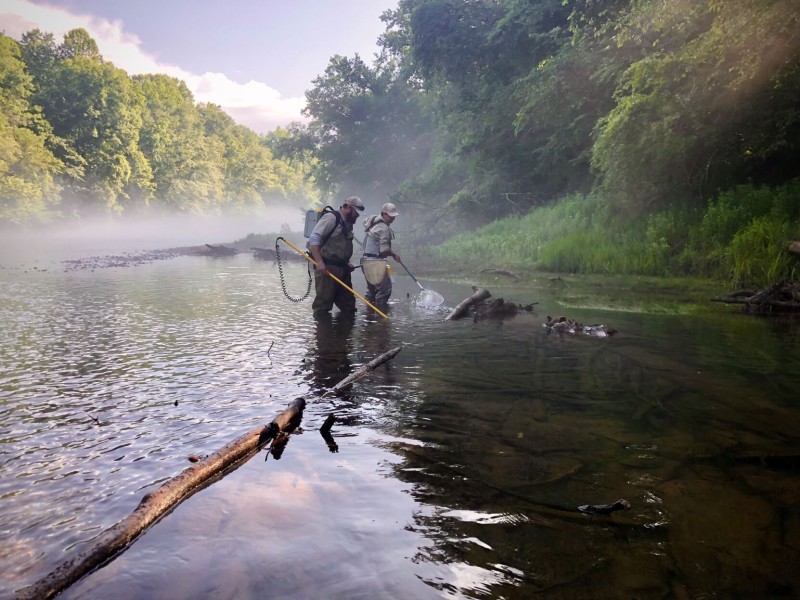
Special Photo: Georgia DNR
From staff reports
SOCIAL CIRCLE — The Georgia Department of Natural Resources’ Wildlife Resources Division is investigating whirling disease and infectious hematopoietic necrosis virus in hatchery-raised trout at the Buford and Summerville Trout Hatcheries. Initial testing results indicate that both hatcheries are positive for WHD and IHNV.
“While neither WHD or IHNV is harmful to humans, these diseases can cause high trout mortalities in hatchery systems and in the wild, and there are no known therapeutic treatments to eliminate these pathogens,” WRD Chief of Fisheries Scott Robinson said. “As a result, Georgia WRD has temporarily suspended its trout stocking program and is in the process of collecting additional trout samples for disease analysis, investigating the source for both pathogens, and identifying disinfectant methodologies for treating the hatcheries.”
Whirling Disease: This is the first documented occurrence of whirling disease in Georgia. First detected in the U.S. in 1958, this disease is found in more than 20 states, including the Watauga River in North Carolina in 2015. Whirling disease can cause 90 percent or greater mortality of young rainbow trout and can have serious impacts on wild and hatchery trout populations. The disease is caused by the microscopic parasite Myxobolus cerebralis, which damages cartilage and skeletal tissue in trout, causing diseased fish to swim in a “whirling” motion.
Infectious Hematopoietic Necrosis Virus: While IHNV has not previously been found in Georgia, it has been documented in salmonids in the Pacific Northwest. The disease is caused by the salmonid novirhabdovirus and is passed through contact with urine, mucus and other fluids. All species of trout are susceptible. The virus can cause high trout mortalities in hatchery systems and in the wild. There are no therapeutic treatments to eliminate the pathogen. Infected fish may exhibit lethargy, whirling behavior, darkened coloration, and swelling in the head and abdomen.
Any fisherman who catches a trout that he or she thinks may be affected by WHD or IHNV, here are ways to help:
— Do take photos and video of the fish, including close ups of its spine.
— Do note where it was caught (waterbody, landmarks, or GPS coordinates).
— Do properly clean all equipment such as boats, trailers, waders, boots, float tubes and fins of mud before leaving an area when fishing. Thoroughly dry equipment in the sun if possible before re-use. If you are traveling directly to other waters, clean your equipment with a 10 percent solution of chlorine bleach or use another set of equipment.
— Don’t transport live fish between bodies of water or release or dispose of them anywhere other than the location they were caught
Anglers who observe the symptoms of WHD or INHV in fish should notify the Georgia DNR Wildlife Resources Division at [email protected]. More information about fish disease in Georgia can be found at: https://georgiawildlife.com/ans#diseases.
Related Articles

Terrell County invites community to celebrate Independence Day with July Fest
Families from across Southwest Georgia are invited to gather in Dawson on July 4 for an afternoon of food, fellowship and fireworks as the Terrell County Recreation Department hosts its annual July Fest celebration.
DOT says delay in Oglethorpe Bridge opening should be brief
“We know it’s not going to be July 22. We don’t think it’s going to be much later than that.”

City of Albany has big July 4 celebration planned for Saturday
“It’s going to be a lot of moving and shooting them off in a short time. It’s going to be a big show.”
