
Dougherty coroner recounts memories of working to identify bodies exhumed by flood
By Alan Mauldin
[email protected]
ALBANY — The dead didn’t rise from their graves; they were evicted.
One of the more grisly results from the Great Flood of July 1994 was that of bodies shot out of the ground by the unrelenting force of floodwaters. When the water receded, coffins containing human remains littered the cemetery, some hung from chain link fence, others floated away into nearby yards and even a home.
“In 1994, we had 503 (bodies) come up,” Dougherty County Coroner Michael Fowler, who at the time was working as a funeral director and volunteered for the job of sorting and identifying washed-up remains, said this week. “We had skeletons, bones at different places. We found a coffin that washed down the street into a house.”
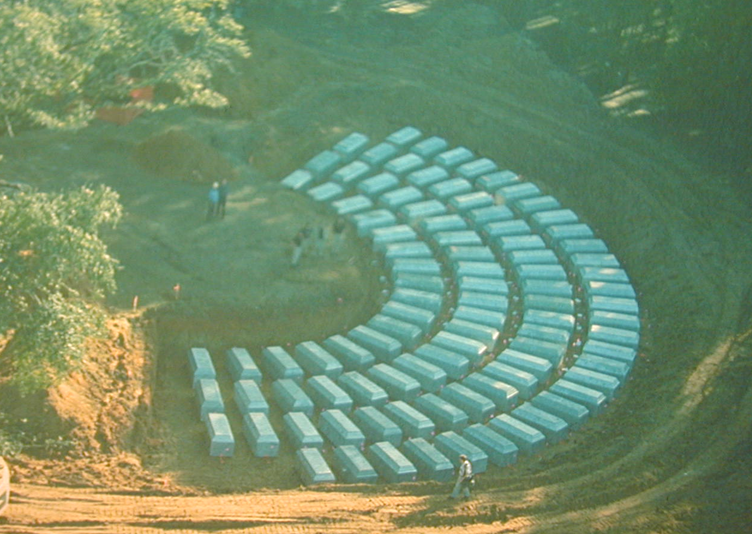
A team worked for more than a month that summer processing the bodies and ensuring all who were recovered were returned with dignity to the earth. But 44 wound up in a watery sinkhole from which they could not be extracted safely and remain in that location.
Initially, the remains were placed in refrigerated trucks and moved to the Albany Exchange Club Fairgrounds. Later, Marine Corps Logistics Base-Albany provided a space where investigators from various state agencies and retired federal specialists could do their work.
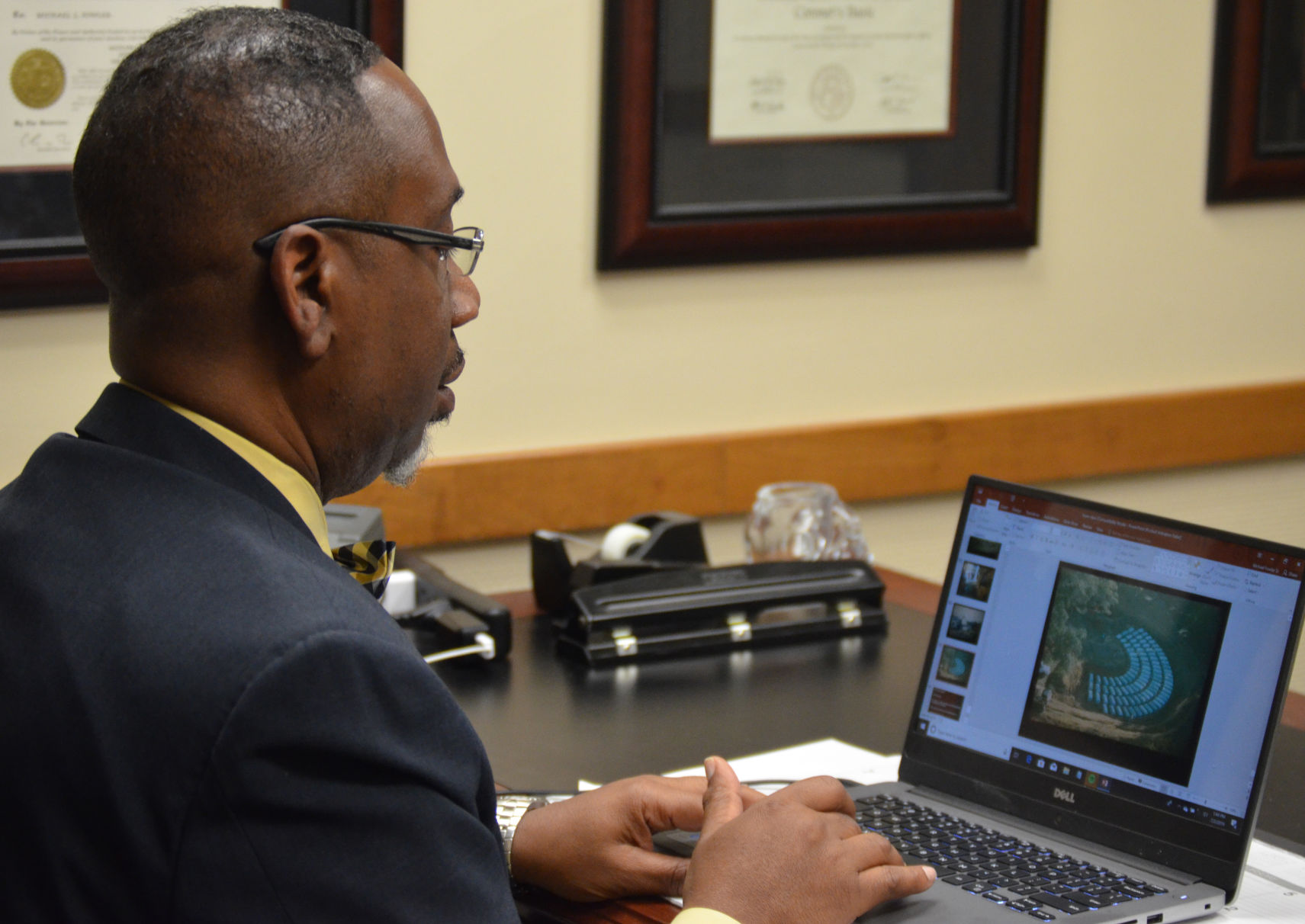
“When caskets came in, we’d put a case number on it,” Fowler said as he described the process while displaying photos on his laptop computer. “We opened all the coffins, took all the bodies out.”
Clothing was removed and preserved. The initial inspection included seeking any distinguishing physical characteristics such as birth marks or hair color, information that could help a loved one in identifying a body.
“(It helps) if you can find any identifying markings, tattoos, clothes, anything you can find – jewelry, body piercings,” Fowler said.
The team photographed those features for its files.
Some of the bodies that were disturbed had been in the ground for many decades, so in death they received more thorough physical exams than they ever could have while living.
“X-ray is very important,” Fowler said. “Dental is very important. Anthropology is very important.”
The latter refers to characteristics that allow investigators to know whether the deceased was black, white or another race and to determine sex.
Even implanted medical devices such as pacemakers or prosthetic limbs yielded vital clues.
“If they’ve got prostheses or any metal in their body, there are serial numbers on medical (devices),” Fowler said.
This is the point in the story where things get gruesome.
Among the investigators’ first task was taking fingerprints from the corpses’ hands. When those appendages were intact, the process was straightforward, but that was not always the case.
When the flesh was too decomposed to allow traditional rolling of the fingers through ink, investigators cut off the top layer of skin and stretched it over their own fingers like gloves.
In the end, the investigators identified all but 97 of the 503 and workers marked each coffin with a large “K” for known or “UK” for unknown. Family members of those identified were allowed to make arrangements, and others were buried back in or near the sites from which they were disinterred.
After processing was completed, Fowler said the bodies were reclothed in what they were wearing at their burial.
“But we gave them a new casket,” the coroner said.“We put them in a body bag and put them in a new casket. Everybody got the same (type) casket. Everybody was (treated) the same.”
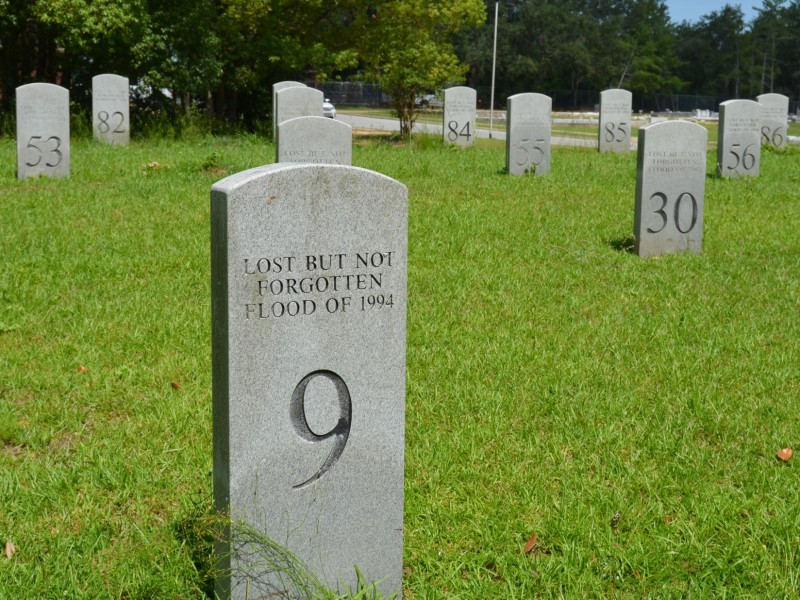
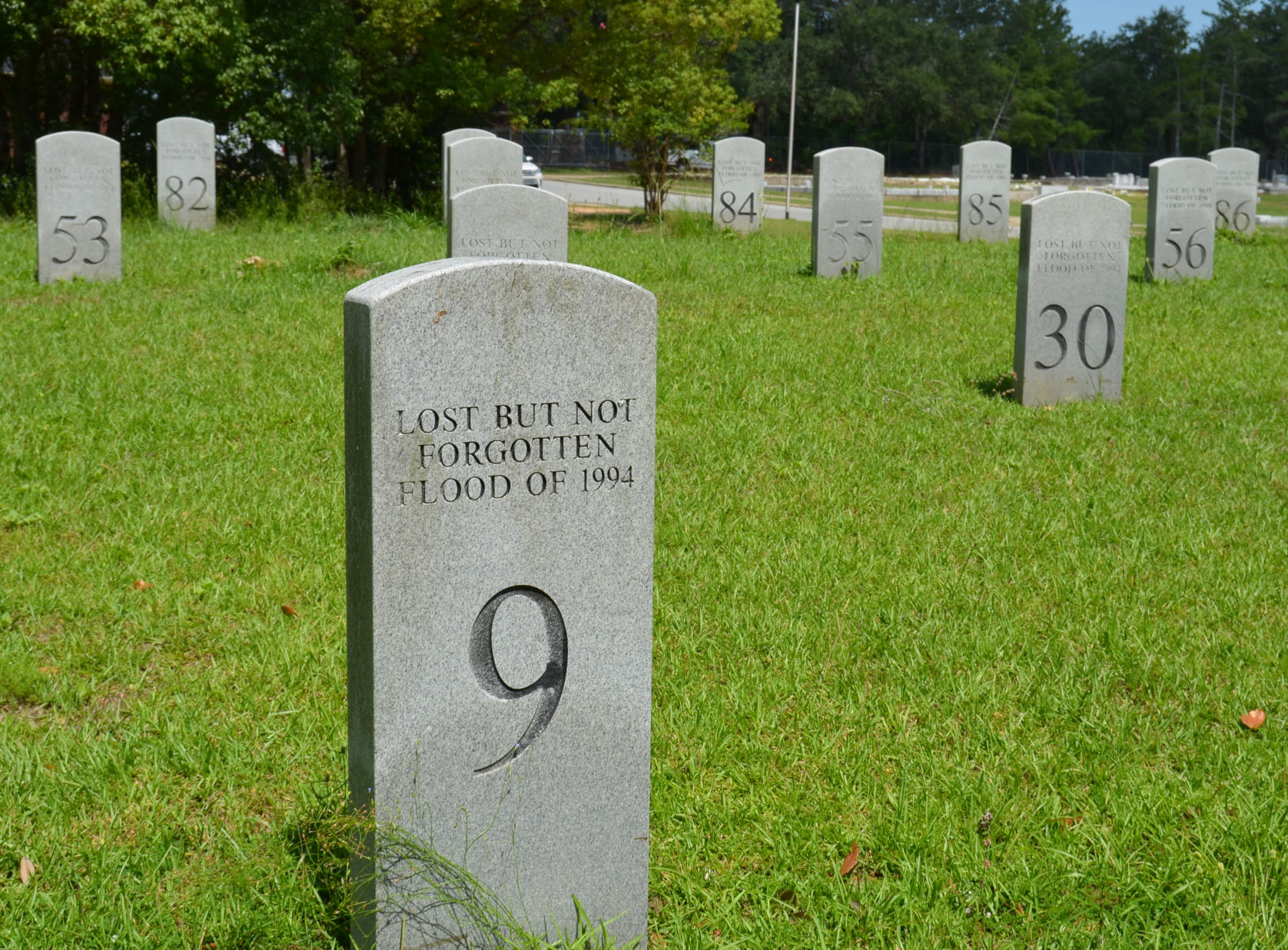
Those who were not identified were placed in rows at Riverside Cemetery, where they were reburied with marker stones. Each stone bears a number and the words: “Lost But Not Forgotten Flood of 1994.”
The case files have been preserved so that if new information becomes available, identification will be possible.
The work, performed in July and August in space that was not air-conditioned, was not pleasant. The “stench” was horrible, Fowler said, and the investigators had to gulp down food, trucked in to them on site, while fending off swarming flies that may have previously landed on human remains.
Fowler said he felt like the task was a calling. It also led to his being hired for two jobs and traveling the country and world to do similar work at places like the World Trade Center and in the wake of tsunamis in Asia.
“I had a great feeling about it,” he said of the post-flood effort. “I believe in God. I wanted to do something for my community. It was a trying time, but I also was blessed.”
Author

Related Articles

Lee County denies mother’s home day care plan despite staff support, corrections to objections
A day after Lee County commissioners voted down her plan to care for five young children in her home, Sharemer Jones returned to the county planning office with her infant daughter to ask how to appeal.
Lee County proposes tax rate cut as homestead cap reshapes tax digest
Lee County commissioners plan to lower the county’s property tax rate for 2026. The new rate would reduce what the county collects for day-to-day operations for the first time since 2022.

PHOTOS: 2026 Albany State Homecoming
Click the arrow to scroll through the photos…five different galleries.
