
Dougherty County education leaders conduct first public listening session
Terry Lewis
ALBANY — More than 150 people crowded into Monroe High School’s cafeteria Tuesday evening as Dougherty County’s “Educational Collaborative” gathered input during its first public listening session.
The session, conducted by the University of Georgia’s J.W. Fanning Institute for Leadership Development, is one of several planned by the collaborative of Albany State Interim President Art Dunning, Darton State College Interim President Paul Jones, Albany Technical College President Anthony Parker and Dougherty County Schools Superintendent Butch Mosely to address local K-16 (kindergarten through fourth year of college) education issues and how to stanch the county’s 33 percent dropout rate.
“We are here to discuss our visions and dreams for public education in Albany,” Parker said. “We hope the results of these sessions provide us with the opportunity to transform Albany from ‘The Good Life City’ into a great community.”
The listening session provided little verbal feed back to the facilitators, who asked just four questions and collected responses on color-coded sheets of paper and laptop computers located at each table. Participants were asked to write their answers, then post them into a database via the laptops.
The facilitators asked for detailed responses to the following questions:
— What are the forces, factors and trends that positively affect K-16 education in Dougherty County?
— What are the forces, factors and trends that inhibit or restrain K-16 education in Dougherty County?
— What are the specific assets the Albany-Dougherty Community can build on to affect positive change?
— What else is important to acknowledge or distinguish Albany-Dougherty County that may have an impact on community change or progress?
Fanning Institute Director Matt Bishop said the responses would be categorized (by business, community involvement, curriculum, etc.), then each category sorted and weighted by similar responses. The results, Bishop said, will allow the institute to determine the strengths, weakness, needs and goals of the community.
This will also allow institute staff to “drill down” through the data and establish a set of more specific questions for the next session. Bishop said it would take about two weeks to sift through the data and that he expected an initial report to be ready in two weeks.
“I was very pleased with the turnout and the diversity of the group I saw in the room tonight,” Mosely said. “I thought it was a great event. As I watched the responses flashed on the screen, I saw nothing that surprised me. But it did drive home that even within the community, there is a poor perception of Dougherty County.
“This is what we have to change.”
Jones was also happy with the turnout.
“I was pleased with the number of people there, but I was especially pleased that the people were engaged,” Jones said. “Clearly the people here care deeply about this community. I thought it was a great first session.”
Related Articles
Albany Herald – July 11, 2026
Putting on the Ritz… Food, mini menagerie provide… Albany City Commission set to vote on… Following Lee’s lead, Terrell County hits…

Classifieds – July 11, 2026
Albany Classifieds and Legals: Real Estate; Merchandise, Misc…
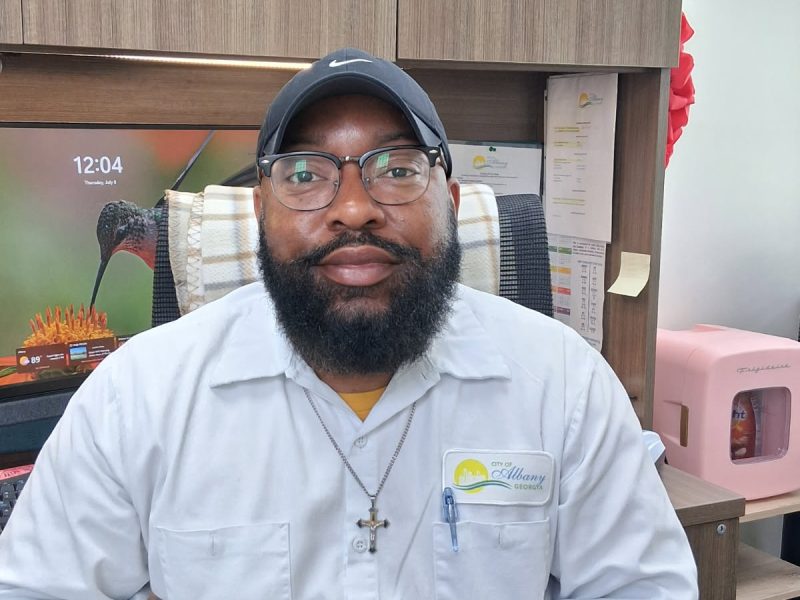
Small actions can help save big on utility bills
The high temperatures of July and August can bring scorching utility bills as air conditioners hum to keep houses cool. Albany Utilities Residential Conservation Auditor Willie Jackson offered some tips on making summer cooling bills more manageable.
