
Dougherty County has new voice on state panel addressing homelessness
Staff Photo: Alan Mauldin
By Alan Mauldin
[email protected]
ALBANY — If the Georgia BoS CoC acronym doesn’t ring a bell, the full name – Balance of State Continuum of Care – probably won’t make the meaning any clearer.
But the board, which recently had perhaps its first member from Albany named to represent the region, is a vital tool in deciding how federal dollars are spent on addressing homelessness in the state’s communities.
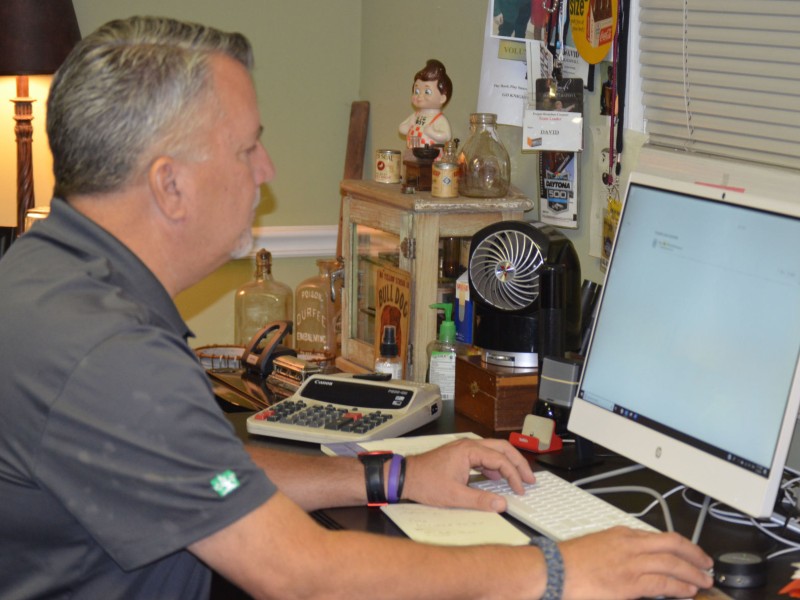
David Blackwell, chairman of the Albany-Dougherty Coalition to End Homelessness, will represent Southwest Georgia on the board, which falls under the umbrella of the Georgia Department of Community affairs.
“It administers (U.S. Department of Housing and Urban Development) dollars for homeless programs and prevention programs,” Blackwell said during a Tuesday interview.
Some metropolitan Georgia counties have their own continuum of care. The others are represented by six regions of the state body.
A continuum of care is a regional or local planning group that coordinates funding for homeless families and individuals, and each year hundreds of those bodies submit applications for funds to assist the homeless in all U.S. states, the District of Columbia, Puerto Rico and Guam, according to the National Alliance to End Homelessness.
Blackwell said he thinks his role will give him “a seat at the table” to help address homelessness in the region and Albany-Dougherty County. He has been involved with the local coalition since 2006.
“I am vocal as I can be about getting as much support for services here (so) that it trickles beyond the 285 corridor,” he said, referring to the Highway I-285 corridor that encircles Atlanta. “I try to raise awareness of the issue.”
For example, Blackwell once met with an irate business owner and police chief about a complaint concerning panhandling. About 80% of panhandlers are not homeless, he said, although both groups do suffer from high rates of mental health and substance abuse issues.
While most people going about their day rarely will encounter a homeless person, it is not an insignificant percent of the population. Invisibility doesn’t mean that they are not here.
“I think on any given day in the community, I’d say there are anywhere from 800 to 1,900,” he said. “Some of that includes families.”
Blackwell estimated there are somewhere between 400 and 600 homeless grade-school students in the Dougherty County School System. There even are several outdoor encampments in the community where the homeless sleep.
Including the shelter for domestic violence victims and their families, there are about 100 beds available at night for the homeless population, although shelters do expand by adding cots during excessively cold or hot weather conditions, he said.
Another local initiative has been A Place 4 Hope, which from 8 a.m. to noon provides a location where the homeless can do laundry, use a telephone and shower, as well as get help with acquiring identification cards and job opportunities.
The homeless “are just people,” Blackwell said, and are not the stereotype some may have.
“I would say there are a good number of people who went in there who are now gainfully employed because they went through there,” he said. “I know of a young man who went to A Place of Hope. Today he works for the city of Tallahassee Public Works Department. That’s just one.”
Author

Related Articles
48th Sunbelt Farm Expo set to kick off next week in Moultrie
“It’s like down home week, coming to see all the friends, and that’s very reassuring to see. We look forward to welcoming 40,000 or 50,000 of our closest friends to the Sunbelt Expo.”
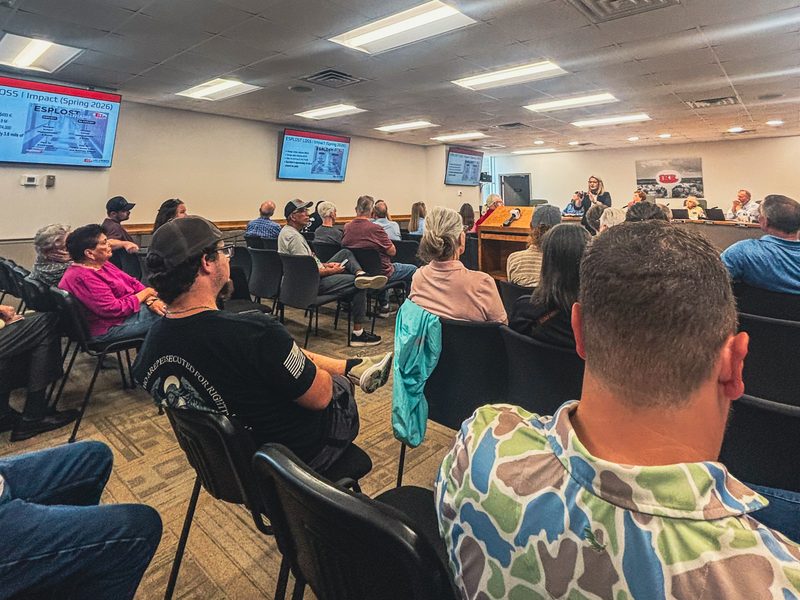
Lee County residents press school board for alternatives before Thursday’s tax vote
Lee County residents urged school board members Friday to reconsider spending, find other revenue and weigh the strain on household budgets before voting Thursday on a proposed 3-mill property tax increase.
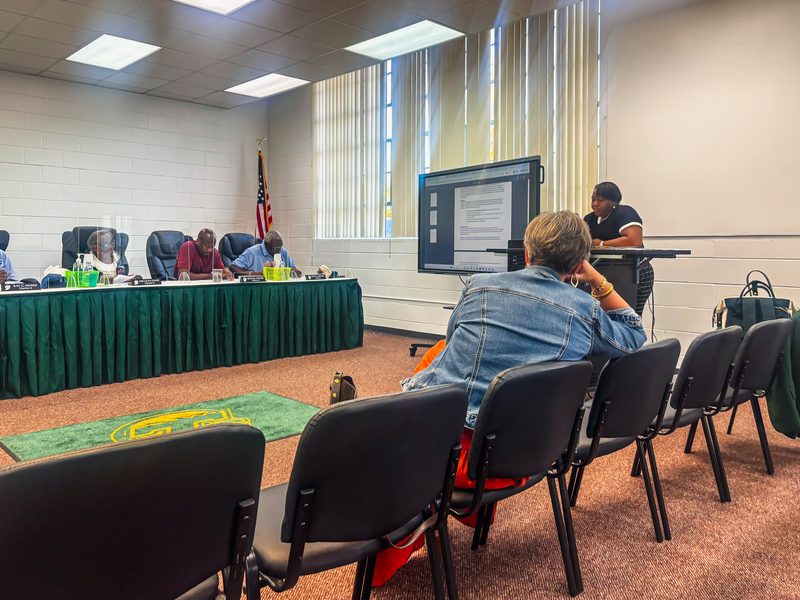
Improper payroll deductions among seven findings in Terrell school audit; corrective action planned
Terrell County school officials are working to correct payroll, purchasing and recordkeeping weaknesses identified in a fiscal 2025 audit, with Superintendent Shereca Harvey outlining the findings and additional reviews during an Oct. 6 school board work session.
