
Dougherty County Jail officials see benefits to COVID-era release policy
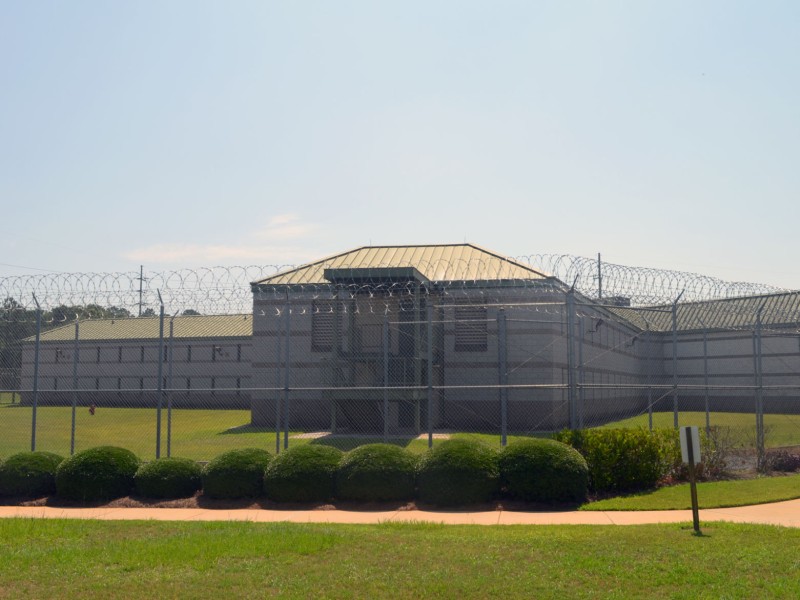
File Photo
By Alan Mauldin
[email protected]
ALBANY — For the Dougherty County Jail, as in correctional facilities across the country, a lot changed in February 2020 when COVID-19 suddenly emerged in the community.
Jails and correctional facilities are the antithesis of social distancing, with large numbers of inmates in relatively close quarters.
Unlike prisons, where the charges have been sent after being found guilty of a crime, jails hold mostly those whose charges have not yet been adjudicated.
Obviously, those deemed flight risks or charged in violent cases couldn’t be released, but the jail staff and Superior Court judges made it easier for inmates considered low-risk to be released to reduce the chances of infection.
“We did try to encourage other alternatives: for judges to give low bond amounts or just to (release) and tell them their court date,” Dougherty County Sheriff’s Office Col. Jon Ostrander, who oversees jail operations, said. “I think the county is trying to impose citations instead of taking them to jail.”
That practice is still being followed to some extent, a policy that has shown some benefits. Again, alternative penalties does not apply to violent offenders and those accused of serious crimes.
Today, the average daily jail population is about the same as before COVID struck, at about 750, but that includes inmates who are being held for Worth County, which had to close its jail, Ostrander said. The maximum capacity for the facility is 1,230. The jail charges other jurisdictions $54 per day per inmate for housing.
“Seventy-five percent of the jail population is pre-trial,” Ostrander said. “Here’s the hope for the future: If we have learned during COVID that jails are not for housing some people who are not flight risks or violent offenders, after COVID came down we could see jail numbers come down to historic levels.”
Jails are costly to staff and operate, and inmates are notoriously litigious, the colonel said. So reducing the number of inmates can have a financial benefit for the county.
“The jail is walking away the county’s highest-cost item,” he said. “It’s labor intensive. There’s great liability. It makes sense to reduce the population.
“When we get upwards to about 1,000 (inmates), it becomes difficult to maintain people in the proper classification. We call that our operational capacity, which is about 80% of our capacity.”
The jail environment also is stressful for staff, particularly for those who are working with high-level inmates, who require the most supervision, Ostrander said. Out of a staff of 195, about 30 positions are currently vacant.
“It’s a very difficult job, and it’s not for everybody,” he said. “I’ve been with the sheriff’s office for 34 years, and it’s difficult to remember a time when we were completely fully staffed.”
Author

Related Articles

Foreclosures jump 52.9% across the region as buyers regain negotiating power
In Dougherty County, the number of residential properties advertised for foreclosure has nearly doubled this year. In neighboring Lee County, developers are preparing to add hundreds of new houses and apartments, including homes aimed at buyers who have struggled to find newer housing at an attainable price.
PHOTOS: Albany State New Employees Luncheon
Click the arrow to scroll through the photos.

Albany Commission will revisit downtown park project at October retreat
“Right now it’s a sea of asphalt there. It doesn’t encourage gathering. Parks and green spaces encourage gathering.”
