
Value of Dougherty’s tax-exempt worship property more than doubles
The assessed value of property in Dougherty County’s religious-worship exemption category more than doubled over a decade, reaching $38.2 million in 2025 while the county’s net taxable value grew about 2%.
State records show $38.2 million in exempt assessed value in 2025. Property use, ownership changes and commercial leases help decide whether an exemption still applies.
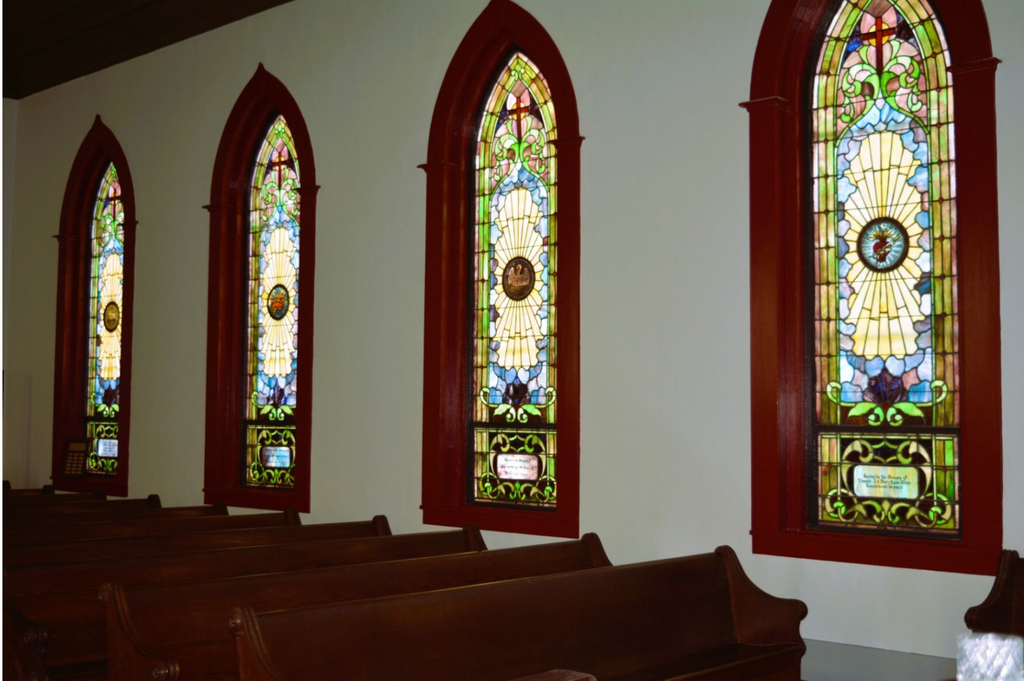
Editor’s Note: Third in a series on local property taxes — Who pays and who doesn’t.
ALBANY — The assessed value of property in Dougherty County’s religious-worship exemption category more than doubled over a decade, reaching $38.2 million in 2025 while the county’s net taxable value grew about 2%.
Georgia Department of Revenue records show the exempt category grew from $16.4 million in 2015, an increase of about 133%. The growth shows a larger pool of exempt value. It does not show that any property received an exemption improperly.
The distinction matters for taxpayers. Qualifying property is excluded from the tax base that supports schools and local government. Whether a particular property belongs there depends on the exemption it qualifies for and how it is used.
The state’s E2 category includes places of religious worship and qualifying residences owned by religious groups, not just sanctuaries. The digest listed 1,111 E2 entries in 2025, compared with 749 in 2015. Those counts are not the number of churches in the county.
At Georgia’s standard 40% assessment rate, $38.2 million in assessed value corresponds to about $95.5 million in recorded fair market value.
Applying the main 2025 county, school and applicable city or special services district tax rates puts the annual tax equivalent at roughly $1.9 million. That is a hypothetical calculation at existing values and rates, not a finding of unpaid taxes or a projection of revenue officials could collect.
State law exempts places of religious worship, qualifying property operated exclusively as a church or certain church-related organizations, and single-family residences owned by religious groups that produce no income. Religious schools and charities can qualify under separate provisions.
Church ownership alone does not settle a property’s eligibility. The law generally excludes real estate used primarily to produce rental or other income, subject to exceptions. It also bars private profit from exempt property.
A recent Dougherty County zoning decision shows how religious and commercial uses can share a larger tract.
Commissioners approved a 198-foot telecommunications tower Sept. 21 at 4614 Gillionville Road on property owned by Gillionville Forest Baptist Church. Diamond Communications was the applicant.
During the meeting, Commissioner Clinton Johnson asked whether the tower site would be separated from the church property for taxation. Deputy Planning Director Angel Gray said it would become a separate, landlocked parcel “so that the parcel itself can be taxed,” The Albany Herald reported Oct. 1. Assessment records will show whether that split has been made.
An Albany Herald analysis of the county’s public tax table, which still lists 2020 values, identified 454 E2 parcels held under 273 owner names. Of those owners, 196 held a single parcel.
The same analysis found 228 taxable parcels, with a combined recorded market value of about $10.5 million, held by 98 owners whose names indicate a religious organization. Religious ownership and taxable property are not mutually exclusive, though the older listings do not show each property’s current use or tax bill.
The county’s public table and the state digest do not produce matching counts. That gap needs an explanation before the parcel-level analysis can be treated as a complete inventory of exempt religious property.
A record with no building value does not necessarily mean unused land. Parking areas and other land supporting church activities may qualify.
An ownership change is another reason to review an exemption, but a sale alone does not prove an exemption was kept improperly. A new owner might qualify under a different exemption, or the property might already be back on the taxable roll.
Federal tax records answer a different question. The IRS’s September extract of tax-exempt organizations lists 638 with Albany or Putney mailing addresses, including 89 with a religion-related classification.
That list is not a county property-exemption inventory. Mailing addresses do not show where an organization owns land, and churches do not have to apply for IRS recognition of their federal exemption.
The Dougherty County Tax Assessors’ Office may request information about property use and ownership when determining exemption eligibility, according to the office. The open local question is how those decisions are revisited when a property is sold, leased or put to a different use.
For the Gillionville Road tower site, officials have described the intended answer: a separate taxable parcel.
Exempt property is only one part of the tax base. For most residents, the number that matters most is the value on their own assessment notice.
This year’s window to challenge that value has closed. Dougherty County property owners had 45 days from the date their 2026 assessment notice was mailed to file an appeal. That period ended Oct. 5, and more than 5,000 appeals were filed, according to a member of the Dougherty County Tax Payers Association.
An assessment appeal challenges the value placed on a property, not the tax rate. Tax bills are calculated after the appeal period ends, the county finalizes its tax digest and elected boards set millage rates. Residents who want to weigh in on rates can speak at the public hearings Georgia law requires when a governing body proposes a rate above the rollback rate.
Owners who live in their homes and have not filed for a homestead exemption have until April 1 to apply for the 2027 tax year. The next chance to appeal a value will come with the 2027 assessment notice. That notice starts a new 45-day clock, so owners should check the mailing date as soon as it arrives.
Assessment notices, exemption applications and appeals forms are available from the Dougherty County Board of Assessors, 222 Pine Ave. in Albany, and online through the county’s appeal module at dougherty.ga.us.
Questions about this story can be sent to [email protected].
Related Articles

Statewide candidates hit Albany for forum ahead of Nov. 3 election
Four candidates seeking statewide office, and two representaives for an additionaltwo candidates, participated in a Tuesday forum. Statewide early voting ahead of the Nov. 3 election starts on Oct. 13.

City officials to meet with downtown developer after default letter sent on North Washington Street project
City officials are still bullish on a project that will bring apartments, restaurant and Albany Technical College culinary arts instruction space to downtown Albany. However, the project has hit a snag with faulre to meet a Sept. 30 deadline to secure funding and a commitment from Albany Technical Colle to occupy off-campus culinary arts space in the development.

PHOTOS: Albany State Homecoming – Faculty and Staff Flag Football Tailgate
Four galleries…click the arrow to scroll through the photos.
