
Dougherty County School System places emphasis on students’ mental health
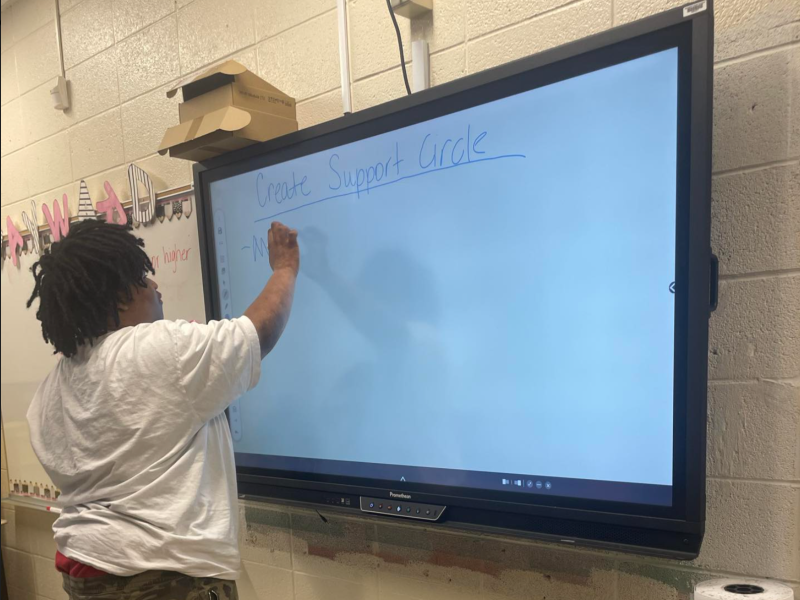
Photo Courtesy of DCSS
By Lucille Lannigan
[email protected]
ALBANY – When best friends, Mason, 10, and Keith, 11, feel upset at school, they go to the SPACE Room.
Keith said the room gave him and his friends a peaceful space to solve a fight they had. Mason said when one of his classmates makes him mad, he asks to go to the room to sit and calm down.
“It feels soothing because nobody is yelling, fighting, screaming or arguing,” he said. “It’s just quiet.”
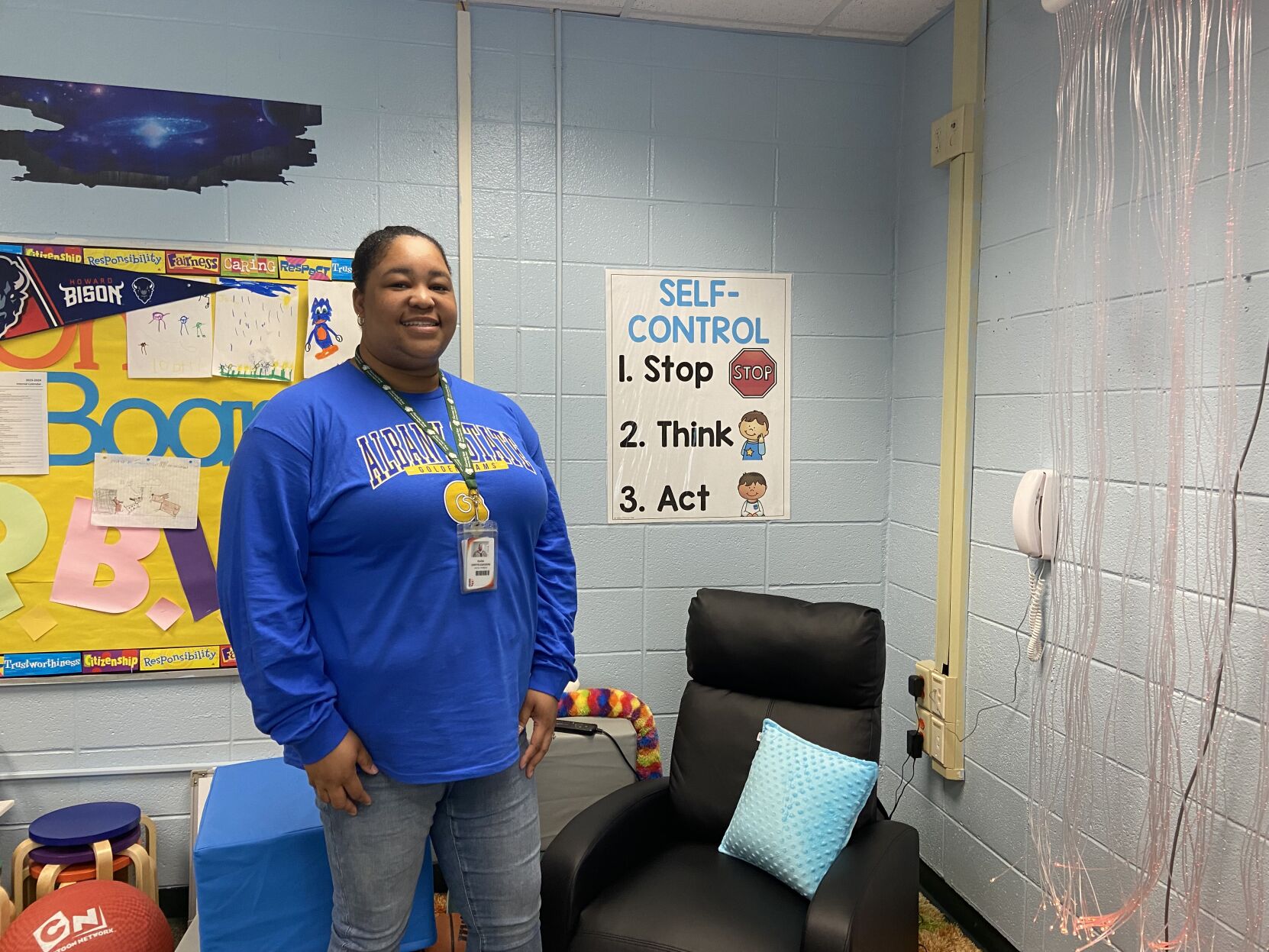
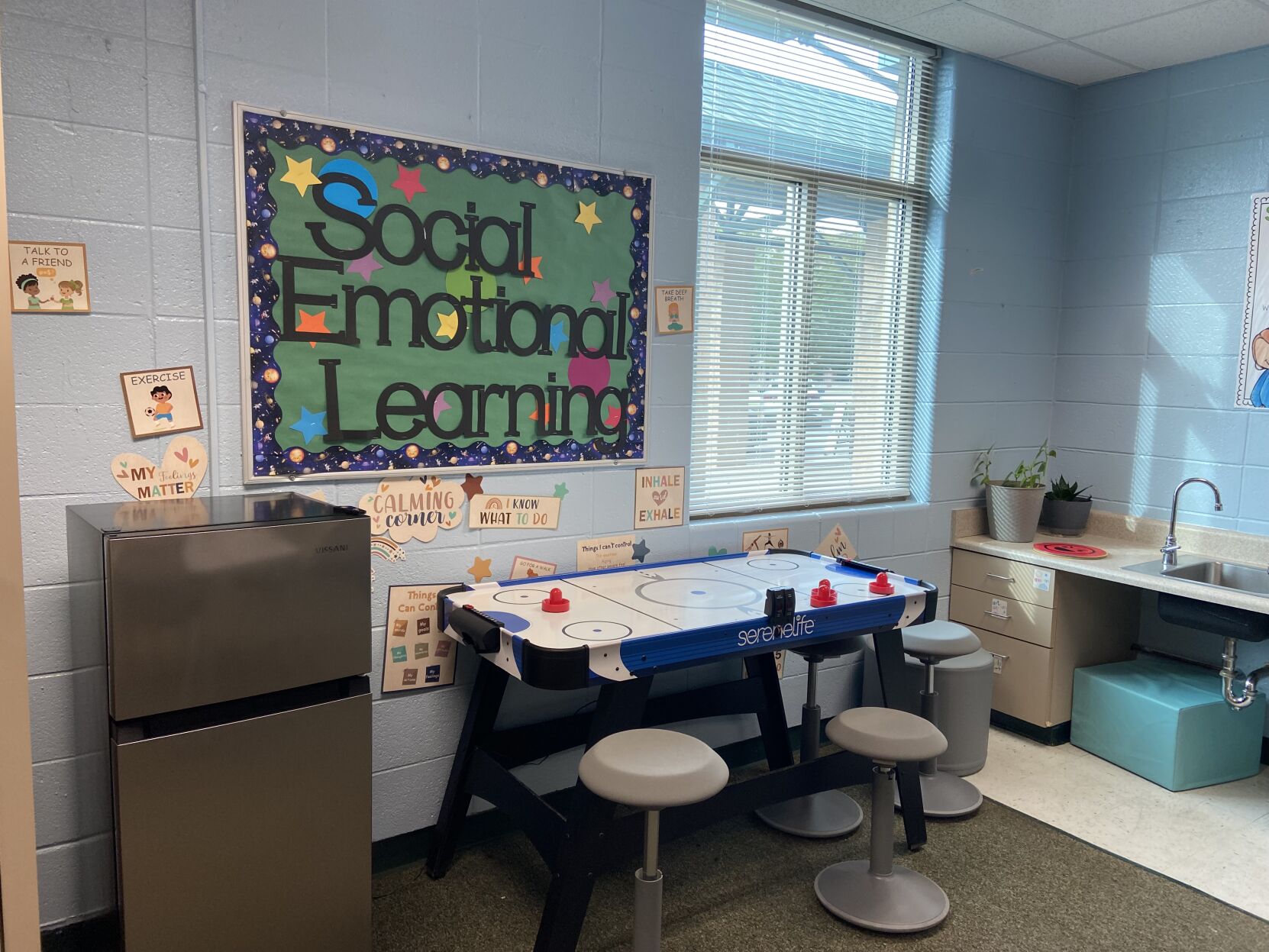
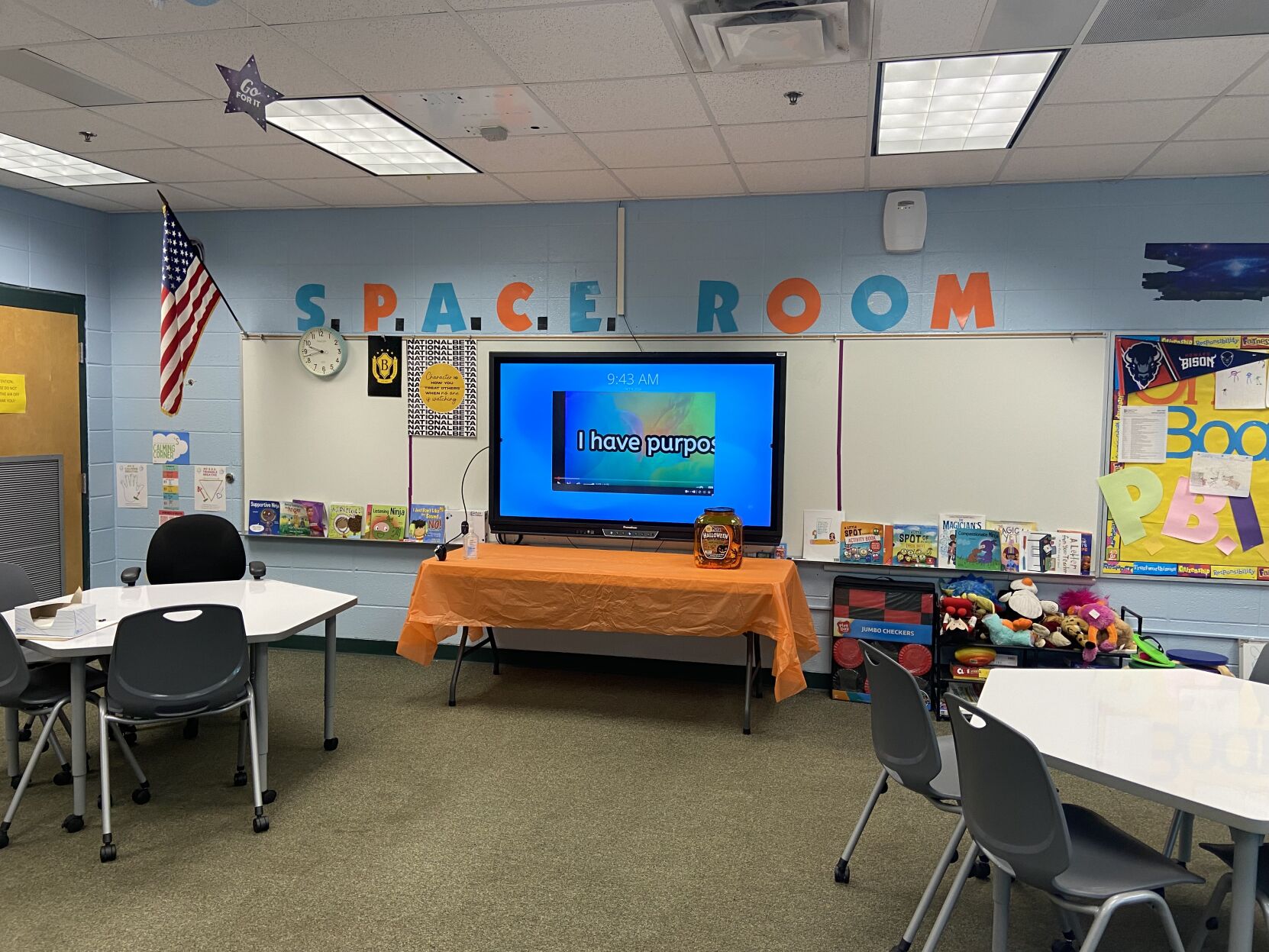
SPACE is an acronym for Sensory Place and Calm Environment. It was part of an Innovation Grant that Sherwood Acres Elementary received. It’s a sensory environment in which students and teachers can destress. It’s filled with massage chairs, aromatherapy kits, music touch boxes, games and even punching bags. It’s an example of just one resource DCSS schools are offering its students to promote better social and emotional wellness – one part of the school district’s strategic plan.
Mental health is something district leaders are prioritizing within its schools. Since the COVID-19 pandemic, from which the Albany community took a major hit, student mental health has declined. Canceled school, missed graduations, social isolation and other pandemic experiences took a toll on students.
“I think our students came back from the pandemic having feelings of loneliness, isolation and social anxiety,” Tiffany Kennedy, the DCSS executive director of student support and empowerment, said. “We spent a year without being in the same room with people.”
The CDC reported more than 37% of high school students said they experienced poor mental health during the pandemic, and 44% said they persistently felt sad or hopeless in 2022.
DCSS Superintendent Kenneth Dyer said the school system noticed a rise in mental health challenges within teens even prior to the pandemic. After the pandemic, the school wanted to understand the mental health impacts within its district, so the district conducted a survey, with parental permission, on student mental health. Dyer said the study showed about 24% of the middle and high school students showed signs of moderate to severe depression.
In 2023, DCSS received a school-based mental health grant of $15 million to go toward mental health resources for students and staff, over five years. The system also received a project prevention grant of $4 million to support programs aimed at preventing violence and supporting student mental health.
Kennedy said there are currently 16 school-level and seven district-level social workers within the system. A portion of the school-based mental health grant funded the hiring of the 16 additional social workers, which enhanced the district’s ability to support student mental health.
At the school-level, social workers are promoting student emotional well-being and host small group and individual counseling. They also teach a social-emotional wellness curriculum within the schools. This course is offered at elementary, middle and high schools during the regular school year and summer.
The curriculum teaches students about growth mindsets, goal-setting and self-reflection. Kennedy said it then moves into emotional management and vocabulary so they can better identify or communicate their emotions and learn how to manage them.
“Because all emotions are allowed, but not all behaviors are allowed,” she said. “So it’s teaching, like how do I help myself without having poor behavior?”
Kennedy said social workers and teachers were unsure how students would respond to the curriculum and were apprehensive initially. However, she said she’s heard from teachers that the students love the coursework.
“They are so engaged, they are so empowered, and they are connected to each other,” she said.
Students also participate in activities like restorative circles where they get to share how they’re feeling. Restorative circles are used in each classroom at Sherwood Acres as well as in its SPACE Room. William Wright, the school’s counselor, said the circles allow students to come forward with a conflict, request the students they want to participate and sit down and talk it out together.
They even offer students circles with their teachers or families if they say they’re having problems at home.
“It allows (students) to have that voice and feel like they’re being heard,” Wright said. “Kids have to learn how to communicate what they’re feeling. The earlier we start, I think that we’ll be able to help save more lives.”
The SPACE Room is also used as a place for students to process their emotions solo. On Wednesday morning, a student sat hunched over, his red hoodie pulled over his head, by the entrance of the room as Wright entered. When Wright appeared, the student tilted his head up and glanced at the counselor, a clear frown on his face, and looked back down again.
The staff member who had escorted him told Wright the student was feeling upset that morning and didn’t want to speak with anyone. So the teacher brought him to spend some time in the room. Wright let the student sit quietly for a bit and then talked to him about how he was feeling.
Wright said the room has led to a decrease in the need for disciplinary action.
“The students are learning how to … say, ‘Hey, I’m not doing well’ or ‘Hey, I’m mad,’ before it gets to the point where it escalates into a conflict,” he said.
Wright said they first saw the need for something like the SPACE Room as students returned from the COVID pandemic.
“There were a lot of kids who had been home, and they did not learn how to regulate their emotions,” he said. “We had a lot of kids acting out.”
Kiara Griffin-Zanders, one of the school social workers funded by the school-based mental health grant, said there were also many students dealing with the loss of loved ones during the pandemic.
Mason and Keith transferred to online school after completing kindergarten at Sherwood Acres. Both agreed it was scary to come back to school. They said they were nervous about making friends. When the two students were having trouble with a friend, they used a restorative circle to sort out the problem.
“My friend in third grade, he didn’t follow very many rules,” Mason said. “But when he came to this place, he started changing.”
Griffin-Zanders said she’s seen a student who was prone to fighting sit down in a restorative circle and say she didn’t want to be like that anymore. Griffin-Zanders said she believes the circles help kids want to change for the better.
While the DCSS executive director of student support and empowerment said she’s seen a lot of progress, she said the district is always looking to see how it can evolve to be proactive and preventative. This year, it’s implementing telehealth, so students will be able to access mental health providers from home. The schools also are creating more rooms like the SPACE rooms
For students who social workers and counselors feel are high risk or have expressed suicidal ideations, the district implements a safety plan through which they talk to the student about their feelings and determine the severity of the situation. They then contact parents or guardians, build a safety plan and get mental health agencies involved when necessary. School counselors then monitor academics, attendance and provide support.
Dyer said one challenge is breaking the stigma surrounding mental health and getting families to accept the services the schools provide.
“There’s a tagline that says ‘It’s OK to not be OK,” he said. “If you’re playing a sport and you fall and break your arm, you go to the doctor. … It’s the same thing with your mind and your mental health.”
Author

Related Articles

Lee County approves hospital bond payments in 95-second vote
The contract requires payments even if the hospital closes; officials say county can afford estimated $2 million annually without raising tax rate.
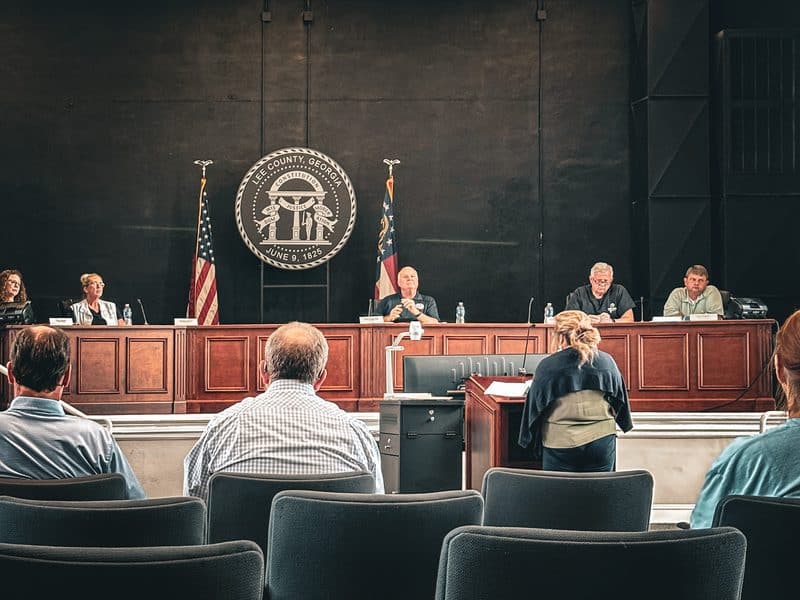
Lee County would repay $30 million for a hospital it won’t own
The authority approved resolutions moving the process forward. Final construction costs, interest rates and repayment terms remain unsettled. The larger portion of the borrowing depends on a federal guarantee that has not yet been approved, and the entire plan must still be validated in court.
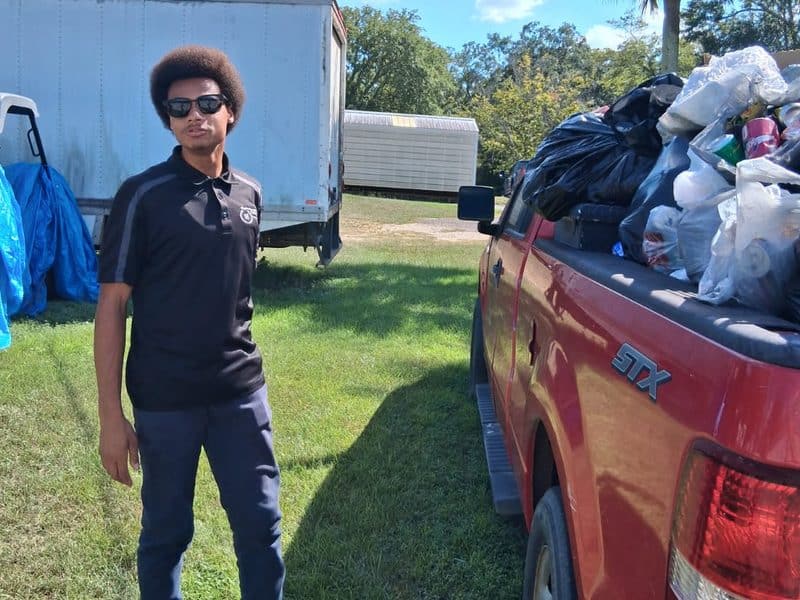
Joshua Harrison pounds the pavement to provide shoes for Dougherty County children
“Being able to work with the H.E.A.R.T. organization and they work with me as one of their protege sons, it really made my life different. I want to let children feel better about themselves.
