
DUPLICATE: Looking Back at the holidays in 1942

Mary Braswell
Each week Albany Herald researcher Mary Braswell looks for interesting events, places and people from the past. You can contact her at (229) 888-9371 or [email protected].
By the time the holidays, Thanksgiving and Christmas, rolled around in 1942, Americans were quite limited as to just what could be purchased and in what amounts. Mandatory rationing began in January of that year and items were added to the growing list throughout the summer and fall. Here is a look at some of what was on the list as well as local newspaper ads.
— Sugar was the first food staple to be rationed. The war cut off some supplies and others were diverted to military use. Each registered household member received a ration book and initially, each stamp was good for one pound of sugar and could be used over a specified two-week period. Later on in the war, each stamp became good for two pounds of sugar over a four-week period.
— A person entering the hospital or remaining in the hospital for more than 10 days was required to bring his or her ration book along.
—Although American farmers produced an abundance of sugar beets, much of the sugar went from the processing plants to the munitions industry where it was converted into alcohol for the making of smokeless powder. Sugar bowls disappeared from restaurants.
— Near the end of the war,the sugar ration was cut to 15 pounds per year for household use and 15 pounds per year for canning, a total of 8 ounces per week. Sugar was the last product to remain rationed after the war. The program was finally discontinued in June 1947
— In April 1942, the government limited coffee roasters to 75 percent of the previous year’s supply. In September the quota was cut to 65 percent.
— Government officials urged the public to limit their maximum meat consumption to 2.5 pounds per week to ensure that military men and women received one pound of meat per week. As with other items, mandatory rationing was eventually required.
— Kraft Macaroni and Cheese became a very popular substitution for meat and required only one rationing coupon for two boxes. The company sold nearly 80 million boxes in 1942.
— Homemakers were asked to pledge their support for rationing: “I pay no more than top legal prices. I accept no rationed goods without giving up ration stamps.”
— By the time Christmas shoppers came out in force, half of U.S automobiles were issued an “A” sticker which allowed four gallons of fuel per week. That sticker was issued to owners whose use of their cars was nonessential and owners were expected to not “pleasure ride.”
— The national maximum Victory Speed was 35 miph, and driving clubs or carpools were encouraged. The main idea was to conserve rubber, not gasoline.
— Most of the world’s supply of natural rubber came from plantations in Southeast Asia, which were quickly occupied by the Japanese in the first months of 1942. New tires became almost impossible to buy, and people were known to line the insides of their tires with newspaper to make them last longer.
— Major purchases such as automobiles, bicycles, and kitchen appliances required special certificates and proof of need. Because the military needed so many typewriters for communication, they too were rationed.
ALBANY ADS
Don’t was energy, tires or precious war time paying bills by cash! Open a checking account at this bank today. — The Bank of Albany
Your worn tires may give you many more miles of useful service if a vulcanizing job is properly applied. We know how! — Trutred Tire Company
Many items will be irreplaceable when present quantities are sold. — Penney’s Toyland
Glasses are an ally. They help defective vision speed production.—Dr. T.O. Steele, Mayfair Jewelry Company
Make at least one-third fewer calls and please be brief in all your telephone conversations. The prompt handling of war calls is of vital importance to all of us. —Southern Bell Telephone and Telegraph Company
Wartime care will save your car. —Studebaker Motor Sales and Service
Army nurse’s kit, $1.98… Red Cross kit to nurse the dollies complete with uniform, first-aid kit, stethoscope and more.—Firestone Toyland
Inexpensive and attractive home-made clothes, modeled by small tots, junior misses and senior misses, were seen at the Albany Woman’s Club fashion show. Held at the Municipal Auditorium, the show also featured skits glorifying Georgia peanuts. The best skit was awarded a war bond. The Victory Fashion Show’s admission was 35 cents for adults and 10 cents for children.
Do your part to help solve the nation’s fuel problem. Keep warm with hardwood blocks…big truckload delivered, $5. — City Wood Co.
Uncle Sam needs scrap and the need is vital. We pay the highest cash prices for scrap metal, rubber and rags. —Durham Iron Co., authorized purchaser for scrap for government war production
Buy War Bonds. Sold by this bank without cost to the purchaser or the government as a patriotic service. — The City National Bank, Albany
Chenille bedspreads with a ceiling price of $2.29 were a “real buy” at $1.69. Also available were war bonds and stamps at Belk’s Department Store.
Southwest Georgians turned in tires for the war effort. Rationing restricted tire ownership to five tires at any given time. The “over five” tire collection netted 3,200 tires which were stored at the A.W. Muse Warehouse on Front Street.
Every boy wants to play soldier! Make him happy with a soldier’s suit from Churchwell’s. Suit includes eagle-design buttons, service stripe, officer’s cap and a gun and holster. Sizes 4 to 14 at a cost of $3.50.
Mrs. Uncle Sam says get health into wartime menus. Seafood has all the necessary vitamins. — Central Seafood Market, Westbrook Alley
You help conserve tin. You help conserve the manpower ordinarily employed in processing food. You help your health when you get your supply of vitamin-packed fresh fruits and vegetables from Mother Nature’s own garden. —Big Star Super Markets
In spite of the war, in spite of rationing of sugar and coffee, in spite of the shortage of meat, in spite of the scarcity of gasoline and tires, in spite of higher taxes and war costs, the people of America have more to be thankful for than any other people in the world. Conserve food, conserve fuel with which that food is cooked. It’s smart now to be frugal. Even in the land of plenty, there is no room for waste. —Water, Gas & Light Department, City of Albany
Related Articles
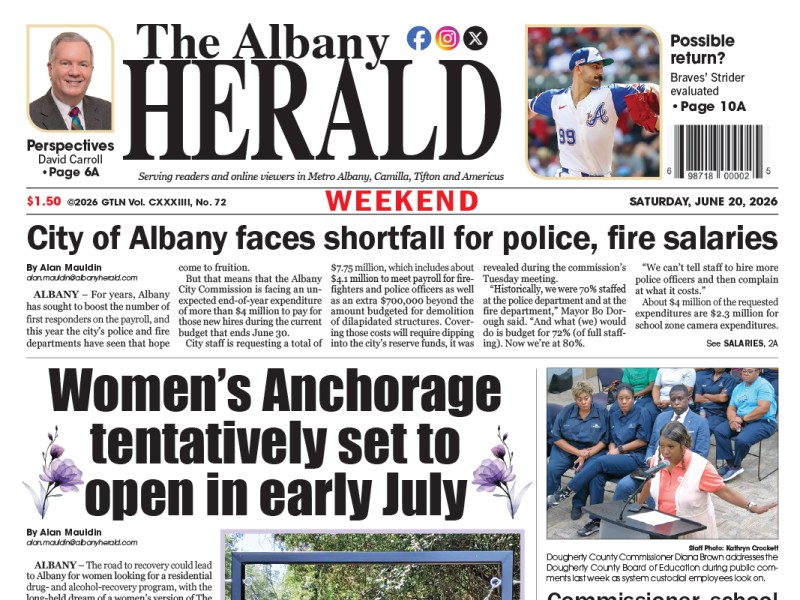
Albany Herald – June 20, 2026
City Albany faces shortfall for police… Women’s Anchorage tentatively set to… Commissioner, school leaders clash over…

Classifieds – June 20, 2026
ALBANY HERALD CLASSIFIEDS JUNE 20, 2026
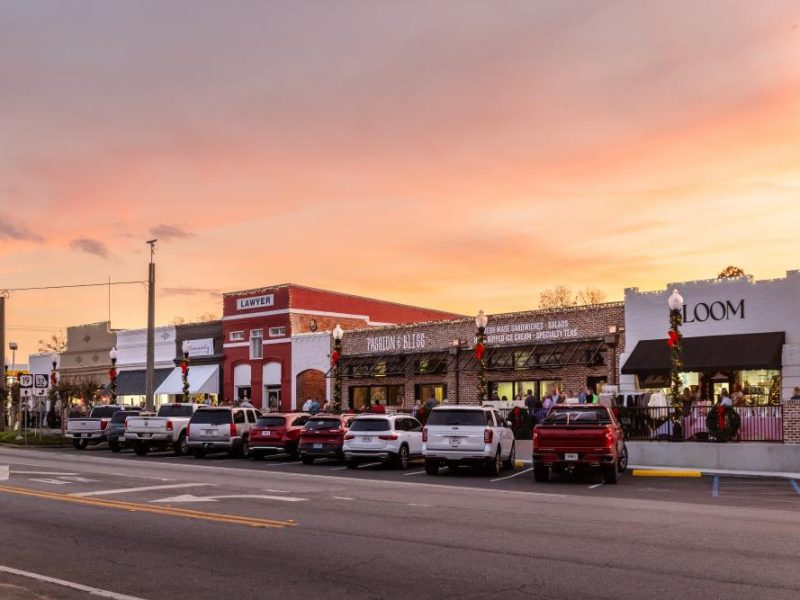
Public safety drives Leesburg’s $4.2 million Fiscal Year ’27 budget
The adopted spending plan reflects modest growth in city revenues and continued emphasis on maintaining core municipal services, particularly public safety and sanitation, which together account for a significant share of general fund expenditures.
