
E-SPLOST has provided millions in funding for Dougherty County schools
File Photo: Alan Mauldin
By Alan Mauldin
[email protected]
ALBANY — As the Nov. 3 presidential election was garnering all the attention, voters were quietly making a decision that will have a huge impact locally.
Amid the big national prize, constitutional amendments, state Senate and House contests, and uncontested local races was a ballot measure on extending a penny sales tax to fund educational initiatives.
Voters in Dougherty County overwhelmingly backed the education special-purpose local-option sales tax — or E-SPLOST — by a 76.1 percent to 23.9 percent margin. The approval of the referendum extends the 1 percent sales tax for five more years, or until proceeds reach $90 million, whichever comes first, with the extension beginning in 2021.
The vote was the fifth extension of the original sales tax, passed more than 22 years ago, and all have generally been approved by more than 65 percent of the vote.
A similar measure in Lee County also passed handily, with 10,409 voters, or 63.97 percent approving of extending the sales tax there.
While residents did vote to retain a penny tax on their purchases at businesses and restaurants, the sales tax provides relief for property owners who otherwise would have to fund school renovation projects as part of the Dougherty County School System’s general fund outlays.
And with Dougherty County being a major shopping hub in the region, residents from other counties also pay that tax when they shop at Albany businesses.
The tax money can be used to fund capital projects including buildings, renovation sand investments in technology and improving campus security.
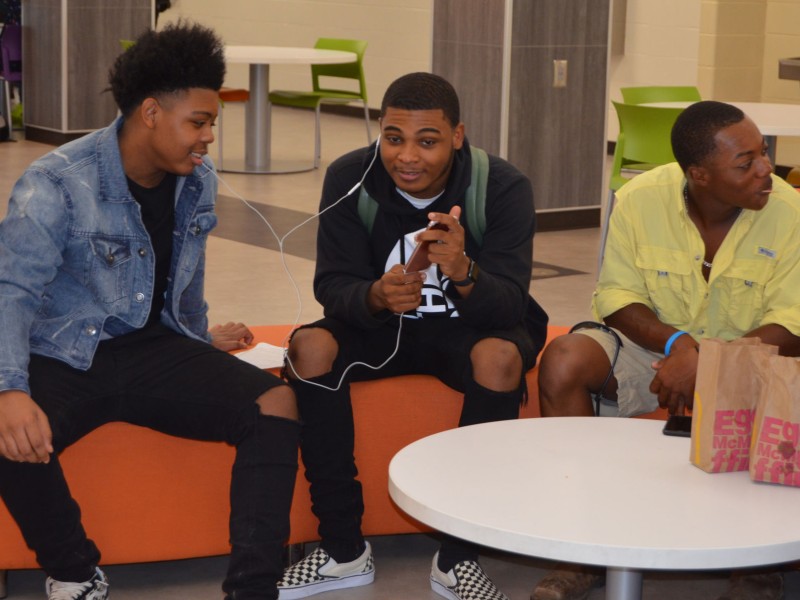
In Dougherty County, the list of accomplishments for the current five-year tax includes a number of school improvement projects. Those include major renovations at Dougherty High School and Monroe Comprehensive High School and a renovation of a campus for the Commodore Conyers College and Career Academy, better known as 4C Academy, Dougherty County Schools Superintendent Ken Dyer said.
The school system also renovated the former Magnolia Elementary School campus where the pre-kindergarten program is now situated in the Magnolia Early Childhood Education Center.
“We also invested in terms of iPads, Chromebooks and laptops for our students,” Dyer said.
The investments in technology paid off, and were expanded, when the COVID-19 pandemic hit and students were forced to learn online while doing their work in a virtual format.
The system also hardened security at campuses with renovations to limit access to school buildings and added cameras to monitor activity inside and outside schools.
“You can see SPLOST funds making a tremendous impact on our school system for providing a safe environment,” Dyer said.
The school system runs a fleet of 130 buses, and the sales tax also enhances safety, he said, by purchasing new buses to replace aging ones.
“We replace eight to 10 buses a year to make sure that we continue to push forward with minimizing deferred maintenance, and we provide the most modern and efficient equipment we can while we serve our students,” Dyer said. “It’s vitally important we provide a reliable fleet, and E-SPLOST certainly helps us do that.”
Projects slated for funding in the five-year extension include renovations at Westover High School; Lake Park, Turner, Northside, Morningside and International Studies elementary schools, and Albany Middle School.
The system’s more than 13,000 students also will gain enhanced learning opportunities through improved facilities to prepare for future jobs and college, Dyer said.
The roughly $18 million available each year to fund capital projects is significant for the system, which has an annual $138 million general fund budget funded by local and state money. The system receives an additional $15 million a year from federal sources.
When the pandemic hit and the state cut $8.5 million in funding for the current year, at the same time the crisis called for a significant investment to purchase additional computer equipment and provide mobile internet for students to have access, Dyer said. That’s because the school system had amassed its largest ever pot of reserve funds at $21.1 million.
“We (weathered) the $8.5 million in state funding without furloughing teachers, without laying people off,” he said. “We’ve rolled back the (property tax) millage rate three out of the last five years. We pride ourselves on being fiscally responsible.
“We can do that because we don’t have to depend on our general fund for these investments, and that’s tremendous. We couldn’t be more pleased with the voters of Dougherty County overwhelmingly supporting our E-SPLOST VI. That shows a level of confidence in our school system.”
Local taxpayers are helped further because some 40 percent of sales taxes paid come from residents in other counties in the region shopping with Dougherty County retailers, Dyer said. The construction and renovation projects also are a boost to local contractors in Dougherty County and surrounding counties that perform most of the work on the projects.
“The impact on our community and surrounding counties in southwest Georgia is tremendous,” he said. “In a time where we had the pandemic, in a time of economic downturn, when you support construction dollars, that certainly helps the local economy.”
Author

Related Articles

Election-night error leads to investigation, change in state House 154 race vote totals
The results of the Georgia House District 154 race were shifted from blue to red after results from a data card in Seminole County were downloaded. With those additional votes, incumbent Repucpublican Gerald Green has a 262-vote lead over Democrat Harry James of Albany in unofficial results.

Did Georgia voters throw out some babies with the bath water?
Somebody sent me an email Wednesday morning that said, “I’m sure you’re happy now that Democrats swept all the top positions in Georgia and took control of the U.S. House and Senate. You just wait; our country is headed to hell.”
Florentina Dobrea latest Phoebe DAISY Award recipient
Phoebe Putney Memorial Hospital has recognized RN Florentina Dobrea as a DAISY Award recipient, a national recognition honoring nurses who demonstrate extraordinary clinical skill, compassionate care, and an unwavering commitment to their patients and colleagues.
