
FEMA and Michael: One year, $115.2 million later
From staff reports
ATLANTA – It’s been one year since Hurricane Michael plowed across the Florida/Georgia state line as a Category 3 hurricane, toppling trees and power lines all the way through the Carolinas.
In that year, Georgia’s recovery has moved forward with more than $65.2 million distributed through federal programs to aid individuals and businesses. An additional $50 million has been provided to reimburse local governments for response actions in advance of Hurricane Michael, for debris removal and to repair or replace critical infrastructure.
As of Oct. 4, 2019:
♦ More than $12.5 million has been approved through FEMA’s Individuals and Households Program, providing grants to 5,000 survivors in Georgia for home repairs and repair or replacing essential personal property.
♦ More than $50 million has been approved through FEMA’s Public Assistance Program to reimburse local and state governments and certain private nonprofit organizations in Georgia.
♦ The U.S. Small Business Administration has approved $52.7 million in low interest disaster loans.
♦ The U.S. Army Corps of Engineers removed more than 4.2 million cubic yards of debris from local communities in south Georgia.
♦ Congress passed a $19.1 billion disaster supplemental relief package, the Additional Supplemental Appropriations for Disaster Relief Act, 2019, for supplemental funding for Georgia’s agriculture industry for Hurricane Michael losses. The bill provided:
♦ $4.7 billion for the U.S. Department of Agriculture disaster-related activities, including $3 billion for crop, tree, bush, vine and livestock losses from hurricanes, wildfires and other declared disasters that occurred in 2018 and 2019;
♦ $2.4 billion for the U.S. Department of Housing and Urban Development community development block grant programs;
♦ $1.7 billion for the Department of Transportation programs and activities, including $1.6 billion for the cost of federal highway and bridge repairs;
♦ $1.5 billion to the Department of Defense to repair military facilities damaged by hurricanes Florence and Michael;
♦ $3.3 billion to the U.S. Army Corps of Engineers for civil construction projects.
FEMA will continue to work with state and local officials, and other stakeholders until the recovery phase in Georgia is complete.
But even as public assistance claims from Hurricane Michael are processed and hazard mitigation projects explored, one of the agency’s primary goals is to build a culture of preparedness — to get everyone in Georgia ready for the next disaster.
Preparedness can take many forms, but on an individual level, it means planning, both personally and financially, to ensure that families know what to do when disaster strikes and having the resources needed to help repair, rebuild or replace those things that may be damaged.
Insurance is always the best financial protection. Because most homeowners insurance does not cover flooding, and since floods are by far the most common and expensive type of disaster that people and communities experience, FEMA urges all Georgians to consider purchasing flood insurance from the National Flood Insurance Program.
For more information about Georgia’s recovery from Hurricane Michael, visit www.fema.gov/disaster/4400.
Related Articles
Albany Herald – June 20, 2026
City Albany faces shortfall for police… Women’s Anchorage tentatively set to… Commissioner, school leaders clash over…

Classifieds – June 20, 2026
ALBANY HERALD CLASSIFIEDS JUNE 20, 2026
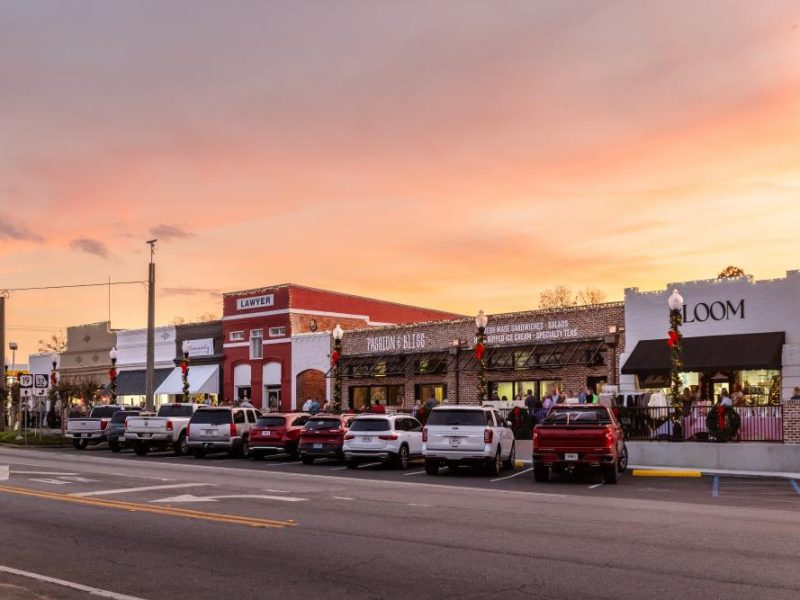
Public safety drives Leesburg’s $4.2 million Fiscal Year ’27 budget
The adopted spending plan reflects modest growth in city revenues and continued emphasis on maintaining core municipal services, particularly public safety and sanitation, which together account for a significant share of general fund expenditures.
