
Fiction and facts about the powers of state Game Wardens
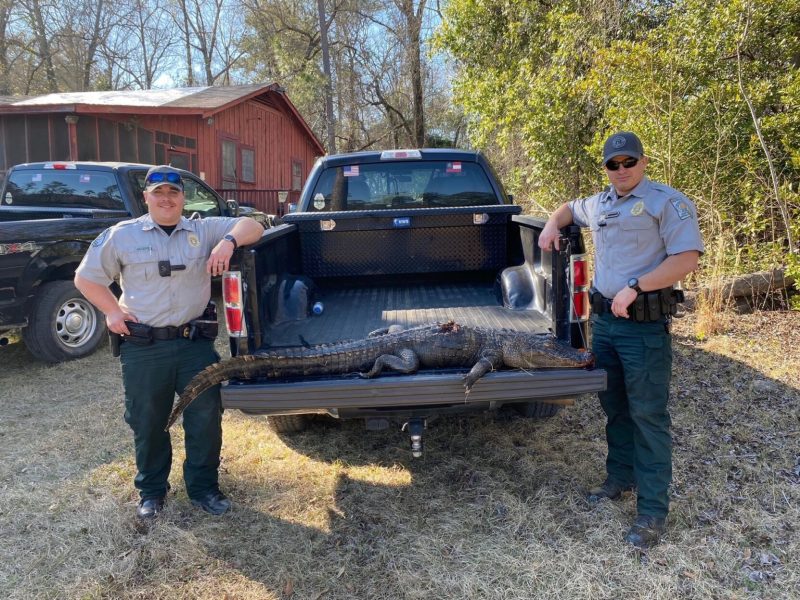
Each Game Warden in the state of Georgia is responsible for serving an average of 54,550 Georgia citizens.
Special Photo: Georgia DNRSpecial Photo: Georgia DNRBy Tom Seegmueller
[email protected]
ALBANY ‒ I recently spoke with Sgt. Quinn Fogle, a Game Warden with the Georgia Department of Natural Resources Law Enforcement Division, regarding the powers and duties Game Wardens have in meeting the division’s mission of conserving natural resources and protecting the people they serve.
The Georgia DNR is the oldest law enforcement organization in Georgia. In 1911, the state General Assembly passed legislation creating a unit of Game Wardens to enforce the early hunting and fishing regulations being drafted at that time to protect the state’s dwindling natural resources. The early wardens carried their own firearms, traveling on foot and by horseback as they patrolled the state’s woodlands and waterways. These early enforcement agents pinned on the “quail badge” that identified them in their official capacity 26 years before officers of the Georgia Bureau of Investigation or Georgia State Patrol would be issued their badges.
After more than 113 years of successful operation, it is common for some myths to evolve. One of the most persistent is that Game Wardens in Georgia have special legal powers and do not need a warrant to go onto private property and that these agents work alone with no support. Another is that they can enforce any laws they choose. My conversation with Fogle helped clarify the myths from reality.
Today, the people, equipment, and methods and technology in the agency have changed drastically since they were founded. However, their core mission of enforcing hunting, fishing, boating and environmental laws have not. Nor has their goal of providing safety on all DNR-controlled properties. Today the Georgia DNR Law Enforcement Division is one of the top conservation law enforcement agencies in the country. Georgia Game Wardens are POST-certified peace officers with statewide authority and full arrest powers. This explains how and why they are able to enforce traffic laws and any other violation that they observe or are dispatched to investigate.
Fogle acknowledged that Game Wardens are aware of the “mythical powers” attributed to them by the public, and although there might be a perceived benefit to this perception, he also acknowledged, “We aren’t doing anything that is unique or different from regular law enforcement officers.”
When it comes to Game Wardens going onto private property without a warrant, he referred me to the “27 Codes.” Georgia Code Title 27 is the section of the Official Code of Georgia Annotated, which is a collection of all laws in the state of Georgia. Title 27 references all laws related to “game and fish.”
Fogle explained: A Game Warden’s authority to go onto private property without a warrant is “covered under the open-fields doctrine,” which states that a warrantless search of an area outside a property owner’s curtilage does not violate the Fourth Amendment to the United States Constitution. He went on to explain, “Curtilage is the immediate surrounding area of someone’s home,” or what might be considered to be the area outside the white picket fence surrounding the house.
Fogle provided me with three court cases backing up the Open-field Doctrine. The first was established by the United States Supreme Court decision in Hester v. United States in 1924. In the opinion written by Justice Oliver Wendell Holmes, the court said, “The special protection accorded by the Fourth Amendment to the people in their persons, houses, papers and effects, does not extend to the open fields.”
Over the years during the past century, the doctrine has withstood several other challenges before the court. Also, Fourth Amendment protection does not extend to commercial facilities processing wild game and seafood. Code 27-1-20, which allows wardens to “enter and inspect any commercial cold storage warehouse, icehouse, locker plant, butcher shop, or other plant or building for the purpose of determining whether wildlife is being kept or stored therein in violation of the wildlife laws or regulations …”
Another pillar for DNR powers in the “27 Codes” is found in 27-1-3 in which the legislative declaration recognizes the value that hunting and fishing tradition has in the cultural heritage of Georgia and the role they play in the state’s economy. The code goes on to clarify that, “Wildlife is held in trust by the state for the benefit of its citizens and shall not be reduced to private ownership as specifically provided in this title. All wildlife of the state of Georgia is declared within the custody of the department for the purposes of management and regulation.”
Another area of contention with some hunters is the feeling that they are being targeted or harassed by wardens.
“A lot of times, we get landowners or leasers that want to know why we were on their property,” Fogle said. “We are not there to disrupt anybody’s hunt. Occasionally, that does happen. When this happens, I encourage them to think about how long they have been hunting and how many times a Game Warden has checked them. Normally, that number will be never or extremely rare.”
Statistics provided by DNR will back that up. Each Game Warden in the state is responsible for serving an average of 54,550 Georgia citizens. The data also show that of the 815,738 licensed hunters in the state, Game Wardens checked 27,436 licenses last year, issued approximately 6,770 citations or warnings, and responded to 30 incidents during which hunters were injured. Using these numbers, Game Wardens came in contact with just 3% of the hunters in the field.
In the past, Game Wardens often worked with little or no back-up when responding to calls at any hour of the day, knowing that most if not all suspects were armed. Fogle said that is no longer the case.
“We do have a new radio program that is being rolled out statewide,” he said. “It allows us to talk directly to a lot of the county law enforcement agencies. We are dispatched through the Georgia State Patrol Post in Americus and some out of Tifton. If they call the tip hotline, it will be sent to the dispatchers that can reach us 24 hours a day.”
He went on to describe how this system also allows for direct communications with the GBI and State Patrol.
Author

Related Articles

Lee Commission readdresses Hospital Authority appointments
Lee County commissioners are restarting the appointment process for three members of the county’s Hospital Authority, a move officials characterized Tuesday as a housekeeping measure intended to ensure the appointments comply with Georgia law.

Police seek identity of man killed in early morning shooting Wednesday
Albany Police Department officers responded at 2:45 a.m. Wednesday to an incident at 216 E. Oghetlorpe in which two men were shot, one fatally. The case remains under investigation.
City Commission discusses fate of Albany Civic Center
Are the Albany Civic Center’s days numbered?
