
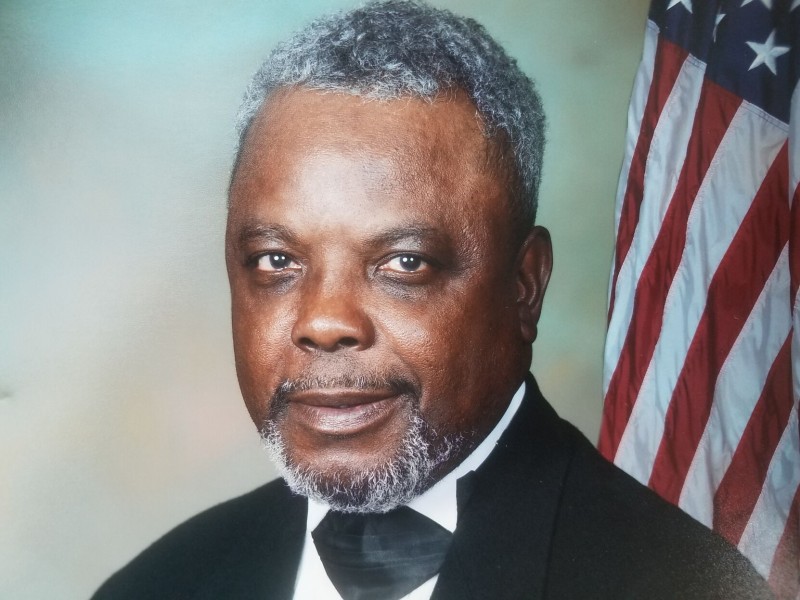
Former Albany City Commissioner Bobby Coleman looks to return after four-year absence
Special Photo
By Alan Mauldin
[email protected]
ALBANY — Bobby Coleman says he thinks the city of Albany needs an experienced commissioner who is ready to hit the ground running in Ward II, and he believes he is the person who fits the bill.
Coleman, one of three candidates seeking the Albany City Commission seat being vacated by incumbent Matt Fuller, served from 2014 through 2017 before he was defeated by Fuller.
“I decided to run again because I see the need,” he said. “I got tired of people walking up to me telling what things were going on in my ward.
“I’ve always been ready to be a servant to the people, and I know the process.”
The candidate, an Albany native who works in non-emergency medical transportation, said he hears complaints about garbage pickup service, streetsweeping and other services. But the biggest complaint is utility rates.
“I see all the problems: public safety, economic development and youth recreation, and everybody cares about Albany utility rates,” he said.
Crime and policing are issues that Coleman said he would like to help address.
The current commission has increased pay for Albany Police Department officers for the last four budget years, but a consultant who assessed the department reported to the commission that the agency is significantly understaffed.
In addition to pay, Coleman said he would initiate a practice that when officers leave the department, the information gleaned from exit interviews would be studied by the commission. That would allow city officials to learn what issues are causing officers to seek employment either elsewhere in law enforcement or leave the field for other jobs.
Doing research and speaking with officers also could give commissioners insight into how to attract and keep police working in Albany.
“The reason crime in Albany is so high is we don’t have enough police presence,” Coleman said. “Speaking of high crime, we need to get our police department to fully staffed. Raises aren’t always the answer.”
While often considered separate issues, Coleman said that crime ultimately is tied to the economic strength of the community and youth recreation programs that keep them occupied and away from criminal activity.
“Crime has a direct relationship to unemployment,” he said. “If you keep people busy working, it would cut down on the time they have to do crime. The same goes for youth recreation.
“Economic development is an answer to crime. It helps reduce crime.”
One way the candidate said he would like to boost the economy is through a program to nurture and sustain small businesses. Another is to get the message out that Albany and Dougherty County are great places to do business.
“We have the weather, we have the water,” Coleman said. “We have a jewel here. We’ve got to start selling that.”
On the topic of utility prices, Coleman said it is important that the city of Albany lobby to have a representative from the city on the board of the Municipal Electric Authority of Georgia (MEAG), who could be a voice for residents when rates are discussed. MEAG generates and distributes electricity as part of a partnership among Albany and 48 other cities in the state.
“When the rate increases are being talked about, you don’t have anyone on there to talk about the plight of the people in Albany,” he said. “We can all say it’s too high, it’s too low. We need somebody on the MEAG Board who can articulate our plight.”
Another issue important for the candidate is homelessness, and he identified it as another important public safety issue for the community. During the COVID-19 pandemic, he said he thinks it’s important to remember those residents in the city.
“Whatever the issues are that affect people the most, the most affected are the homeless,” he said. “People look down on the homeless, but that’s what all of us should be focusing on so they get vaccinated.”
As a commission member, Coleman said his philosophy would be to avoid being part of a group that votes as a bloc and instead keep an open mind and make decisions based on research and the information presented to the board.
“I hate cliques,” he said. “I don’t do cliques. I will be listening to all the people. I understand the collaboration part of it, and I think I’m the best candidate for this ward.”
Author
Related Articles
Federal agency to investigate Monday paragliding fatality
The death of a 63-year-old man who was killed in a paragliding accident on Monday is under investigation by the National Transportation Board, according to Dougherty County Coroner Michael Fowler.
Audit of police surveillance cameras results in arrests of five former APD officers
“The bottom line is when we find people who have misused resources that they have, we’re going to hold them accountable. These resources help fight crime, but we will not tolerate when they are misused.”
Albany Herald – July 7, 2026
Lee County stands alones without… DOT say delay in Oglethorpe Bridge… ASU’s Leah Cowen Selected for…
