
Georgia lawmakers hope to build on 2022’s mental health reforms
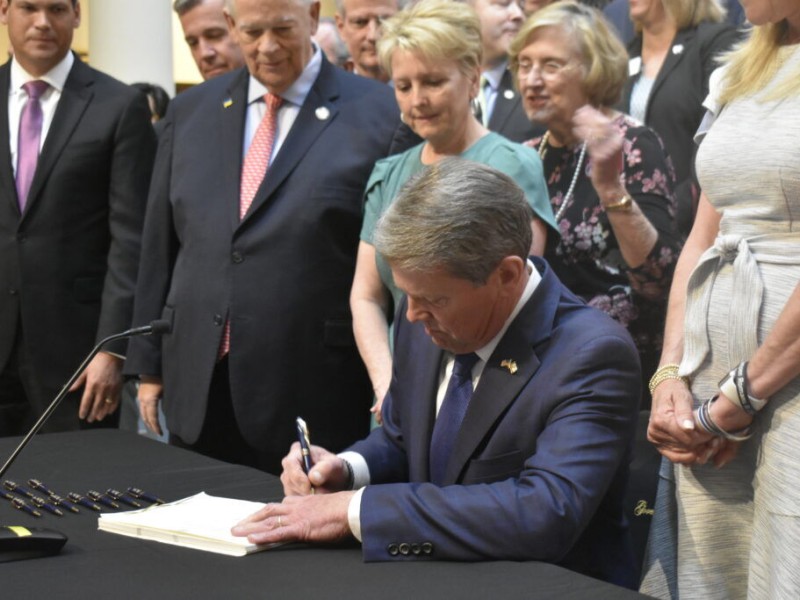
Ross Williams/Georgia Recorder
By Jill Nolin
Georgia Recorder
ATLANTA — Last legislative session lawmakers stepped up state oversight for a 2008 federal law requiring insurers to provide behavioral health benefits that are on par with physical health.
But what happens when consumers try to access those benefits and can’t book a timely appointment with an in-network therapist or find a substance abuse treatment provider in their area?
Advocates are making the case that state lawmakers should do more to hold insurers accountable when the availability of behavioral health services are not as they appear, and they say it should be one of the next steps taken in the multiyear effort to lift Georgia’s lagging system of care.
A bill designed to tackle the issue — known as network adequacy — is likely to be just one of multiple measures filed this legislative session aimed at building on the high-profile bipartisan measure passed last year.
The influential Behavioral Health Reform and Innovation Commission has issued a new slate of recommendations, including a call for “strong” standards for network adequacy.
Last year, the panel’s conclusions helped shape the sweeping behavioral health bill sponsored by the late House Speaker David Ralston, who died unexpectedly in November.
There are signs the momentum has not slowed in Ralston’s absence and as both chambers undergo a change in leadership.
The commission’s chairman, former GOP state Rep. Kevin Tanner, now leads the state Department of Behavioral Health and Developmental Disabilities. Tanner often calls this the “decade of mental health reform.”
Tanner said in an interview that it’s no coincidence Gov. Brian Kemp appointed the head of the reform-minded commission to lead the state agency.
Ralston’s widow, Sheree Ralston, is also in a runoff to replace the Blue Ridge Republican as a state representative. The speaker said it was his wife who challenged him to use his position to improve access to mental health treatment in Georgia.
Last year’s bill was heralded as landmark legislation, but it also was widely seen as the beginning of a long road toward improving access to behavioral health care services after the COVID-19 pandemic highlighted a growing need.
That work is set to continue this session, despite the upheaval under the Gold Dome.
The new recommendations nudge lawmakers toward more changes meant to address the behavioral health work force shortage, encourage data collection and information sharing across state agencies, increase the capacity of Georgia’s crisis services system, and more.
“A lot of it drives back to work force,” Tanner said. “All the issues that we have identified, all the issues we’ve talked about, without exception for the most part, we’re not able to address them if we don’t address the work force issue.”
Advocates say they are optimistic that behavioral health will remain a legislative priority for lawmakers this year.
“Speaker Ralston made it for everyone, and that’s what he said: Mental health is everyone’s problem,” Kim Jones, who is the executive director of NAMI Georgia, a member of the commission and a leader of a coalition of advocacy groups, said. “Every legislator out there knows somebody in their own community, if not in their own family, who is struggling with mental health and not being able to find care. So, I still feel like that momentum will be there because they realize what we could do.”
Jeff Breedlove, chief of communications and policy with the Georgia Council for Recovery, who also co-leads the broad coalition of advocacy organizations, points to troubling data last fall from the Centers for Disease Control and Prevention that showed drug overdoses as a contributing factor for a shortening life expectancy in America.
“My message to the governor, to the president, to the mayor, to the General Assembly: This is an epidemic, and it is time to treat it as such,” Breedlove said. “We need to mobilize, organize and get serious about the fact that behavioral health issues, especially addiction, are literally impacting our life expectancy.”
Georgia also still ranks near last for access to mental health care services and professionals, according to 2023 rankings released by Mental Health America.
Any bills passed this legislative session will come as elements of last year’s sweeping bill are still being brought to life. That is partly why there has so far been no jump in parity violation complaints from Georgians.
As of late December, only two complaints from consumers with private insurance were received last year, according to information from the office of Insurance Commissioner John King. This came as no surprise to advocates who pushed hard for the legislation last year.
“A big part of that is nobody in Georgia knows where to go if they have a parity violation,” Roland Behm, who serves on the board for the Georgia chapter of the American Foundation for Suicide Prevention, said. “People don’t know what they are entitled to and where to complain when they don’t get it.”
King’s office is developing a new system for consumer complaints, which is set to start accepting reports of suspected parity violations by this June. In the meantime, consumers can continue to submit an online complaint here.
Private insurers also must begin to submit more parity information to the insurance commissioner’s office starting this month, and Medicaid Care Management Organizations must do the same with the state Department of Community Health.
This process is likely to identify more potential violations than relying on consumers to flag problems, Jones said.
“Most people, we have to tell them what parity means,” she said. “I think we haven’t seen a lot of complaints because the public is not aware of what it is.”
A parity violation can come in many forms, such as paying higher costs for prescription medication for mental health treatment than for physical treatment or being limited to fewer visits for mental health services than for other kinds of health care.
Jones said consumers should be alert when they see extra costs on a bill and ask their insurer for confirmation in writing whether the charge is on par with other physical and surgical costs.
If someone suspects a violation has occurred, the first step is to raise the issue with the insurance provider. If that goes nowhere, a complaint can be submitted to the state Office of Insurance and Safety Fire Commissioner for private insurance plans, although large, self-funded corporate plans are regulated by the U.S. Department of Labor. The state Department of Community Health oversees Medicaid and PeachCare for kids.
“If they can’t find a provider in their area, there you go,” Jones said. “That’s a network adequacy violation right there. But what we’re trying to do is to measure it on a state level, so people don’t have to make a one-off call and say, ‘Wait a minute, there’s not a network.’
“One person isn’t going to be able to get an insurance company to do it. The state can, and there’s some consequences for not doing it.”
Author

Related Articles

Federal agency to investigate Monday paragliding fatality
The death of a 63-year-old man who was killed in a paragliding accident on Monday is under investigation by the National Transportation Board, according to Dougherty County Coroner Michael Fowler.

Audit of police surveillance cameras results in arrests of five former APD officers
“The bottom line is when we find people who have misused resources that they have, we’re going to hold them accountable. These resources help fight crime, but we will not tolerate when they are misused.”

Albany Herald – July 7, 2026
Lee County stands alones without… DOT say delay in Oglethorpe Bridge… ASU’s Leah Cowen Selected for…
