
Georgia second state with approved coal ash permit program
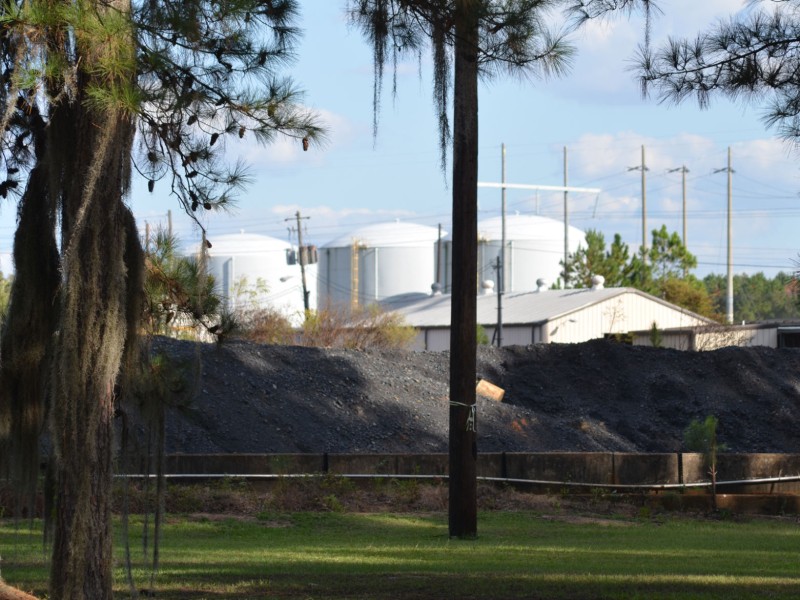
File Photo
From staff reports
WASHINGTON — The U.S. Environmental Protection Agency has proposed a streamlined, efficient, federal permitting program for the disposal of coal combustion residuals, commonly known as coal ash or CCR, in surface impoundments and landfills, which will also include electronic permitting. In addition, the agency announced the recent approval of the state of Georgia’s permit program for the management of CCR in landfills and surface impoundments. This approval makes Georgia the second state in the nation – following Oklahoma – with an approved coal ash permit program.
“Today the agency is proposing a dynamic federal permitting program that will ensure the safe management of coal ash in operating units, as well as the closure and clean-up for those units that have stopped receiving waste,” EPA Administrator Andrew Wheeler said. “We continue to encourage states to adopt their own program, but for those that choose not to and for facilities in Indian Country, EPA is confident that the proposed federal program will protect human health and the environment without placing undue burden on operators.”
The proposal sets up a federal permitting program for coal ash units as required by the 2016 Water Infrastructure Improvements for the Nation Act. EPA has used the lessons learned from many years of implementing hazardous waste and other permitting programs to design what it is cxalling an efficient, federal CCR permitting process.
EPA is soliciting comments on this proposal in a 60-day comment period, during which a virtual public hearing will be held for interested persons to present information, comments, or views concerning this proposed program.
For more information and to access a pre-publication version of this proposal, visit https://www.epa.gov/coalash.
“Today, we take an important step in supporting our state partners as they move forward in managing the disposal of coal ash,” EPA Administrator Andrew Wheeler said. “Placing implementation of coal ash regulations more fully into the hands of the state of Georgia empowers those with local expertise to oversee these operations, which is a safer and more effective approach to disposal.”
“The State of Georgia is a shining example of how partnerships between local leaders and the federal government can deliver vital results for the American people,” Congressman Rob Woodall said. “I look forward to monitoring Georgia’s successes under the leadership of EPA Administrator Andrew Wheeler and Gov. Brian Kemp in managing and properly disposing of coal ash under the permit program, and I am optimistic that the state will continue to pursue innovative solutions to recycling coal ash and limiting waste.”
Congress recognized the essential role of this local expertise in the WIIN Act, which provided states the ability to develop and submit permit programs to EPA for approval. The programs operate in lieu of the federal rules, provided EPA determines that the state’s requirements are as protective as the federal standards. After analyzing the permit program application submitted by the Georgia Environmental Protection Division and providing an opportunity for public comment, EPA determined that the Georgia program is as protective as the federal regulatory program. Now that Georgia’s program has been approved, GA EPD can process permit applications for existing and future units in Georgia.
To learn more about this approval, visit https://www.epa.gov/coalash/us-state-georgia-coal-combustion-residuals-permit-program.
EPA is working with several states with coal ash facilities to apply to establish their own permit programs. EPA encourages all states with coal ash facilities to apply to establish their own permit program like Georgia and Oklahoma have done.
In 2015, EPA published a final rule that established the first-ever comprehensive set of federal requirements for the disposal of coal ash in landfills and surface impoundments. This rule included technical standards that are designed to prevent the release of contaminants into groundwater, blowing of contaminants into the air as dust, and failure of coal ash surface impoundments. Additionally, the rule sets out inspection, monitoring, and reporting requirements and makes transparency a cornerstone of the program by requiring facilities to post compliance data online on a facility-established, publicly available website.
At the time the 2015 CCR rule regulating coal ash as nonhazardous waste under RCRA was issued, EPA did not have authority to approve state permit programs. Instead, utilities were responsible for directly implementing the requirements of EPA’s 2015 CCR rule, which were enforceable only through citizen suits.
The 2016 WIIN Act amended RCRA to give states the authority to operate permit programs after EPA approval. States can develop and submit coal ash permit program provided they (1) include evidence of a permit program or other system of prior approval and (2) be as protective as federal regulations currently in place. Once approved, the state permit program operates in lieu of the federal management standards for the disposal of coal ash.
Related Articles
Albany Herald – July 18, 2026
Georgia Trust for Local News partners with… Adult leadership group spreads concept to… Lee County homeowners have until Aug. 1 to claim…

Classifieds – July 18, 2026
Classifieds; Legals;

Albany police make arrests in murder, robbery cases
Officials with the Albany Police Department have announced a number of arrests in cases that involved a homicide and a pair of thefts.
