
Ghost of Albany’s automotive past reappears on Front Street
During Wednesday morning’s meeting of the Albany-Dougherty Historic Preservation Commission, members discussed the recently revealed “Albany Auto Electric” ghost sign on the former Albany Auto Electric Service building at 115-121 N. Front St., now undergoing renovation as part of the 4C on Front redevelopment project.
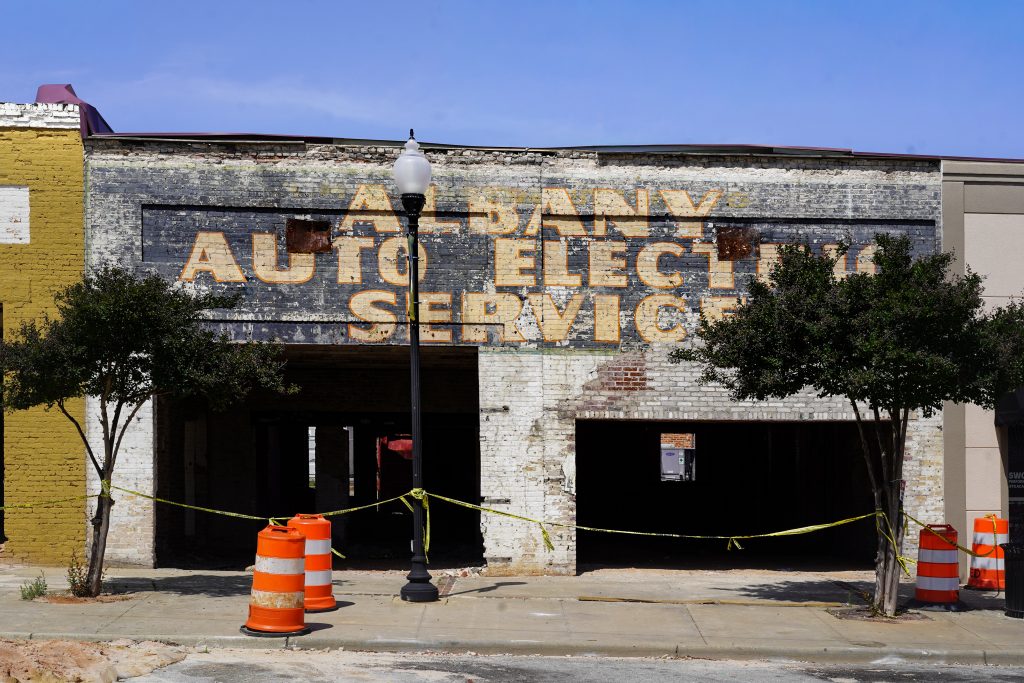
ALBANY — A faded hand-painted sign uncovered during renovations on a downtown Albany building is drawing renewed attention to a piece of the city’s automotive and commercial history, and to the disappearing art form of the American “ghost sign.”
During Wednesday morning’s meeting of the Albany-Dougherty Historic Preservation Commission, members discussed the recently revealed “Albany Auto Electric” ghost sign on the former Albany Auto Electric Service building at 115-121 N. Front St., now undergoing renovation as part of the 4C on Front redevelopment project.
The sign emerged after rehabilitation work began on the building, according to discussion during the meeting. Commissioners said the project architect recommended preserving the sign rather than covering it, viewing it as a rare surviving artifact from Albany’s mid-century commercial landscape.
“This is a historic sign,” Tonie Mitchum, Planner II for the city, told the commission, noting research traced the lettering back to at least the late 1950s or early 1960s — old enough to potentially qualify as a protected historic feature.
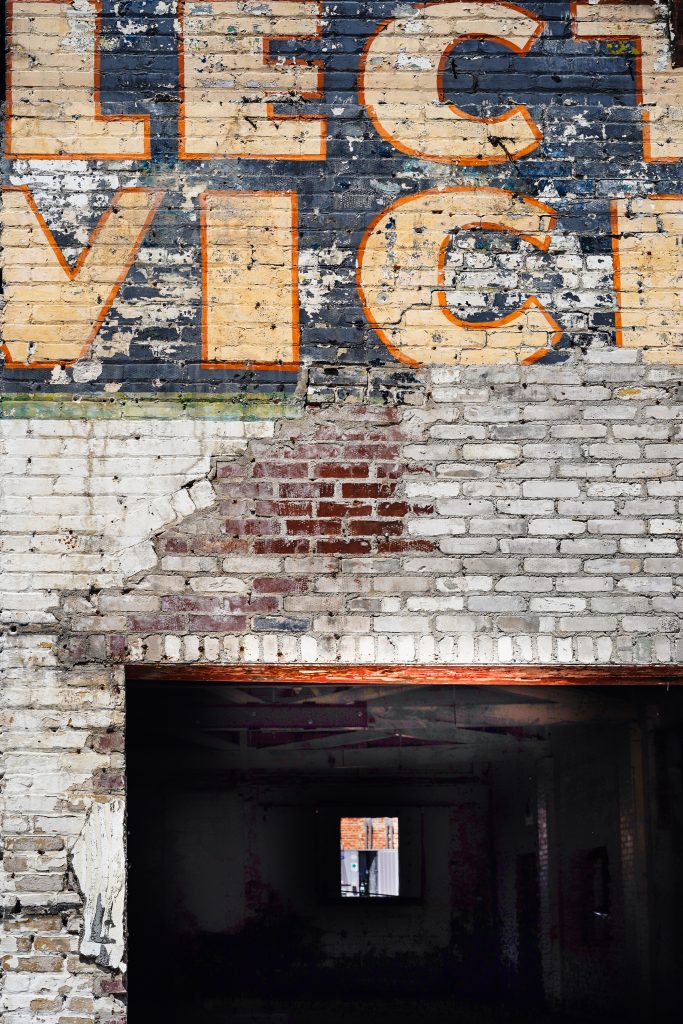
Ghost signs are faded painted advertisements, typically found on brick walls in older downtown districts, that survive long after the businesses they promoted have disappeared. Popular from the late 19th century through the mid-20th century, the signs were painstakingly hand-painted by professional signwriters, often using high-quality oil-based paints that contributed to their longevity, decades before vinyl wraps and modern commercial signage became common.
Over time, exposure to weather and sunlight caused the original vibrant colors to fade, leaving behind the faint outlines and layered textures that give ghost signs their distinctive appearance. Often hidden beneath newer materials or neighboring buildings for decades, ghost signs are frequently rediscovered during demolition or renovation projects. Preservationists increasingly view them as valuable pieces of urban archaeology — visual records of local commerce, craftsmanship and changing downtown economies.
In Albany’s case, the sign points back to an era when automotive electrical repair shops were essential parts of the local economy. Before inexpensive mass-produced replacement parts became widely available, specialized shops routinely rebuilt starters, generators and alternators rather than replacing them outright. Businesses such as Albany Auto Electric served drivers, mechanics, farms and trucking operations during a time when repair culture dominated the automotive industry.
The sign also reflects a period in American commerce when trades were commonly passed down through families and learned across generations inside small local businesses. In automotive shops, machine shops and service garages throughout the mid-20th-century South, children often grew up around the family trade — beginning with simple cleanup and shop tasks at young ages before gradually learning mechanical skills through observation and hands-on apprenticeship.
That tradition of generational craftsmanship helped sustain many independent businesses in Albany’s downtown commercial district during the city’s industrial and agricultural growth years. Historical records show Albany Auto Service, founded by Lonzo Akridge in 1960 and incorporated in 1962, became one of Albany’s best-known family-owned automotive businesses and remains in operation today under later generations of the Akridge family. The continuity reflects a broader era when specialized automotive knowledge — from rebuilding starters and alternators to diagnosing electrical systems — was often preserved through family-owned businesses and informal apprenticeships rather than corporate training programs.
The building’s next chapter also carries echoes of that same educational philosophy. Commodore Conyers College & Career Academy operates under a career-focused, hands-on learning model designed to connect students directly with real-world professions while they are still completing traditional academic coursework. Rather than separating classroom instruction from workforce experience, the academy emphasizes industry partnerships, technical training, certifications and applied learning opportunities that place students in practical environments tied to future careers.
The re-use of a former automotive service building for a workforce-centered educational initiative could create an unexpected continuity between the site’s past and present — linking the older tradition of trade apprenticeship and family-taught professions with a modern educational model centered on experiential learning and early workforce integration.
While no official links between the local business and the property have been confirmed, commission members Wednesday emphasized preserving the historic signage would remain a priority. Due to the sign’s recent discovery, no formal proposal has yet been submitted regarding whether it will remain exposed or eventually be covered as part of the redevelopment project.
Several commissioners suggested the matter get further discussion during the board’s June meeting, allowing developers to present façade plans and explain how the historic lettering would interact with future signage for the 4C project. One commissioner argued preserving the sign could strengthen the redevelopment rather than detract from it.
“I think they might benefit … from having that sign there,” the member said during the meeting, suggesting the visible remnants of the former business also reinforce the adaptive reuse story behind the project.
The commission took no formal action Wednesday, but members agreed any decision involving the sign should proceed through the standard Historic Preservation Commission review process before additional work moves forward.
Related Articles
Terrell County school board calls special meeting to consider CFO consulting services
The Terrell County Board of Education will hold a special called meeting Tuesday to consider hiring outside financial consulting services as the school district continues work on its finance operations.
The meeting is scheduled for 5 p.m. Tuesday, Aug. 25, in Room 107 of the Terrell County Board of Education office, 761 First Ave. SE in Dawson.
Dawson’s proposed fire tax district: What residents need to know
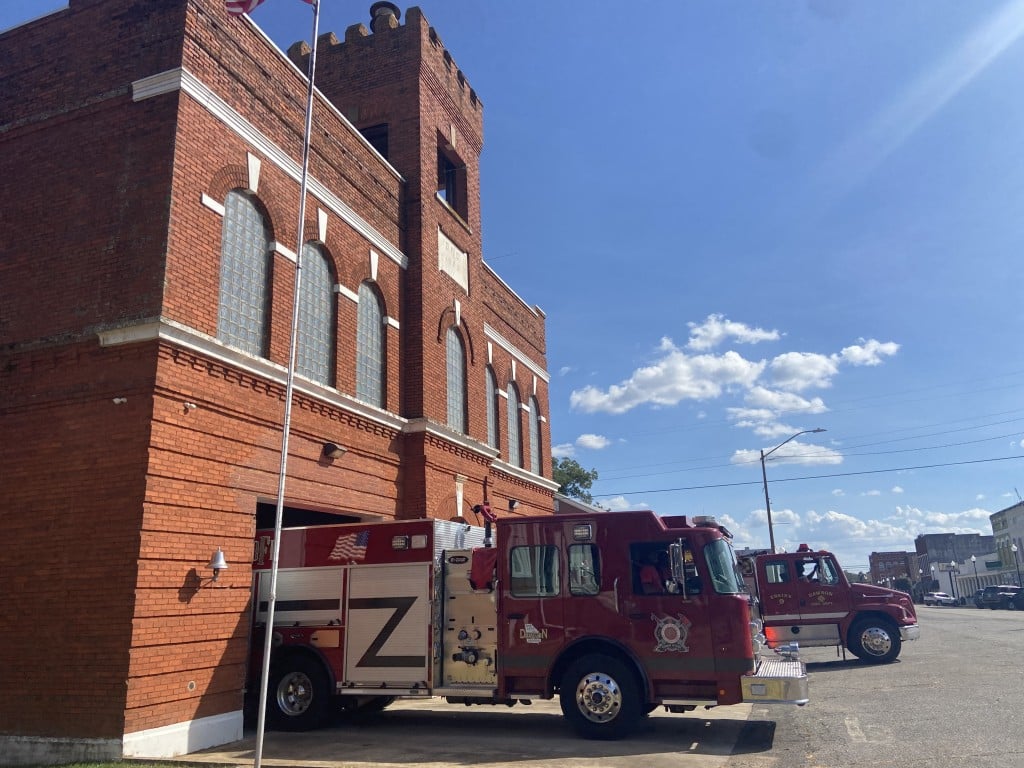
Dawson residents could soon see a new $8 charge on their monthly city utility bills to help pay for fire protection. That is the simplest way to describe what the Dawson City Council is considering. But the proposed ordinance would do considerably more than add another line item to a water bill.

Judges denies residency challenge; Edward Brown to claim Senate District 12 seat
An email ruling issue this week paves the way for Albany businessman Edward Brown to enter the Georgia Senate next year. A Superior Court judge denied candidate Corey B. Morgan’s challenge to Brown’s residency in the District 12 race.
