
GOP furor over ‘critical race theory’ hits college campuses
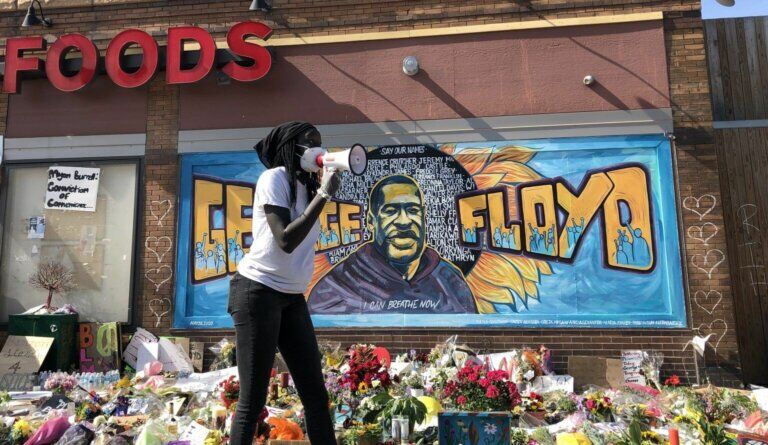
Special Photo: Max Nesterak/Minnesota Reformer
By Daniel C. Vock
Georgia Recorder
ATLANTA — Professors say the Republican crusade to root out “critical race theory” is taking a toll on college campuses around the nation — places where academic freedom is supposed to encourage thought, discussion and analysis.
Much of the “critical race theory” uproar to date has centered on teaching in K-12 schools. But several high-profile incidents, combined with new laws with unexpected effects, are raising worries about political interference in higher education. Some of it may play out this fall as students return to classes and professors sort out what they can and cannot teach.
“We haven’t seen this level of intrusion since McCarthyism,” Lynn Pasquerella, the president of the Association of American Colleges and Universities, told States Newsroom in an interview. The group says it’s tracked legislative proposals that have taken shape in 20 states.
“The consequences are the upending of the American system of higher education,” Pasquerella said.
Georgia’s 2021 legislative session ended in early spring before the wave of critical race theory angst rippled across the country, and no bills addressing the subject were filed.
But Gillsville Republican Rep. Emory Dunahoo raised the subject in January when he sent a letter to University System of Georgia administrators asking a series of questions including whether students are taught about the concepts of privilege and oppression, that some races are inherently privileged, or that white, male, heterosexual Christians are intrinsically oppressive.
In response, then-Chancellor Steve Wrigley said the university system strives to balance its cause of expanding students’ minds and ensuring they are free from harassment and indoctrination.
“It is a constant balancing effort, and I am certain we do not always get the balance right,” he wrote. “I believe the vast majority of time we do, and work hard to do so.”
All 26 University System of Georgia institutions responded as well. None said they teach that any group is inherently bad. Many said concepts of privilege and oppression come up in classes including sociology, history, anthropology and literature.
“It is impossible to talk about the American Revolution, civil rights movements, women’s suffrage, or World War II without discussing oppression, and thereby privilege,” the College of Coastal Georgia’s response reads in part. “When teaching courses about philosophy of education or community health, we discuss how socio-economic status and race impact the outcomes in those areas (to) prepare students to tackle challenges they will face in their chosen fields.”
Many Republican officials have used the misnomer of “critical race theory” to criticize a wide variety of activities examining the role of racism in American society. The term describes a narrower field of study among legal scholars.
Still, colleges and universities are being targeted.
The University of North Carolina has been at the center of the controversy. The school’s administration came under fire for denying tenure to Nikole Hannah-Jones, a New York Times journalist who led the “1619 Project” that examined the role slavery played in shaping American history and society through the present day.
Despite credentials including a Pulitzer Prize and a “genius” grant from the MacArthur Foundation, Hannah-Jones was initially offered a five-year appointment instead of the standard permanent tenured position, as was first reported by NC Policy Watch. After a national outcry, the UNC Board of Trustees voted 9-4 on Wednesday to offer Hannah-Jones full tenure after all.
In Florida, Republican Gov. Ron DeSantis hinted that budget cuts to state universities could come if surveys required by a new state law showed that instructors were “indoctrinating” students.
In Idaho, lawmakers cut funding to Boise State University because of concerns about its diversity programs (some of which turned out to be unfounded).
And in Iowa, legislators passed a law this spring taking aim at schools or government entities that promoted ideas about racism and sexism that GOP lawmakers deemed “divisive.”
The attempts by Republicans to monitor classrooms threaten the principle that higher education is intended to help students think on their own, academic leaders say.
Pasquerella’s group and dozens of others that focus on higher education or history signed a statement in mid-June decrying the “spate” of attempts to interfere with college coursework. Many of those proposals would prevent college instructors from discussing “divisive concepts” about racism and sexism in American history.
“Legislation cannot erase ‘concepts’ or history,” the groups wrote. “It can, however, diminish educators’ ability to help students address facts in an honest and open environment capable of nourishing intellectual exploration.”
The growing concern on the right about race-related instruction follows massive protests and calls for action last year, in the wake of the Minneapolis police killing of George Floyd and the killing of other black residents by police in other cities.
Higher education is not the only target for Republican officials who have lashed out in recent months at various efforts to discuss systemic racism and white supremacy. They have attacked government diversity training programs, the military and K-12 schools.
But colleges and universities do enjoy more legal protections about the material they teach than K-12 schools do.
The U.S. Supreme Court has explicitly provided protections for academic freedom for colleges and universities. It ruled in 1967, for example, that colleges could not require faculty to take loyalty oaths.
“In the absence of policy changes,” Pasquerella predicts, “there will be lawsuits that look at whether it’s constitutional for state universities to infringe on academic freedom in this way.”
Many faculty members also worry about how political interference will affect their universities’ communities and reputations.
The school’s initial decision not to grant Hannah-Jones tenure has already dissuaded faculty from coming to the flagship university, and Stroman says she thinks that is likely to continue. When recruiting black faculty for departments that have few black professors already, it’s important to be able to show them that they will be welcome in the larger community, she said.
Meanwhile, professors at Iowa State University thought they would largely be excluded from the state’s recent Republican bill targeting the teaching of “divisive concepts” because it only applied to mandatory diversity trainings at institutions of higher education.
But that’s not how campus administrators see it.
Josh Lehman, a spokesman for the Iowa Board of Regents, said the three large universities under its control have all reviewed their mandatory staff and student trainings to ensure they comply with the new law.
But the provost at Iowa State took it a step further.
Provost Jonathan Wickert interpreted the law as applying to any course that is required for students to graduate, which could potentially affect classes in any degree program, according to an FAQ written by the provost’s office. On top of that, Wickert blocked faculty-approved updates to the campus’ 1990s-era requirement that students take a course on U.S. diversity, citing the new law.
“The environment created by laws like this makes people worried that if they have something in their syllabus, say a section on race and racism, or if they say something that a student does not like in class, or if they have a slide in a lecture that happens to offend someone, that a student or even a colleague will call up someone in the state government and report them for violating this law,” Brian Behnken, an Iowa State history professor, said.
Already, Behnken said, professors are reworking their courses to steer clear of the divisive concepts listed in the law.
“Some people simply don’t want to find out what the consequences are,” he said.
Rob Schweers, a spokesman for the provost’s office, said that the faculty group recommending changes to the diversity requirement did not have time to see how it would be affected by the state’s new divisive concepts law.
“Given the passage of HF 802, the risk of the proposal being viewed as violating either the letter or the intent of the new law, and open questions about implementation, Provost Wickert made the decision not to approve the recommendation at this time,” Schweers said in an emailed statement. “Not approving the revision at this time should not be taken as a rejection of the Faculty Senate’s important work.
“Because HF 802 is a new law, many of the terms and provisions contained in the legislation are currently being interpreted. As a public university supported by the state and its taxpayers, Iowa State University has an absolute responsibility to comply with both the letter and spirit of the law.”
But David Peterson, an Iowa State political science professor, said the provost’s policies leave faculty members with plenty of unanswered questions as they come back to campus and prepare for in-person instruction this fall.
“They don’t tell us what happens if we are found in violation,” he said. “I don’t know if we have to get pre-clearance. If we don’t get pre-clearance and are found in violation, what are the rules? I know if we violate state law, we can get fired for that. But is there a process? I have no idea.
“I have a book called ‘Ignored Racism’ about how Anglos’ negative attitudes about Latinos shaped Anglos’ use of politics. The starting point of the book is that there have been centuries of systemic racism targeted at Latinos in America. According to this law, I cannot claim that there is systemic racism in class. So I cannot teach my book.”
Related Articles
Brie’s Gift offers a helping hand for families affected by leukemia
“I think that would be beautiful. Brie loved her school, she loved her city. I think that would be wonderful.”

Classifieds – June 30, 2026
JOBS: Full-Time – Fire Fighting Pilot for Thrush Aircraft, LLC… SERVICE … DIRECTORY: Health – Private Caregiver… Home Repair/Remodeling: Enhanced Remodeling & Drywall…
Albany Herald – June 30, 2026
Albany Commission approves $358.2
million budget… State Bar of Georgia honors Willie Lockette with… Red light violations will bring citations at…
