
Half-million Georgians could lose health coverage
Ross Williams/Georgia Recorder
By Jill Nolin
Georgia Recorder
ATLANTA — Hundreds of thousands of Georgians who have had health insurance through Medicaid during the pandemic could begin to lose their coverage this coming spring under the proposed federal spending bill unveiled this week.
The congressional proposal would end the pandemic-era rule requiring states to continue covering Medicaid enrollees even if they no longer qualify under a state’s eligibility rules. The requirement was packed into federal coronavirus legislation passed in March 2020.
Under the terms in the $1.7 trillion spending package, millions of people could lose coverage nationally — including about 545,000 Georgians, according to one state estimate — under a process that could start as soon as April 1 if Congress passes the federal spending bill.
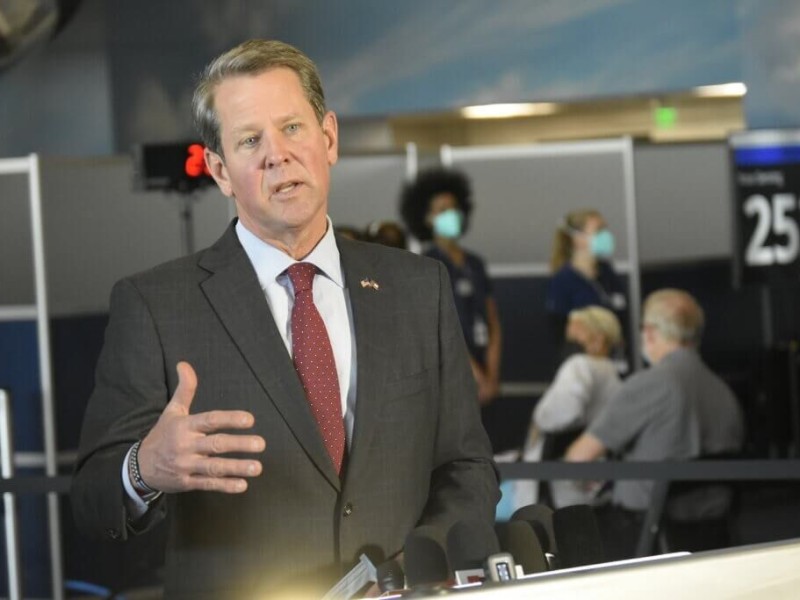
A group of Republican governors, including Georgia Gov. Brian Kemp, sent President Biden a letter this week asking him not to renew the public health emergency declaration beyond April so states could start whittling down their inflated Medicaid rolls, citing the costs.
The governors’ plea was made even as states continue to wrestle with a “tripledemic” of rising COVID-19, flu and RSV cases that threaten to strain their hospitals this winter.
“While the virus will be with us for some time, the emergency phase of the pandemic is behind us,” the 25 governors wrote in a Dec. 19 letter to Biden. “We have come so far since the beginning of the pandemic — we now have the tools and information necessary to help protect our communities from COVID-19.”
The emergency declaration is set to expire Jan. 15, but the Biden administration is expected to extend it again, continuing it through at least April. But the proposed spending bill would untether the so-called Medicaid unwinding process from the federal emergency declaration.
In Georgia, Medicaid enrollment has grown to about 2.6 million people, up from about 1.8 million before the pandemic.
That increase has come with extra federal funding that helped state budget writers navigate the public health crisis, delivering Georgia about $2.2 billion in fiscal relief — or more than twice the amount the state spent on additional enrollees, according to an analysis from the Kaiser Family Foundation.
The state closed out the last fiscal year with a $6.6 billion surplus, and revenues for the first five months of the new budget year were up 6.2% — or $741.7 million — above this time last year.
But even with the federal boost, GOP leaders argue the rule has cost states “hundreds of millions of dollars,” the letter said.
There won’t be a clear picture of the cost until states are able to go through the process of identifying those who are no longer eligible for coverage because, for example, they have aged out of the program or their income level has changed, said Kemp’s spokesman, Andrew Isenhour.
All told, though, the state has spent about $37.5 billion on Medicaid enrollee benefits since the beginning of the pandemic, Isenhour said.
Under the proposed omnibus, the enhanced federal match for states would be phased out over the next year, and it would also require a year of continuous coverage for children in low-income households.
Health care advocates are urging Georgia officials to move cautiously as this key pandemic-era rule, which has guaranteed health care coverage for a wide swath of Georgians, comes to an end.
Laura Colbert, executive director of Georgians for a Healthy Future, a consumer advocacy nonprofit, called Medicaid “a life preserver” for people and states during the pandemic.
“Its continuous coverage protections have enabled Georgia children, expecting and new parents, and others to get covered, stay covered, and affordably access health services in the midst of a very unpredictable pandemic,” she said.
Federal and state investments in Medicaid should match the reality on the ground, Colbert said, pointing to the triple epidemic and low rates of vaccination for COVID-19 and the flu.
In the meantime, state agencies have been encouraging Georgians with Medicaid coverage to update their contact information through their Gateway account.
Author

Related Articles

Albany Herald – June 20, 2026
City Albany faces shortfall for police… Women’s Anchorage tentatively set to… Commissioner, school leaders clash over…

Classifieds – June 20, 2026
ALBANY HERALD CLASSIFIEDS JUNE 20, 2026

Public safety drives Leesburg’s $4.2 million Fiscal Year ’27 budget
The adopted spending plan reflects modest growth in city revenues and continued emphasis on maintaining core municipal services, particularly public safety and sanitation, which together account for a significant share of general fund expenditures.
