
Harper dominates rural vote as Juhan-Arnold wins statewide
Juhan-Arnold, a Snellville nonprofit founder, defeated Republican incumbent Tyler Harper 2,238,993 to 1,920,757, or 53.8% to 46.2%, according to unofficial results from the Georgia Secretary of State’s Office. Harper, a seventh-generation farmer from Ocilla, carried 18 of the state’s 20 largest farm counties.
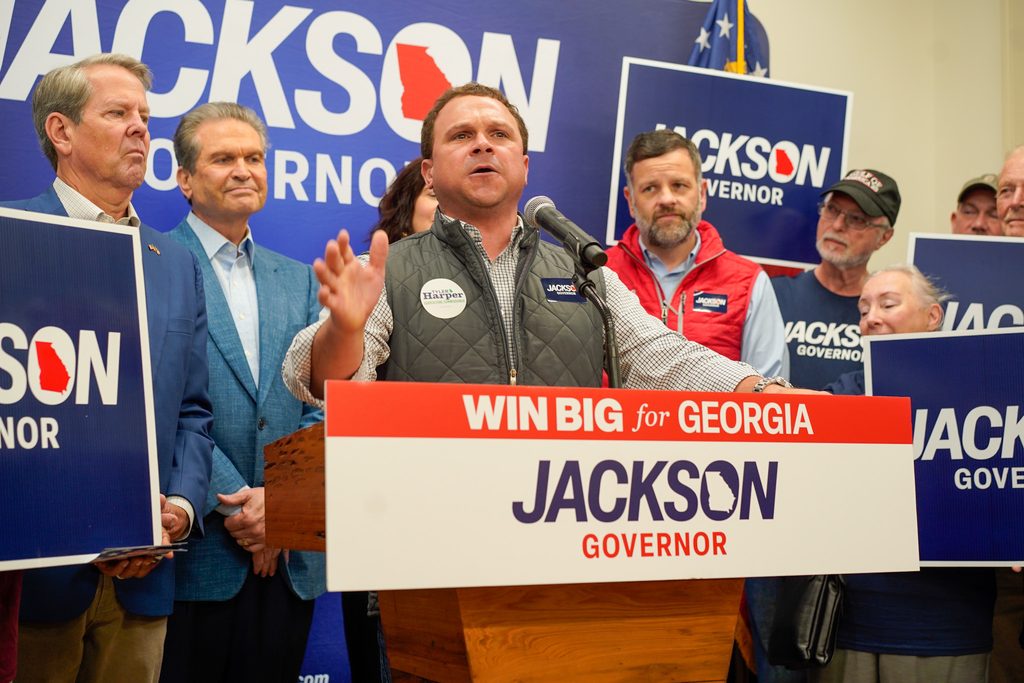
ALBANY — Democrat Katherine Juhan-Arnold won Georgia’s agriculture commissioner race Tuesday without winning most of Georgia’s farm country.
Juhan-Arnold, a Snellville nonprofit founder, defeated Republican incumbent Tyler Harper 2,238,993 to 1,920,757, or 53.8% to 46.2%, according to unofficial results from the Georgia Secretary of State’s Office. Harper, a seventh-generation farmer from Ocilla, carried 18 of the state’s 20 largest farm counties.
Juhan-Arnold will be the first woman and the first Black person to lead the Georgia Department ofAgriculture, the oldest state agriculture department in the nation.
An Albany Herald analysis matched vote totals from all 159 counties with University of Georgia farm production estimates and state and federal rural classifications. It shows her margin came from metro Atlanta, while the counties that produce most of Georgia’s farm value voted for Harper.
Where the votes fell
Georgia’s 118 rural counties hold 84% of the state’s farm gate value, the university’s estimate of what food and fiber production is worth. They cast 19.8% of the votes in this race. Harper won 69.2% of those votes.
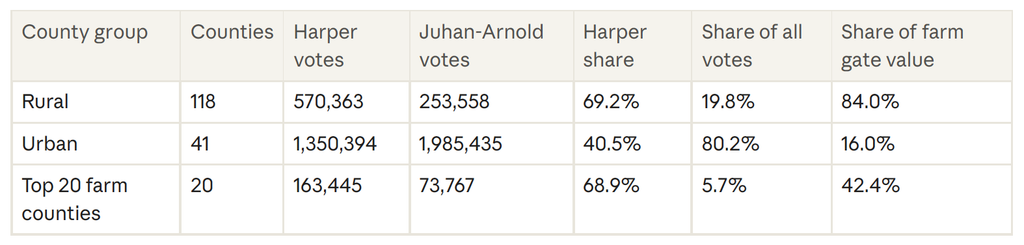
The rural count uses the Georgia Department of Revenue’s list of counties with fewer than 50,000 people, excluding military personnel and their dependents. Federal definitions produce a similar result: Harper won 68.4% in the 85 counties the U.S.
Juhan-Arnold’s statewide margin was 318,236 votes. Fulton, DeKalb, Gwinnett, Cobb and Clayton counties alone gave her a 677,606-vote edge, more than twice that margin. Those five counties hold about 1% of the state’s farm gate value.
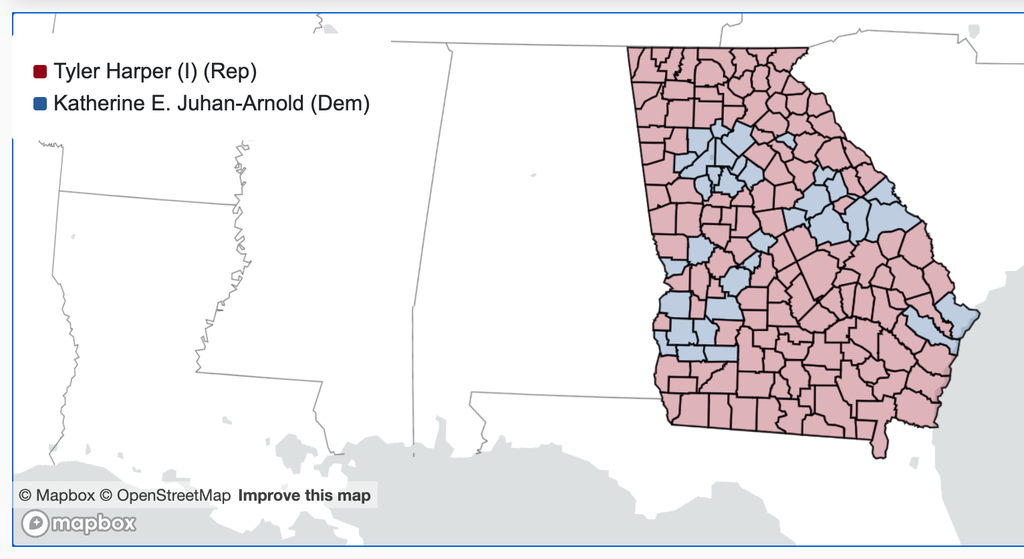
Overall, Harper carried 126 counties to Juhan-Arnold’s 33. The counties he won hold 88.9% of the state’s farm gate value.
The farm belt was not unanimous. Juhan-Arnold carried Macon County, No. 7 in farm gate value at $426.1 million in 2024, and Sumter County, No. 15 at $245.4 million. She also narrowly carried Burke County, No. 25 at $215 million, 4,370 to 4,269.
Harper’s strongest results among the top farm producers came in the state’s northeast poultry belt. He won 86.5% in Banks County. He won 84% in Franklin County and 75.2% in Hart County, the state’s top two poultry and egg counties, according to UGA. In Colquitt County, the state’s largest farm producer at $700.1 million, he won 70.2%.
Southwest Georgia was more divided. Harper won 55.5% in Mitchell County, No. 4 in the state and the leading row crop county. He carried Lee County 8,893 to 4,362 and Miller County 1,448 to 491. Juhan-Arnold carried Dougherty County 19,841 to 7,250 and Terrell County 1,818 to 1,598.
A new first at the oldest department
The Georgia General Assembly created the department Feb. 28, 1874. The state describes it as the first state department of agriculture in the country. It now oversees food safety inspections, animal health, consumer protection and fuel pump calibration in all 159 Counties.
Juhan-Arnold will become the department’s 18th commissioner. Every commissioner before her has been a man. One of them, Tommy Irvin, held the job from 1969 to 2011.
She will take charge of an industry that UGA says supported 370,400 jobs and $100.4 billion in Georgia economic output in 2024. Georgia’s farm gate value that year was about $18.03 billion, according to UGA.
Her win came in a Democratic sweep of every statewide office on Tuesday’s ballot. Black women will hold seven of the state’s eight executive offices.
Why farm counties stayed with Harper
The results suggest party loyalty mattered more than farm ties. Harper’s map nearly matched that of Republican gubernatorial nominee Rick Jackson. Jackson carried 125 counties and Harper 126. The only difference was Houston County, which Harper carried and Jackson did not.
In the top 20 farm counties, both men carried the same 18. Harper won 68.9% there, compared with 68.4% for Jackson. That 0.5-point edge matches his edge statewide, so the largest farm counties gave him no added boost.
Harper still ran stronger than any other Republican on the statewide ballot, with 1,920,757 votes. He gained the most on Jackson in Clarke and Oconee counties, where he ran 1.9 points ahead, and in his home county of Irwin, where he ran 1.8 points ahead. He also ran well ahead of Jackson in nearby Coffee, Ben Hill and Tift counties.
Harper campaigned on his roots and his record. His family has worked its land for more than 125 years, and he grows peanuts, cotton and timber and raises cattle in Irwin County.
“Agriculture is who I am, what I am, and what I’m about,” Harper said in a candidate profile published by the Georgia Farm Bureau. Gov. Brian Kemp endorsed him Aug. 18, saying Harper had “fought tirelessly” for the state’s top industry.
Where Juhan-Arnold is vulnerable
The same data shows soft spots for the incoming commissioner. Her 53.8% was the lowest share of any Democrat in the 11 statewide contests on the ballot. U.S. Sen. Jon Ossoff won 59% and Gov.-elect Keisha Lance Bottoms won 54.3%. She also received 29,471 fewer votes than Bottoms.
She won 16 of the 118 rural counties and two of the top 20 farm counties. She will lead a department whose largest farm economies are concentrated in counties that voted against her.
This was her first campaign for elected office. Harper spent a decade in the state Senate before taking office in 2023.
Her farm experience is on a far smaller scale than his. The Georgia Farm Bureau listed her as a farmer, and The Atlanta Journal-Constitution reported in 2020 that she had farmed 2 of 14 acres in Deepstep for three years.
She founded Baby Katie’s Pharm & Kitchen, a nonprofit focused on produce access, grower education and farm-to-school connections, in 2014. She has also worked more than a decade in infrastructure systems.
Harper attacked her most sharply over inspections. At an Oct. 15 debate, she said inspections had dropped 45% since 2022, stating that business inspection coverage fell from 100% in 2022 to 55% in 2025. Harper disputed the claim, said the agency had increased inspections and called her stance “disqualifying for her to hold this office.”
“Those are the figures that your department gave the state,” she replied.
Her proposals could also test her. She has proposed regional food hubs at about $2 million each. A League of Women Voters chapter guide noted those proposals are plans rather than existing programs. Their funding would depend on state budget decisions.
What comes next
Results remain unofficial until they are certified, with Juhan-Arnold set to take office in January. Her platform calls for stronger food safety, regional food hubs, expanded cold storage and more processing in Georgia, so that profits stay with family farmers.
She has argued that producers need a more responsive agency, “I don’t think you should have to know the right person to get the right answer.”
Related Articles
Improper payroll deductions among seven findings in Terrell school audit; corrective action planned
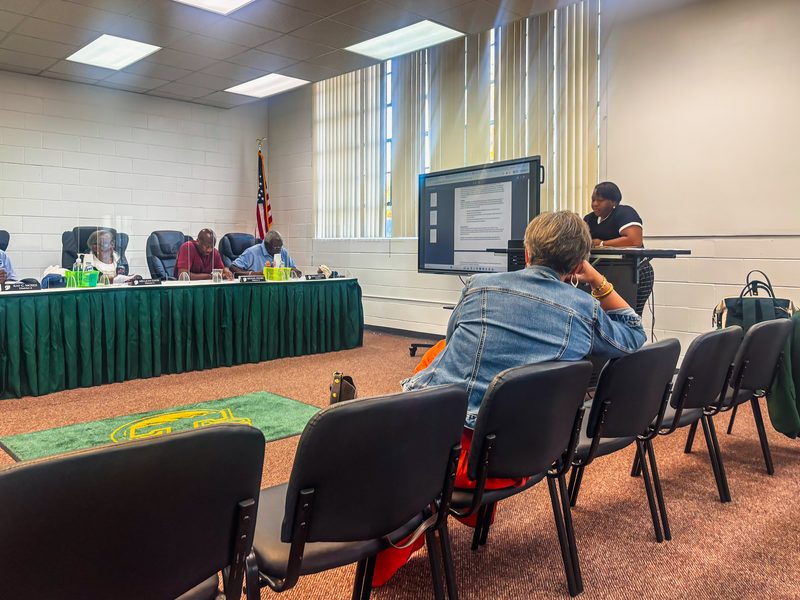
Terrell County school officials are working to correct payroll, purchasing and recordkeeping weaknesses identified in a fiscal 2025 audit, with Superintendent Shereca Harvey outlining the findings and additional reviews during an Oct. 6 school board work session.
A promise to one student grows into a districtwide pink-out
For two days in 2013, an eighth grader sat alone at the far end of a gym at Robert Cross School. When Tee Taylor asked what was wrong, Olivia Charles told her that her mother had breast cancer.
Dawson drops fire charge after Georgia Supreme Court ruling
Dawson will not implement its approved $8 monthly fire service charge following a Georgia Supreme Court ruling, and residents have never been billed for it, City Manager Roxie Powell said.
