
Increase in opioid overdoses gets attention of Albany City Commission
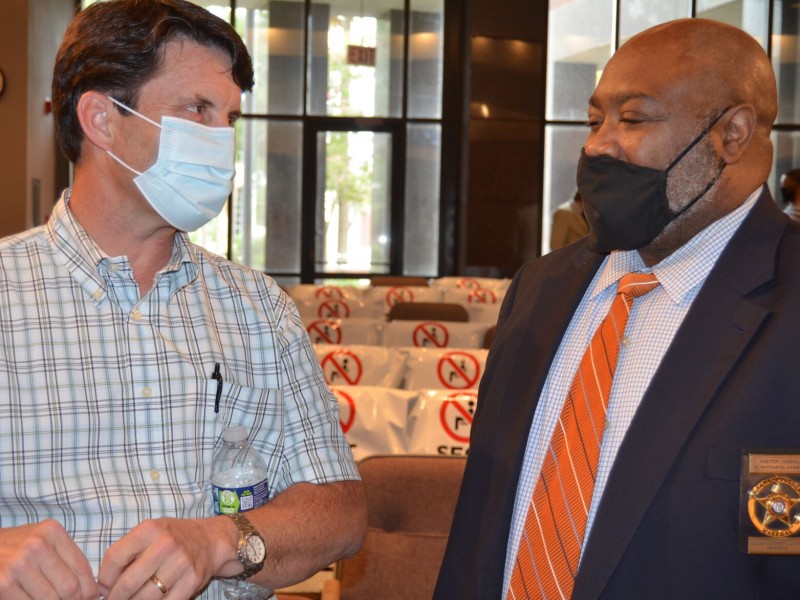
Staff Photo: Alan Mauldin
By Alan Mauldin
[email protected]
ALBANY — The third wave of the nation’s opioid crisis is crashing hard in Dougherty County, which saw overdose deaths increase last year by more than 400 percent from 2019.
The opioid epidemic is not limited to any particular area or socioeconomic group, as overdoses are seen everywhere from store parking lots to hotels, a Southwest Public Health District 8-2 representative told Albany City Commission members on Tuesday.
In 2019 there were two overdose deaths linked to opioids in the county, a number that jumped to nine in 2020, said Phyllis Rolle, a public health analyst with the agency, during a virtual presentation to commission members.
“That’s a significant increase,” she said.
Through May of this year there were 88 opioid overdose cases in the county, Rolle said.
“As you can see, we’re surpassing the overall numbers for 2020,” she said.
Currently the number of overdose calls seems to have peaked, Dougherty County Emergency Medical Services Director Sam Allen said.
“It’s not as bad, but it’s holding steady at a higher than normal rate” since the spring,” he said during a telephone interview following the meeting. “We have gone through 130 of those Narcan nasal sprays since Dec. 7.”
Naloxone, known by the brand name Narcan, can revive patients who have overdosed on an opiate drug.
Calls related to overdoses, which primarily involve heroin or fentanyl and occasionally the synthetic mariuana substance known as “spice” on the street, currently make up between 3 to 5 percent of EMS calls, he said.
“It’s a lot, it really is,” Allen said. “We’re seeing it all over. It’s all over central, south, north, east and west.”
The health district is working to distribute naloxone to hotels and other businesses where overdoses may occur, Rolle said.
In recent years the number of opioid-related overdose cases has been rising as those related to prescription medications has decreased, according to the U.S. Centers for Disease Control and Prevention. The first wave of deaths in the epidemic began in the 1990s with an increase in doctors prescribing opioids.
The second began in 2010 with an increase in heroin deaths, and three years later the number of deaths related to synthetic opioids such as fentanyl increased sharply.
Commissioner Jon Howard, who invited Rolle to give her presentation, and Mayor Bo Dorough expressed shock at the statistics.
“This is a huge problem in the city and the county,” Howard said. “The numbers continue to go up.”
Author

Related Articles

PHOTOS: Albany State campus tour with Senator Jaha Howard
Click the arrow to scroll through the photos.

Foreclosures jump 52.9% across the region as buyers regain negotiating power
In Dougherty County, the number of residential properties advertised for foreclosure has nearly doubled this year. In neighboring Lee County, developers are preparing to add hundreds of new houses and apartments, including homes aimed at buyers who have struggled to find newer housing at an attainable price.
PHOTOS: Albany State New Employees Luncheon
Click the arrow to scroll through the photos.
