
Incumbent Freddie Powell Sims, Albany firefighter Tracy Taylor face off in Senate race
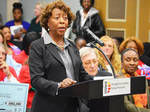
Herald File Photo
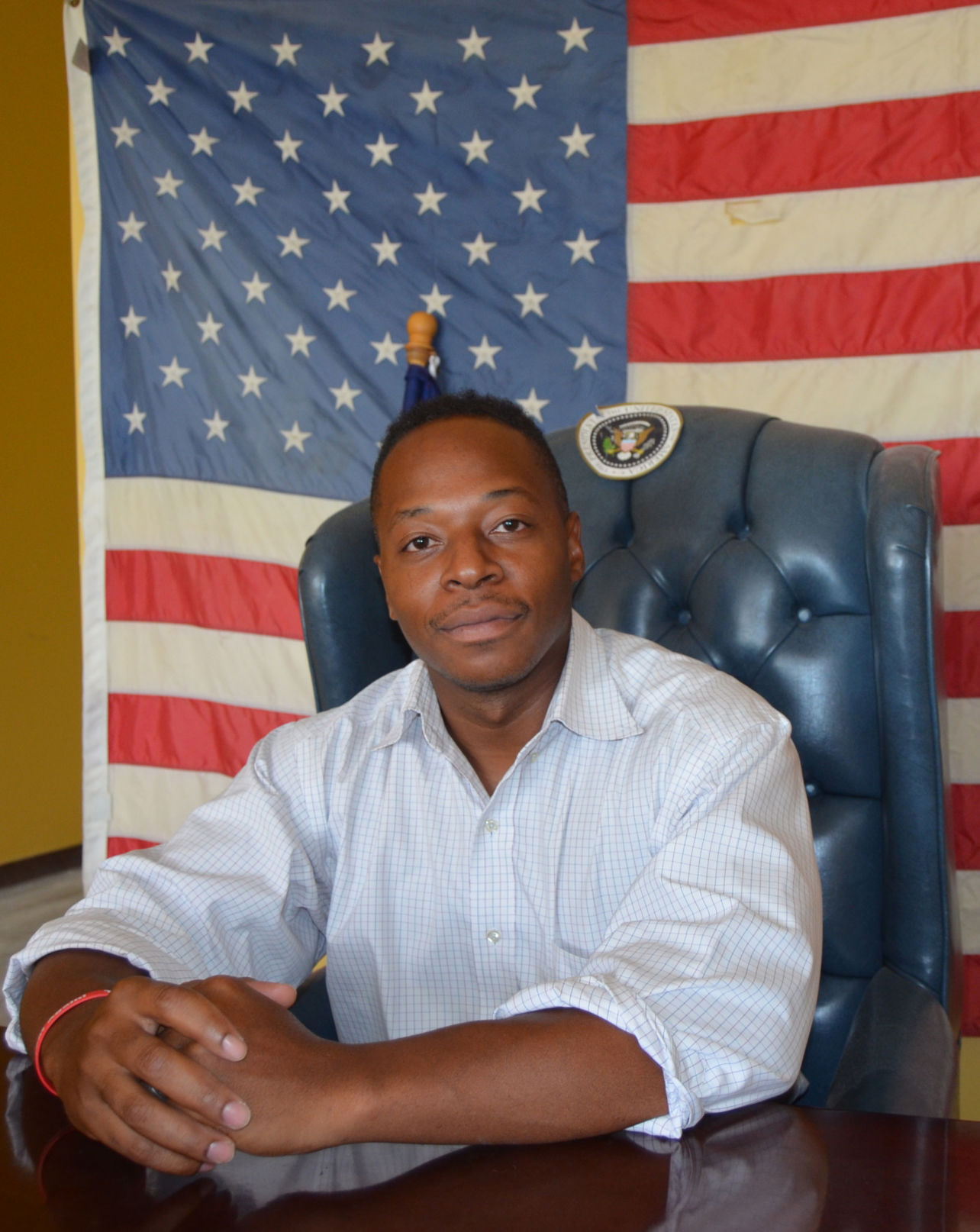
By Alan Mauldin
[email protected]
Editor’s Note: First in a series on southwest Georgia political races that will be decided during the Nov. 3 election.
ALBANY — Freddie Powell Sims has been representing southwest Georgia under the Gold Dome in Atlanta for 16 years. To Sims, that is a plus; but for her opponent, Tracy Taylor, it is not such a good thing.
“That’s why people should vote for me,” said Taylor, an Albany firefighter. “This senator has been in office since 2008, and to be frank, I haven’t seen a single change since 2008.”
Taylor, an Albany Republican, previously has been a candidate for the Dougherty County Commission, in 2013; Albany mayor, in 2015 and 2019, and the Georgia House of Representatives, in 2018. Sims served in the House of Representatives from 2005 through 2009 before being elected to the Senate.
For Sims, a Dawson Democrat, 2020 was a year in which she and other members of the southwest Georgia delegation almost literally built a bridge — or at least secured funding to fix one.
During a session in which spending was cut initially due to a drop in revenue and then slashed to deal with the impact of COVID-19, the Georgia Legislature approved a grant of $1.5 million for the Dougherty County Commission. The funds will be used to renovate the bridge located where Skywater Creek flows into the Flint River and is part of a trail network that starts at the former nearby golf course.
Sims, a retired educator, could use that as a metaphor for the bridges of communication she has built during her tenure, a development she said serves residents well.
“This is how southwest Georgia receives appropriations, by building relationships with people in government who can help us, and especially (with) appropriations,” said Sims, who serves on the Appropriations Committee as well as the Agricultural and Consumer Affairs and Natural Resource and Environment Committees and is secretary of the Education and Youth Committee. “That is important because you get a seat at the table; you build relationships with people.”
While the Skywater Bridge seemed an unlikely candidate for funding as a pure recreation project, to the state it meant more.
“What they told us in Appropriations is it’s an economic development project as well,” Sims said. “It’s going to work with tourism as well as recreation. Essentially, it’s going to have an economic piece to it that’s going to be good for the community.”
The Radium Springs area was ravaged by flooding in 1994 and 1998 and by a 2017 tornado.
“Albany has been rebuilding infrastructure, and we reminded them of the storms we have experienced,” Sims said. “Our needs are very dire.”
Georgia, like the rest of the nation, has been hard hit by the novel coronavirus and the state’s farmers are struggling, as are school systems looking to return to classes or continue online instruction. The move to online learning has made the region’s lack of broadband internet access even more apparent, Sims said. Internet access is one of the big infrastructure needs of the area. Health care is another key concern of the region.
The state was unable to keep a hospital in Cuthbert open because the aging building needed a replacement that would have cost millions of dollars, Sims said. Where the state can help is by building and staffing clinics and making sure local governments have resources needed to stabilize patients for transfer to regional facilities.
COVID-19 also has made evident the need for additional spending on health care. That’s also the case for education.
Many of the jobs lost during the pandemic are not coming back, Sims said, and that means more people will seek training for new skills at Albany State University, Albany Technical College, Andrew College and Georgia Southwestern State University.
“It’s not only K through 12 education, it’s post-secondary level,” she said. “Our colleges, universities, technical colleges. That is our work force development.
“My thing is, is it a quality education? Does it address the needs of our Georgia children? That’s what we’re working on right now. Right now we need it more than ever, because of COVID.”
Having quality educational institutions in the region also helps residents learn at home and makes them more likely to remain in the region after completing their education, Sims said.
“We need to train and keep as much educational capital in southwest Georgia as we possibly can,” she said.
Taylor’s chief criticism of Sims involves education, specifically a bill introduced in 2019 that would have removed the state’s three historically black colleges and universities — Albany State, Fort Valley State and Savannah State — from the umbrella of the University System of Georgia.
Sims has said she was unaware of changes to the original intent of the committee to improve the three universities and did not support the legislation.
“I’m running because Sen. Sims wanted to merge the three colleges,” Taylor said. “With that merger, it would have been devastating. As a resident in Dougherty County that would have been detrimental to the people who have graduated from Albany State and who attend Albany State. It would have been bad for the community.”
Taylor also said that more should have been done to keep the hospital in Cuthbert open. The hospital’s announcement it was closing its doors in October brings home the critical need for more resources for rural health care, he said.
“As a state senator, I would be able to talk to the governor and talk about a health care plan designed to bring in doctors from all across the state, especially in rural parts of the state and (ask) for state money for private clinics in rural Georgia,” Taylor said. “Rural Georgia is being hit bad.’
As a senator, Taylor said, he would be able to work to secure federal funding for rural health care.
There are other critical infrastructure needs in District 12, Taylor added, and as the chairman of the Dougherty County Republican Party, Taylor said he is in a position to work with the Republican majority in Atlanta.
“I want to bring back jobs,” said Taylor, who pointed to success in Bainbridge and Valdosta as opposed to the Albany area. “I know we can bring manufacturing jobs to Dawson and Albany.
“They say things a lot of the time about Albany being in the running, but those projects went to other districts that should have gone to the 12th.”
Taylor knows that one of his proposals — the decriminalization of marijuana — may not seem a natural for support in a city like Albany, where voters have yet to approve package beer sales on Sunday. However, he said that such a move could be a boost to the economy and give farmers another crop to grow.
Georgia allowed farmers this year to begin growing marijuana’s relative, hemp (actually the same plant grown using different methods of harvesting). Taylor pointed to the Pretoria Fields Collective hemp operation as a success story that will benefit the state through tax revenues and jobs.
The company, which operates a downtown brewery, distilled the first hemp oil in the state earlier this year and is manufacturing CBD and hemp products for medicinal use.
Taylor said he would like to create an opportunity for farmers, at least for growing marjiuana for use in medications used to treat seizures and cancer patients, if full decriminalization does not have sufficient support currently.
He said he has heard of no ill effects in states where marijuana has been legalized and pointed to the tax money generated for those states.
“I believe we can decriminalize it and tax it and bring in more revenue so more revenue is coming in for health care,” he said. “I believe in growing revenue, not raising taxes.
“Georgia is a big agriculture state, so it will allow our farmers to come into the revenue as well.”
Author

Related Articles
Albany Herald – July 14, 2026
In Lee County, they saw it… Bigger budget will mean improvements at… Small actions can help save…

Classifieds – July 14, 2026
Albany Classifieds and Legals…
‘Just Africa’ festival scheduled for third weekend in September in downtown Albany
A taste of the Caribbean and Africa is coming to Albany with a fall festival that will also bring African dance, a parade of children’s fashions, as well as vendors, live bands, and arts and crafts.
