
John White: A voice that moved from the anchor’s desk to the state Capitol
Southwest Georgia has lost one of its true originals in former Georgia state Rep. John White, a man whose life cannot be measured by one title alone.
ALBANY — Southwest Georgia has lost one of its true originals in former Georgia state Rep. John White, a man whose life cannot be measured by one title alone.
White was a broadcaster, legislator, civil rights leader, public servant, mentor, and one of Albany’s most consequential political figures. Before he carried Albany’s concerns into the halls of the Georgia Capitol, White first made history in front of the camera. He became local television station WALB’s first black male anchor, opening a door at a time when even visibility on television carried the weight of struggle, resistance and representation.
But John White did not stop at being seen. He insisted on being heard.
As a member of the Georgia House of Representatives, White served for more than two decades and helped shape conversations far beyond Albany. He played a role in making Ray Charles’ “Georgia on My Mind” the official state song. He also stated that he wrote and introduced the Georgia Lottery Bill in the House of Representatives in 1977, an idea that, years later, would become one of the most consequential education funding mechanisms in modern Georgia history.
That point matters. Before the lottery became scholarship checks, pre-K classrooms, campaign slogans, and accepted public policy, there had to be someone willing to introduce the idea. White was one of those men who saw the future before the crowd caught up.
For me, this is not just a public remembrance. It is personal. As an impressionable teenager who relocated to Albany because of my family’s job transfer, I was introduced early to the local political scene. My parents immediately began volunteering in campaigns and civic efforts. Before long, I found myself knocking on doors, setting up yard signs, and meeting the politicians of that era. John White was one of those figures.
Years later, our paths would cross again in politics, business, and community work. In 2000, we successfully helped bring the Organization of African Kings and Queens into partnership with the Atlanta Black Chamber of Commerce, connecting cultural identity, economic development, and black institutional
power in a way that reflected the kind of bridge-building White understood so well.
But before the public work, before the meetings and formal partnerships, White and I became friends. We traveled the backroads of Georgia together, and during those rides I received an education that no classroom could have provided. He shared history, strategy, political wisdom, and a deeper understanding of how power actually moved in Georgia.
I vividly remember traveling to the state Capitol and seeing redistricting software provided by the University of Georgia. Ironically, redistricting was a major issue being emphasized at the time, and there I was, witnessing first-hand the machinery behind political representation. Those moments stayed with me.
John White was not simply talking politics; he was teaching me how to see politics, how lines on a map, relationships in a room, and courage in public service could shape the future of entire communities. That is why his legacy should not be reduced to a resume.
Albany should remember him not merely as a former elected official, but as a bridge between eras: from segregation’s shadows to television screens, from local advocacy to state legislation, from symbolic victories to practical policy. He came from Albany, but he did not allow Albany to limit him. He stepped into media when representation mattered. He stepped into politics when courage mattered. And he helped push ideas that would outlive the headlines of his time.
John White’s life reminds us that southwest Georgia has produced people who shaped Georgia, not just Dougherty County. He was proof that a voice from Albany could travel to the Capitol and leave fingerprints on history. His passing should make us pause, not simply to mourn, but to remember what public service once looked like when it was rooted in purpose, relationships, courage and vision.
Rest well, Rep. John White. Albany remembers. Georgia benefited. And those of us who still believe public service should mean something are left with your example.
Author

Related Articles

Dawson City Council uninformed as state freezes sewer loans, audits remain incomplete
With three overdue audits, no Mauldin & Jenkins briefing on Thursday’s agenda and funding deadlines approaching, the larger question is increasingly urgent: How will Dawson pay to finish the work, and what will further delay mean for the future reliability of the city’s water and wastewater systems?

Across a county line, foster care rates reveal stark divide
An abandoned home in Dawson sits overgrown and deteriorating, one example of the city’s ongoing struggle with blighted and unusable housing. Dawson’s long-range planning documents identify both a high vacancy rate and a need for more safe, affordable housing. Staff Photo: Kathryn Crockett
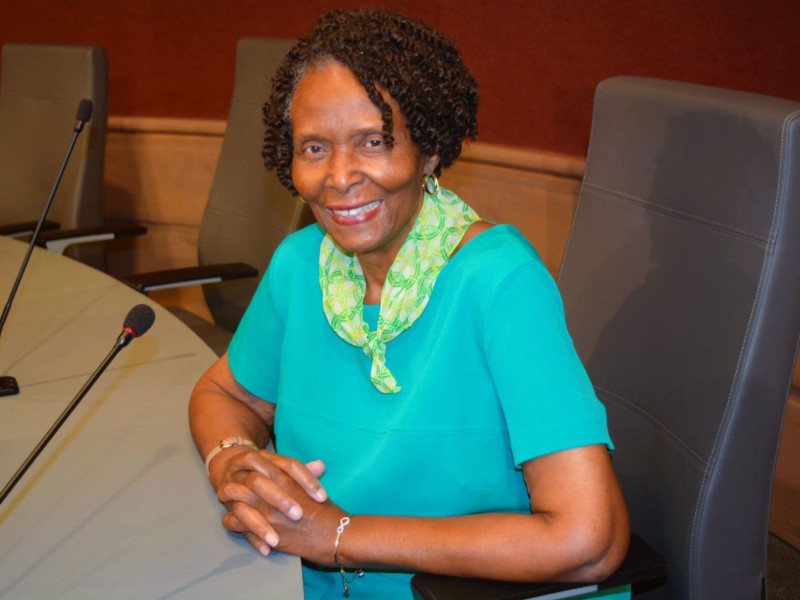
Dougherty Commissioner Gloria Gaines to serve as honorary sponsor of 2027 international conference in Atlanta
“By Alan Mauldin
[email protected]
ALBANY – In 1898 academic and sociologist W.E.B. Du Bois traveled to southwest Georgia during his summer break from teaching to investigate the lives of black residents in the “Black Belt” and later covered his sociological studies of the region in two chapters of his book “The Souls of Black Folk.”
The academic and peace activist’s visit and subsequent account was more than an intellectual exercise, however, according to Dougherty County Commissioner Gloria Gaines.
Du Bois’ account inspired South Carolina native Joseph Winthrop Holley to move Albany, where he founded the Albany Bible and Manual Training Institute. The institute later became part of the University System of Georgia and became a four-year college in 1943 before its last renaming in 1996 as Albany State University.
Holley was inspired by Du Bois’ writing, said Gaines, who will be an honorary sponsor of The International Conference on W.E.B. Du Bois: Race, Democracy and Global Justice in 2027. The conference is scheduled for April 9-11 in Atlanta.
“I am in admiration (of) his impact on the founding of Albany State University,” she said. “I also appreciate his political philosophy as well. He was clearly identified with Atlanta University and education.”
During her time at Albany State Gaines worked in the office of civil rights attorney C.B, King.
She holds a master’s degree in community development and worked as an assistant general manager for MARTA.
Her travels also have taken her to Africa, where she worked and met Nelson Mandela and Archbishop Desmond Tutu.
For the 2027 conference, Gaines has collaborated with individuals including professor Preston King, C.B. King’s youngest brother..
Last year she traveled to Accra, Ghana, where DuBois died after he was stranded out of the United States for his opposition to nuclear weapons and had his passport renewal denied, for his 157th birthday celebration.
The conference will feature discussions of democracy, equality and human dignity, Gaines said
“Those are issues that were important to him,” she said. “Now is a good time to talk about democracy. Some may see it as under threat. I think this conference will be timely. It’s a timely issue, not just for black folks as well as human dignity and equality within the country.”
