
Kemp proposes record $32.5 billion state budget
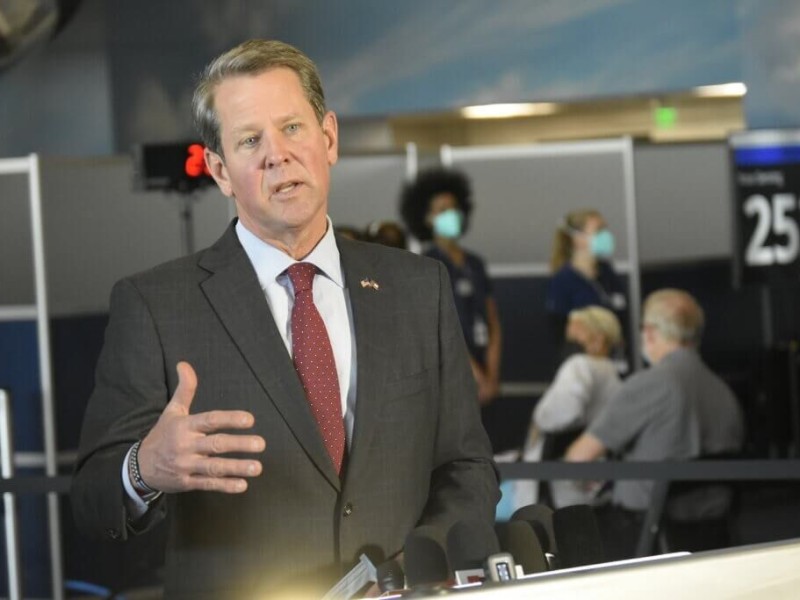
Ross Williams/Georgia Recorder
By Dave Williams
Capitol Beat News Service
ATLANTA — Gov. Brian Kemp released a $32.5 billion Fiscal 2024 state budget proposal Friday that’s heavy on spending for education and gives Georgia teachers and state employees $2,000 raises.
The spending plan, up more than $2 billion over this year’s record budget, is built on an all-time high state surplus of more than $6 billion.
“As we look ahead to the upcoming fiscal year, we expect the state’s economy to be well-positioned to withstand any further national economic slowing,” the governor wrote in his annual budget message to legislative leaders. “As such, the … budgets I am presenting herein ensure that we continue to meet our financial obligations as a state while also investing in the education, health, and safety of our citizens to maintain our position as the best state in the country to live, work and raise our families.”
Kemp is calling for fully funding Georgia’s Quality Basic Education K-12 student funding formula with $745 million in the Fiscal 2023 mid-year budget — which covers state spending through June 30 — and $1.1 billion in Fiscal 2024. The QBE was not fully funded when Georgia was suffering leaner economic times, but full funding has been restored for the last several years.
On the higher education side, the governor’s budget earmarks $61.2 million to fully fund the HOPE Scholarship program for the first time since then-Gov. Nathan Deal and the legislature cut HOPE benefits more than a decade ago due to growing demand for scholarships combined with rising tuition costs.
After raising teacher salaries in Georgia by $5,000 during his first term, Kemp is calling for another $2,000 raise for teachers and other certified educators. State employees also would see their pay increased by $2,000.
Kemp is fulfilling a promise he made on the campaign trail last year to provide a second $1 billion state income tax rebate on top of the refund Georgia taxpayers received last year. He also is proposing $1.1 billion in property tax relief to homeowners.
“These actions will put real money back in the pockets of hard-working Georgians facing unforeseen jumps in property values and record-high inflation,” the governor wrote.
Other major goodies for education include $115 million to give every K-12 public school a $50,000 school safety grant and $25 million in “learning loss” grants to help offset the impacts of the pandemic on student instruction.
With Georgia poised to become a leader in the electric mobility space, the proposed budget calls for $130 million to build two training facilities for workers in the state’s fast-growing electric vehicles manufacturing industry.
Kemp is seeking to repurpose $35.7 million from the state’s One Georgia rural economic development fund to launch a Rural Workforce Housing Fund to help ensure an adequate supply of housing for workers who will fill the jobs being created in rural communities.
Another $52 million would go to Georgia Pathways, the limited expansion of the state’s Medicaid program backed by Kemp, which is expected to launch in July. The governor also is requesting $25 million to build an additional state prison.
The state House and Senate Appropriations committees will kick off the legislative review of Kemp’s budget recommendations with three days of hearings next week.
The governor will open the proceedings Tuesday with a remote presentation from Switzerland, where he will be appearing on a discussion panel at the World Economic Forum.
Notable budget proposals in this year’s report include:
♦ $1 billion to provide a second state income tax refund, ranging from $250 for single filers to $500 for joint filers, to every eligible taxpayer in Georgia;
♦ $1.1 billion for a one-time Homeowner Tax Relief Grant program that will provide property tax relief of, on average, $500 for every eligible homeowner;
♦ An additional $745 million in AFY 2023 and more than $1.1 billion in FY 2024 for K-12 education, fully funding the Quality Basic Education formula;
♦ $303 million to adjust the state base salary schedule to give certified education personnel a $2,000 raise. This will bring the total pay increase for educators under Gov. Kemp’s administration to $7,000;
♦ $15 million in grant funds to encourage paraprofessionals to pursue teaching certification, growing the teacher work force;
♦ $115 million in AFY 2023 for $50,000 school safety grants to every K-12 school in the state;
♦ $26.9 million to increase funding for school counselors to help address student emotional and mental well-being;
♦ $25 million for learning loss grants to allow schools to tailor programs to fit the unique needs of their student body;
♦ An additional $61.2 million to fully fund HOPE scholarship and grant awards at 100% of tuition at all Georgia public higher education institutions (saving full-time students an average of $444 each year);
♦ $166.7 million in the Amended FY 2023 budget for the Regional Economic Business Assistance program that will assist local governments in providing incentives to support business development statewide;
♦ A reallocation of $35.7 million within OneGeorgia to establish the Rural Workforce Housing Fund, allowing local development and housing authorities to prepare land for housing developments to support upcoming economic development projects and ensure the work force has access to quality housing opportunities;
♦ $52 million to implement the Georgia Pathways to Coverage program established by the Patients First Act to increase health insurance access statewide;
♦ $92 million in both the AFY and FY budgets for the state reinsurance program to reduce insurance premiums and increase affordability of health care. With this program, Georgians have seen not only an increase in health care insurance options but also meaningful savings, with an average decrease in premiums of 12.4%.
♦ $3.2 million for a loan repayment plan for state and local law enforcement, providing up to 800 officers with loan repayment of up to $20,000 per officer in exchange for five years of service.
♦ $243 million in FY 2024 to provide state law enforcement and other state employees with a cost-of-living pay increase of $2,000.
Author

Related Articles
Albany, Dougherty County looking at data center regulations
“Data centers are going to come to Georgia. Data centers are already in Georgia. Property owners have a right to sell their property. It is the responsibility of local government to zone and protect the community you are in.”

Third time’s the charm? Developer brings plans for downtown hotel project to Albany Commission
Albany city commissioners got their first look Monday at a proposed downtown hotel and branding project with a major market chain.
Congress weighs packaging bill with implications for Albany manufacturers
A congressional hearing this week on proposed national packaging-labeling standards could have implications for several of Southwest Georgia’s largest manufacturers, many of which produce or package products shipped across state lines.
