
Lee County commissioners discuss equipment, ag park plan

File Photo
By Tom Seegmueller
[email protected]
LEESBURG – A discussion regarding the lease and purchase of tractors for Public Works was the major focus of Tuesday’s Lee County Commission Meeting. A three-year lease of four tractors from Flint Equipment Co. is set to expire, and a variety of options are available to the county.
Commissioner John Wheaton questioned why the county was using large tractors to pull 5-foot mowers when smaller tractors might be better suited for the task. Todd Rice with Flint Equipment explained that the mowers the county had chosen to use three years ago were a much heavier and higher-geared model than a standard ag mower and that a 120-horsepower tractor was considered the minimum standard for use with these mowers.
Wheaton said he had been to the Public Works yard to inventory equipment a few weeks ago and that the only mowers being used were 5-foot models.
The county could elect to buy back two tractors for $101,310 or turn them in and lease two 2021 models. This option led to a discussion of benefits of either choice relating to cost, warranty and operation. Commissioners agreed that they needed more information to make an informed decision, including how many hours were put on the tractors annually.
The commission also agreed at the meeting to work up a policy for the operation of food trucks on county property. The policy would include a uniform permitting process as well as a map outlining where trucks could operate on approved sites. The county’s recreation department is looking into having food trucks available at ball parks and recreation sites.
Another discussion revolved around developing a design and plan for the planned 100-acre ag park. The commission agreed there is a need to appoint a committee to address the design and utilization of the site.
Commissioner Rick Muggridge requested that consideration be given to creating a map that would identify the areas in the county that do not have internet or broadband service.
“Where are the holes in our service?” Muggridge asked. “We need to know the best investment to benefit opportunities and, if we are going to spend money, where it makes the biggest difference.”
Related Articles
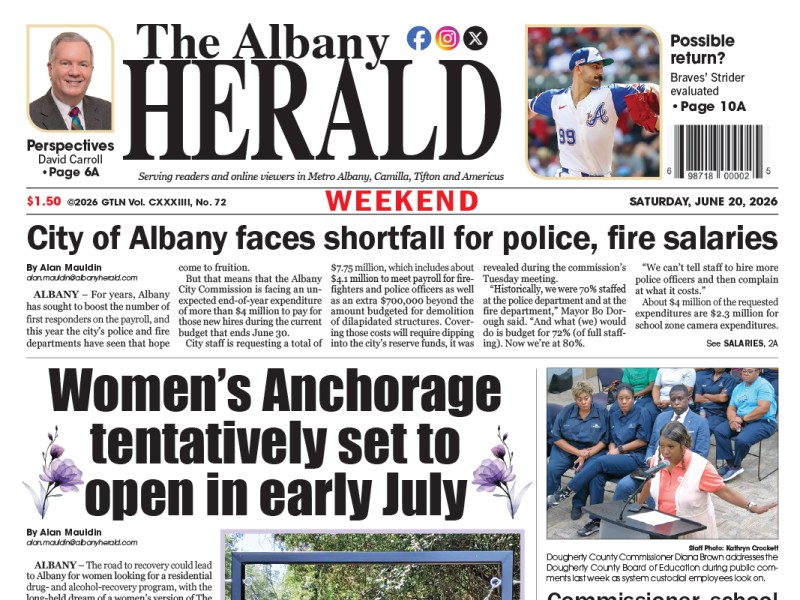
Albany Herald – June 20, 2026
City Albany faces shortfall for police… Women’s Anchorage tentatively set to… Commissioner, school leaders clash over…

Classifieds – June 20, 2026
ALBANY HERALD CLASSIFIEDS JUNE 20, 2026

Public safety drives Leesburg’s $4.2 million Fiscal Year ’27 budget
The adopted spending plan reflects modest growth in city revenues and continued emphasis on maintaining core municipal services, particularly public safety and sanitation, which together account for a significant share of general fund expenditures.
