
Lee County proposes tax rate cut as homestead cap reshapes tax digest
Lee County commissioners plan to lower the county’s property tax rate for 2026. The new rate would reduce what the county collects for day-to-day operations for the first time since 2022.
Commissioners will vote Monday on a rate that would bring in about $287,000 less than last year
LEESBURG — Lee County commissioners plan to lower the county’s property tax rate for 2026. The new rate would reduce what the county collects for day-to-day operations for the first time since 2022.
The county held a public hearing Tuesday on a proposed maintenance-and-operations rate of 11.17 mills, down from 12.317 mills last year. At that rate, the county expects to levy $16,006,522. That’s $286,513 less than the $16,293,035 it levied in 2025, a decrease of 1.76%.
“We are looking at a rollback to 11.17 mills,” Chairman Luke Singletary said Tuesday. He added that the rate means “no tax increase for the county.”
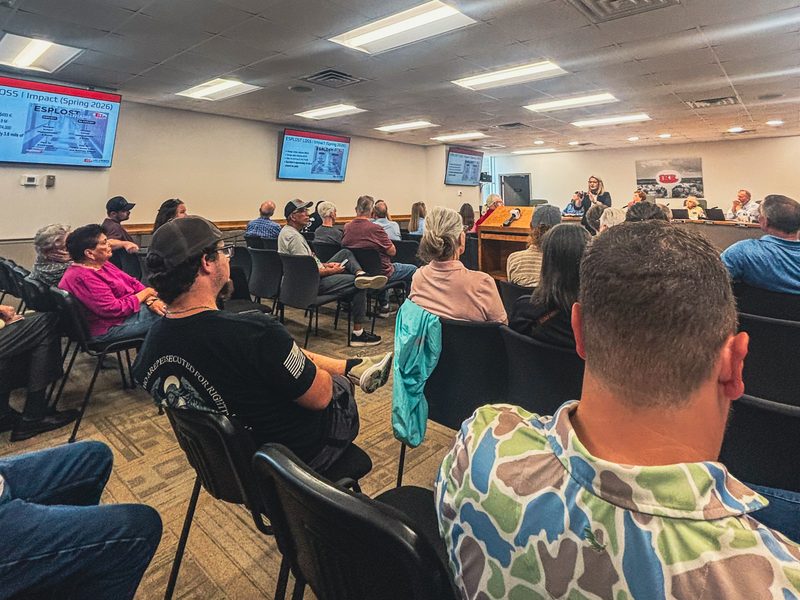
No one from the public spoke at the hearing. Commissioners will vote on the rate at a special called meeting at 6 p.m. Monday in the Opal Cannon Auditorium of the T. Page Tharp Governmental Building, 102 Starksville Ave. North, in Leesburg.
Values rise, exemptions rise faster
The value of real and personal property on Lee County’s tax digest rose to $1.92 billion this year, up 18% from $1.63 billion in 2025. Much of that growth isn’t taxable. Exemptions climbed to $512.8 million, up 55% from $329.7 million last year. In 2024, before the latest changes, exemptions totaled $151.3 million.
The increase lines up with Georgia’s floating homestead exemption, created by House Bill 581 and approved by voters in November 2024. The exemption limits how much the taxable value of a homesteaded home can rise each year to the rate of inflation, using 2024 values as the starting point. It took effect in 2025.
Local governments had until March 1, 2025, to opt out, and Lee County did not. When a home’s market value rises faster than inflation, the difference is recorded as an exemption and removed from the taxable digest.
After exemptions, the county’s net taxable digest is $1.43 billion, up 8.3% from $1.32 billion last year.
What it means for tax bills
A mill is $1 in tax for every $1,000 of assessed value. Georgia assesses property at 40% of market value, so a home worth $250,000 is assessed at $100,000 before exemptions.
At that value, the cut of 1.147 mills would lower the county’s share of the tax bill by about $114.70, as long as the assessed value stayed the same.
Homesteaded homeowners are the ones most likely to see that savings. The exemption limits how fast their taxable values can grow, and the lower rate applies on top of it.
Rental houses, second homes, farmland, timberland and commercial property get no inflation cap. When their values rise, the full increase is taxable, so some of those owners could still see a higher county bill at the lower rate.
The county’s levy is only one part of a property tax bill. The Lee County Board of Education and city of Leesburg set their own millage rate separately.
Recent history
The proposed cut follows a 9.55% increase in county operations taxes in 2025. That year, the county collected $1.42 million more than in 2024, even though it trimmed the rate slightly, from 12.38 mills to 12.317. Collections also rose 3.16% in 2023 and 3.20% in 2024.
This year’s rate starts at a gross figure of 14.55 mills. Local-option sales tax revenue then reduces it by 3.38 mills, to the proposed 11.17.
At the board’s Sept. 22 meeting, Singletary said he hoped to set the rate in October with no tax increase expected.
At that same meeting, resident Brian Granberry asked whether taxpayers could end up covering $30 million in bonds tied to the Lee County Hospital project. Commissioner Billy Mathis said no tax increase is foreseeable because of the bonds.
Related Articles

PHOTOS: 2026 Albany State Homecoming
Click the arrow to scroll through the photos…five different galleries.

48th Sunbelt Farm Expo set to kick off next week in Moultrie
“It’s like down home week, coming to see all the friends, and that’s very reassuring to see. We look forward to welcoming 40,000 or 50,000 of our closest friends to the Sunbelt Expo.”
Lee County residents press school board for alternatives before Thursday’s tax vote
Lee County residents urged school board members Friday to reconsider spending, find other revenue and weigh the strain on household budgets before voting Thursday on a proposed 3-mill property tax increase.
