
Lee leaders hope citizens display address numbers

Photo by Carly Farrell
Carlton Fletcher
LEESBURG, Ga. — On enough occasions to spike the concerns of Lee County’s various public safety directors, emergency personnel in the county have answered 911 calls, only to have their efforts hindered by the lack of legible address numbers on the residence to which they’ve been dispatched.
The issue has become such a safety concern that Lee’s E-911 coordinator, sheriff, Code Enforcement officer, EMS director and fire chief have taken on the challenge of alerting residents to the dangers of not having properly installed and reflective address numbering.
“It happens just about every day,” EMS Director Bobby Watkins said. “What some people don’t seem to understand is that when emergency personnel have to spend time trying to find the address from which a call was made, it’s eating up precious minutes.
“Sometimes those minutes are the difference between life and death.”
Lee E-911 Coordinator Larry Hill, whose first duty in that position was to reassign numbered addresses to all structures in the county, notes that there is an ordinance in the county’s code (Article III, Sections 18-66 and 18-67) that outlines the proper display of addresses.
“There is an ordinance that specifically states the numbers must be posted, that tells where they should be posted, and that gives the size and other specifications of the address numbers,” Hill said. “One of the things we’ve all agreed to do is take a look at the ordinance to see if there should be any changes or modifications.
“But everyone agrees that we’ve got to put our public safety personnel in a position where they can answer emergency calls and offer help as quickly as possible.”
Lee code stipulates homeowners must remove any numbers on a structure that might be mistaken for its address or make necessary corrections if the address changes; the address must be posted at the entrance to the property and must be visible to vehicles approaching from either direction; multiple single-family structures accessed by the same entrance must post the address at the entrance to the property and on the structures themselves; and numbers utilized must be reflective, 4 inches tall with a width of at least one-half inch and must be of a contrasting color to their background.
Residents who refuse to comply with the ordinance could be fined up to $100 and be required to reimburse the county for the cost of proper numbering.
“People talk about aesthetic issues or intrusion on their privacy rights, but this is a safety issue,” Fire Chief James Howell said. “It’s an ongoing problem in the county, and it’s one that has to be dealt with.
“Whether it’s medical personnel, fire or a law enforcement issue, these folks need to get to the call in a hurry. We’re having a tough time dealing with this issue, so we’re determined to find a happy medium that everyone can live with.”
Code Enforcement Officer Jim Wright said he and other public safety leaders have trouble buying the “government intrusion” argument that some have embraced as an excuse for not complying with the ordinance.
“This is a very serious issue,” he said. “What if you’ve got a child choking to death or a loved one who needs a defibrillator? In situations like that, seconds do count. And the seconds that emergency personnel spend riding the roads looking for correct addresses could be seconds that make the difference in a real life-or-death situation.
“And really, we’re talking about a few dollars. Isn’t it worth a few dollars to make it easier for EMS, fire/rescue and law enforcement to find you?”
Hill said the public safety directors are looking at ways to make sure the public is aware of the address numbering issue.
“We’re going to look at informing the public on some kind of identified basis going by sections of the county,” he said. “We’re going to get as much information as we can up on our website (lee.ga.us), show the people what is acceptable and let them know where they can find the reflective numbers.”
The issue is, Wright notes, too important to take lightly.
“This is truly one of those instances where we’re trying to help people help themselves,” he said. “The consequences of this issue are too severe; we’re talking about endangering people’s lives.
“When public safety personnel have to search for an address in an emergency situation, it’s most likely already too late for the person in need.”
Related Articles
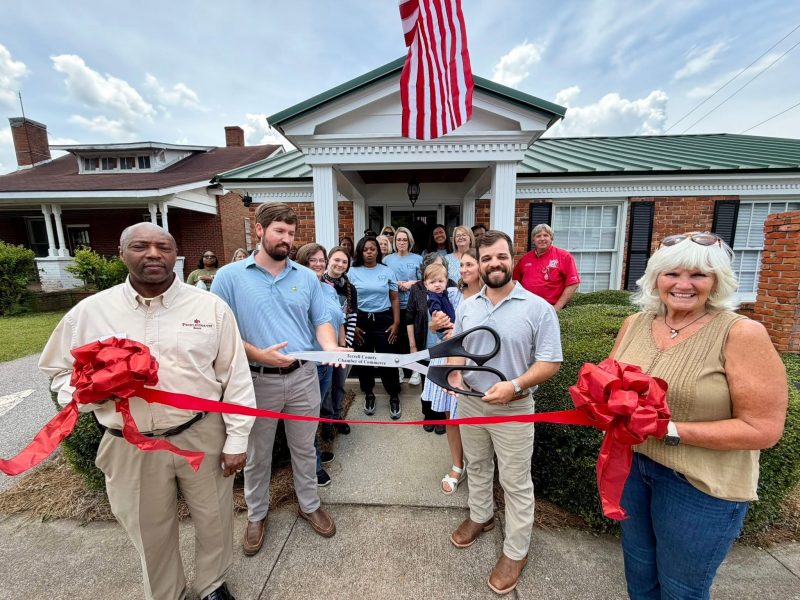
Chamber celebrates new businesses, invites community to Coffee and Connections event
The Terrell County Chamber of Commerce is continuing its efforts to strengthen local business relationships through community celebrations and networking opportunities, recently recognizing two new businesses with ribbon-cutting ceremonies and announcing its next “Coffee & Connections” event in Sasser.

Classifieds – June 20, 2026
ALBANY HERALD CLASSIFIEDS JUNE 20, 2026
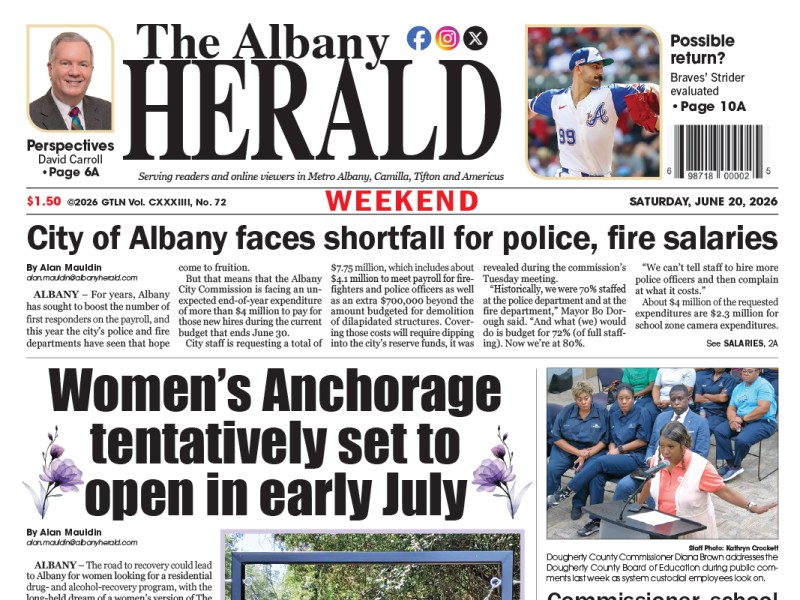
Albany Herald – June 20, 2026
City Albany faces shortfall for police… Women’s Anchorage tentatively set to… Commissioner, school leaders clash over…
