
Local Government 101: Dougherty County services mandated by state
Carlton Fletcher
Editor’s note: This is the second part of a three-part series.
ALBANY — As a creation and subdivision of the state of Georgia, the laws that govern Dougherty County are primarily created by the General Assembly in Atlanta.
But when it comes to the delivery of services, from Emergency Medical Services to garbage collection and disposition to road repairs, Dougherty officials are governed by a Code of Ordinances that outlines — in detail — what actions must be taken to ensure those services meet taxpayer expectations.
What that means, in essence, is that the county’s elected seven-member commission is responsible for making decisions that primarily impact 17,000 county residents who live outside the Albany city limits.
“Of course, we have agreements with the city where we provide some services countywide and they provide others,” County Attorney Spencer Lee said. “In cases like that — where, for instance, we provide EMS services and the city provides fire protection — pro rata costs are paid for the services.
“In the unincorporated area of the county, we’re responsible for such services as fire protection and law enforcement. We provide, and pay for, fire stations and equipment, but we pay the city of Albany for fire services. But we are responsible for law enforcement protection that we provide through the Dougherty County Police Department.”
Established by the General Assembly in 1853 on land that was carved from Baker County, Dougherty County, as a state entity, is primarily responsible for the collection of taxes and for setting the tax digest in the county. But, as Lee notes, that power does not fall directly on the county government.
“The Tax Assessor’s Board is appointed by the County Commission, but they work independently,” the county attorney said. “They determine the value of property in the county, and that information is passed on to the tax director’s office, which collects taxes due all three taxing authorities in the county: the city, School Board and the county.
“It’s been said that the county sets the tax digest, but that’s not exactly accurate. The digest is based on decisions made by the Tax Assessor’s Board.”
The county’s Code of Ordinances, as adopted by the County Commission and approved by the state Legislature, calls for a governing board made up of six distinct district representatives, elected by voters within the geographic boundaries of those districts (commonly referred to as single-member districts), and a chairman who is elected at-large. County elections are partisan, so candidates must declare party affiliation.
The Code of Ordinances also includes specific guidelines for commission eligibility (the chairman must have been a resident of the county for a year, a commissioner a resident of his or her district for at least six months), how to fill vacancies on the commission and the responsibilities of the appointed county administrator.
The code book also lists specific powers of the board, including levying taxes, establishing and changing election precincts, supervising the tax director’s office, making rules to support the poor and to promote public health, regulating license fees, selecting and appointing “minor officials” not provided by law, collecting taxes on alcoholic beverages, providing a system for garbage disposal, making road improvements and creating rules for regulating the development of real estate.
County commissioners’ salaries are regulated by the state. (In part 1 of this series, The Herald incorrectly reported that commissioners are paid $3,000 and the chairman $3,600, based on information on the county code currently online. The state has raised that salary on several occasions since the online version of the county’s code was created. County Clerk Jawahn Ware said Monday that commissioners are now paid $9,600 annually, while the commission chairman is paid $10,800.)
The county’s code has been updated on a number of occasions, and Ware said the last time it received a complete overhaul was “sometime in the 1970s.” But Administrator Richard Crowdis, whose various duties are outlined in the Code of Ordinances, said tweaks are made at regular intervals when appropriate.
“It’s true that every so often you need to update your codes, but it’s quite an undertaking with a pretty significant expense,” Crowdis said. “It’s one of the things we’ve talked about doing, but it’s something that would take up a lot of our county attorney’s time. It’s something Spencer and I have talked about, but it’s not exactly a high priority.
“Our codes’ relevance are based primarily on state law, and they’re supported by court rulings. That’s one of the big differences in a city and a county. Counties are set up by the state Legislature and are bound by state laws, while cities have more flexibility. Counties have to provide — and finance — services that are mandated by the state.”
In addition to being responsible for the budgets of the judges and officers of state and superior courts, the county must also provide funding for the sheriff’s office. Its primary responsibilities also include the Board of Registration and Elections, the Albany-Dougherty Hospital Authority and the Albany-Dougherty Payroll Development Authority.
A list of departments and boards (including joint city of Albany/Dougherty County authorities) for which Dougherty County is responsible includes the tax director’s office, Public Works, Emergency Medical Services, recreation, inspection, purchasing, police, E-911, the Citizens Transportation Committee and the Library Board.
“It takes something of an in-depth knowledge of government to understand all that it involves, so I guess I’m really lucky that we have an administrator (Crowdis) who is a historian and a county attorney (Lee) who is very knowledgeable about the community,” Ware said. “We may need clarifications at times, but there are few things these two aren’t familiar with. Still, the need to update codes and ordinances changes with the needs of a community’s citizens.
“Unfortunately, many citizens aren’t aware of the distinct differences in the county and the city and the way they’re governed. They’re not aware of the different responsibilities each has. So we end up with calls from confused citizens looking for answers that are often out of our jurisdiction. There needs to be a better understanding of what each government does.”
TOMORROW: The city of Albany.
Related Articles
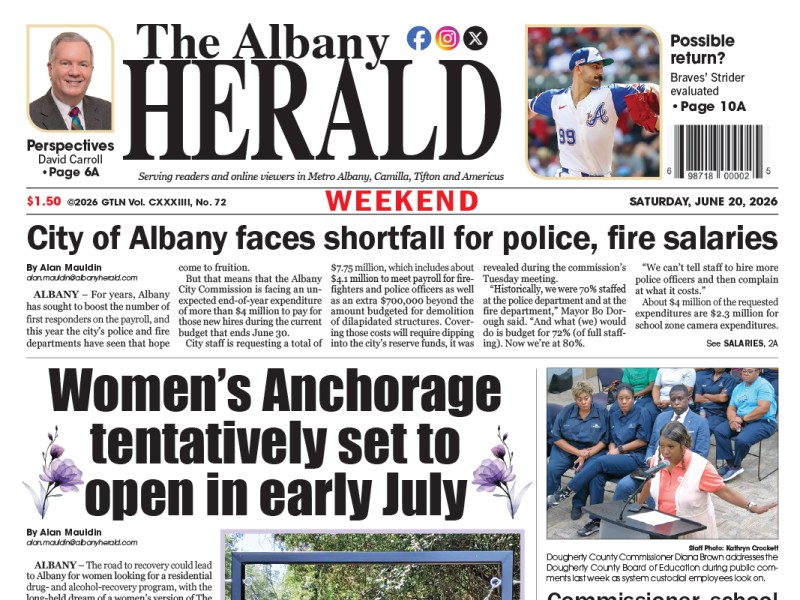
Albany Herald – June 20, 2026
City Albany faces shortfall for police… Women’s Anchorage tentatively set to… Commissioner, school leaders clash over…

Classifieds – June 20, 2026
ALBANY HERALD CLASSIFIEDS JUNE 20, 2026
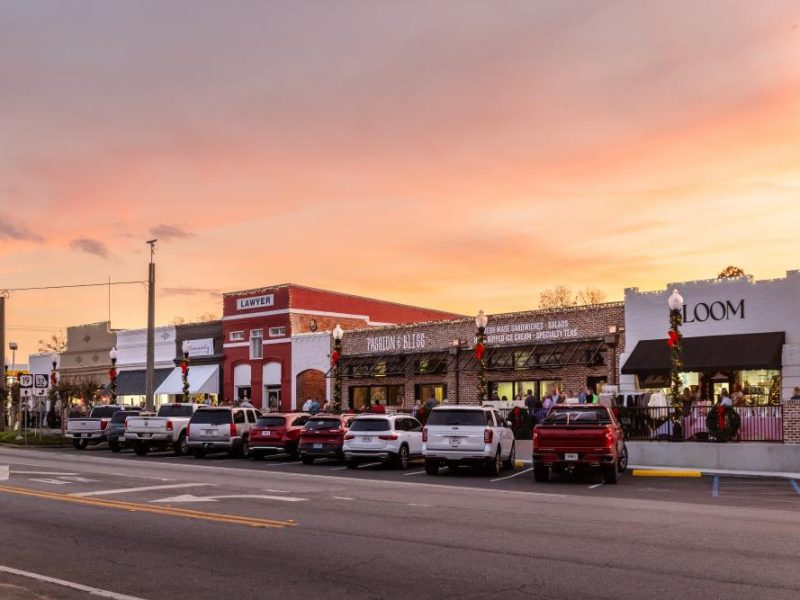
Public safety drives Leesburg’s $4.2 million Fiscal Year ’27 budget
The adopted spending plan reflects modest growth in city revenues and continued emphasis on maintaining core municipal services, particularly public safety and sanitation, which together account for a significant share of general fund expenditures.
