
Local historian to present Black History Month program focusing on how Albany became the state’s blackest city

From staff reports
ALBANY – Ask most black children in Albany and surrounding areas when, how and why black people populated the region, and most would be hard-pressed to answer.
Addressing that lack of awareness is what inspired documentary filmmaker and Albany native Clennon L. King to develop and present his film, slideshow and lecture entitled “How Albany Became Georgia’s Blackest Major City and Other Facts.”
“In an environment where black history is clearly in the crosshairs and a moving target, we owe it to the ancestors to share our history as armor to our children,” he said. “The goal here is to deconstruct the standard narrative, establish a timeline and provide a baseline understanding of where black folk in the region came from, how we got here and why.”
The filmmaker’s lecture is scheduled for 6-8 p.m. on Feb. 22 at the Albany Civil Rights Institute, located at 326 W. Whitney Ave. It will be complemented by a short film, a PowerPoint slide show and an audience question-and-answer session. The event is free and open to the public.
Preserving and conveying Albany’s black history is the black community’s responsibility, King said.
“Arabs don’t rely upon Jews to learn their history,” he said. “Nor do the Chinese rely upon Colombians to teach their children their roots. So why rely upon another community which, historically speaking, has never had our interest or our children’s at heart? This is our job, story and song,”
Among the takeaways King said he hopes attendees will gain is a working knowledge of how slavery worked, the area where black people were bought and sold in Albany, and why the region’s geography was so vital to the institution on a global scale.
Some of the topics covered by the presentation are:
— The whereabouts of surviving physical vestiges of slavery that still exist in Albany;
— The turn-of-the century locations of a black hotel, restaurant and black neighborhood located in downtown Albany;
— The physical address of Albany’s first “institution of higher learning” that predates Albany State University;
— The real reason Ray Charles was born in Albany;
— How the region became the ancestral home of a host of celebrities, including The Isley Brothers, Whitney Houston, Nikki Giovanni, Supreme Court Justice Ketanji Brown Jackson, Pati Labelle and Denzel Washington;
— And the reason the Albany Movement was no failure.
“My hope is that people come away clear that our significance to history, yes, includes, but also extends beyond, the Albany Movement,” King said. “More importantly, what I want to convey is that our legacy is ultimately defined by our interpretation, not someone else’s take on our history.”
The event marks King’s third presentation at The Albany Civil Rights Institute.
In September 2017, he presented his award-winning film “Passage at St. Augustine: The 1964 Black Lives Matter Movement That Transformed America,” and in February 2019 he screened his documentary “Fair Game: Surviving a 1960 Georgia Lynching,” which prompted the district attorney in Early County to re-open a 60-year-old child rape and murder case.
In 2021, “Boston Magazine” commissioned and published a granular article on the “Boston Love Story of Martin and Coretta,” by King, no relation.
In 2022, his award-winning eight-minute documentary “The Boston Photograph” screened at 15 film festivals, telling the story of a 91-year-old woman who dated Martin Luther King Jr. and studied with his future wife before the two ever met. And in 2023, the city of Boston unanimously passed a resolution to establish a 21-address heritage trail in Boston around the couple’s love story, based on the filmmaker’s research, design and proposal.
Author

Related Articles

Albany Herald – July 9, 2026
Audit of police surveillance cameras results in… New commander takes helm as Marine Corps logistics adapts to… United Way of Southwest Georgia halts…

United Way of Southwest Georgia halts funding for regional restructuring
The United Way of Southwest Georgia plans to withhold typical funding for a whole year during a “restructuring” period.
Federal agency to investigate Monday paragliding fatality
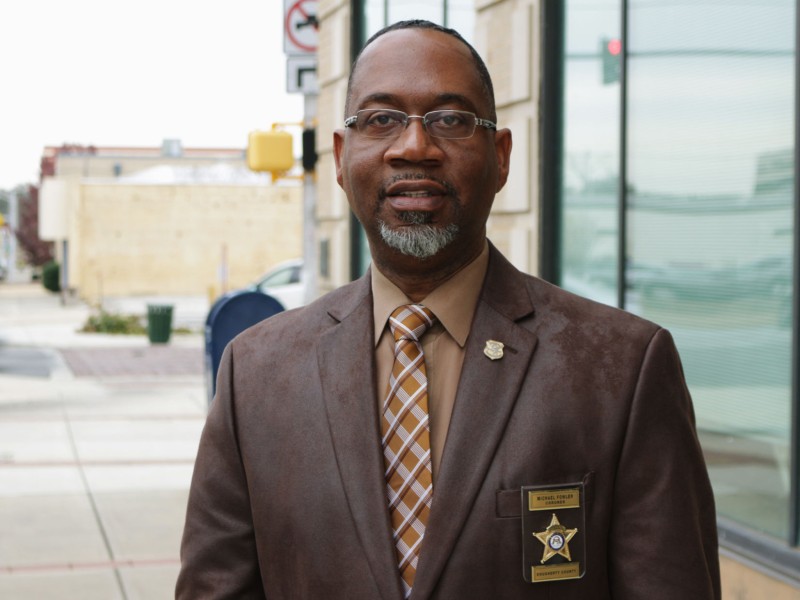
The death of a 63-year-old man who was killed in a paragliding accident on Monday is under investigation by the National Transportation Board, according to Dougherty County Coroner Michael Fowler.
