
ABAC economic impact nearly $370 million
Abraham Baldwin Agricultural College sees 12 percent impact increase in two years
From Staff Reports
TIFTON — A study conducted by the University of Georgia has found that Abraham Baldwin Agricultural College had an economic impact of nearly $370 million in Fiscal Year 2016, ABAC officials say.
The study by the Selig Center for Economic Growth in the University of Georgia’s Terry College of Business and sanctioned by the University System of Georgia set the impact an just under $369.9 million. That was a 12.1 percent jump from FY 2014.
The study determined the impact of the entire University System on the state’s economy was $16.8 billion.
ABAC President David Bridges said there were several factors that led to the more than $40 million growth in economic impact that the Tifton college experienced over the two-year period.
“The enrollment at ABAC has increased in three of the past five fall semesters at ABAC,” Bridges said. “That kind of growth is not happening at other colleges and universities in South Georgia.
“The number of students pursuing bachelor’s degrees on our campus has jumped from 41 in 2008 to about 2,000 today. That’s a significant increase.”
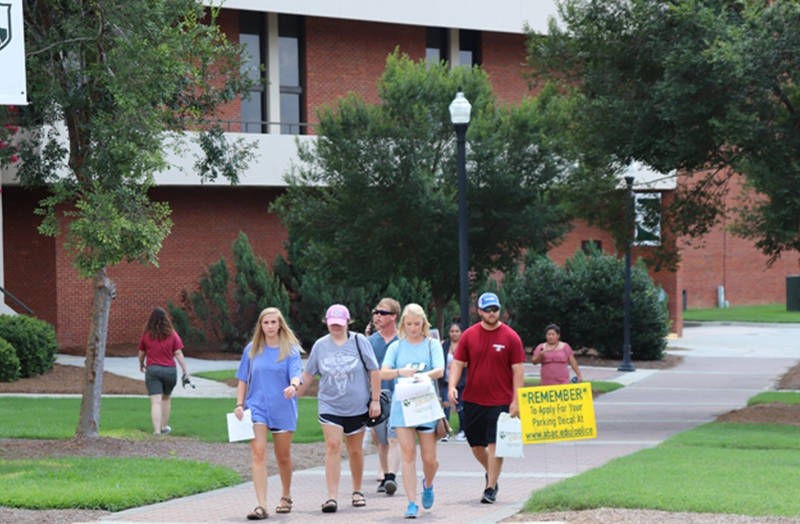
College officials also noted that ABAC Place and ABAC Lakeside housing complexes on the campus have been at capacity, with about 1,400 students living on campus. Other ABAC students rent houses and apartments in the community and patronizing local business, ABAC officials said.
“All of our students are eating in the restaurants, buying from the stores, and contributing to the local economy,” Bridges said. “Not to be dramatic, but can you imagine what Tifton would be like without the 3,400 ABAC students, plus all the ABAC employees and their families?”
Renata Elad, dean of the Stafford School of Business at ABAC, said her analysis of the data from the study shows the college’s positive effect on area employment rates.
“With 250 employees, ABAC stimulates the region’s labor income in an amount over $50 million,” Elad said. “The multiplier effect of the employees at ABAC results in 886 other employees in the area. This helps in no small way to keep the unemployment rate in South Georgia very low.”
She said ABAC student spending reached a record of just over $41 million in FY 2016.
“These students are paying for food, gas, rent, and entertainment,” Elad said. “Some of these students later become employees and, eventually, employers who further enhance the region’s economic growth and development.”
Bridges noted that one of his favorite themes in recent years has been that “life is better at ABAC,” which he said also applies to Tifton and south Georgia.
“After they have lived in this community for four years going to ABAC, a lot of ABAC graduates are going to find jobs here, get married, have children, and contribute even more to the economy long term,” Bridges said. “Life is better at ABAC, but life is also better in south Georgia. ABAC graduates realize that and settle down in the community.”
Bridges said he believes ABAC will continue to have increasing impact in future years.
“Just look at the Destination Ag program at ABAC’s Georgia Museum of Agriculture,” Bridges said. “That program alone brought 5,000 elementary school students to our community last year.
“This year, we’re predicting 7,000 students will participate in Destination Ag. Add that number to what we’re doing at the ABAC golf course and with the various community events through the arts series and concerts, and you’ll see why ABAC is a major player in the economic activity of south Georgia.”
Related Articles

James Rubino installed in new role at Marine Corps Logistics Command in Albany
James L. Rubino recently assumed the role as executive deputy of Marine Corps Logistics Command in Albany. In his new role he will oversee integrated logistics support.

Rain depresses voter turnout in Dougherty County
“A lot of people don’t vote when it’s raining. People don’t do a lot of things when it’s raining.”

City of Albany faces shortfall for police, fire salaries
“We can’t tell staff to hire more police officers and then complain at what it costs.”
