
Albany mayor laments county action on T-SPLOST
Dougherty Commission expresses little interest in pursuing transportation tax
By Carlton Fletcher
ALBANY — It’s not difficult to understand the reasoning of Dougherty County commissioners when it came time to press on or leave behind discussion of a transportation special-purpose local-option sales tax.
The county board voted to pass on pushing for a T-SPLOST referendum during the next election cycle, noting that they as commissioners were hesitant to move forward with action that could add to the tax burden of citizens in the community so soon after the board had added a 3-mill property tax increase just last year.
As District 6 Commissioner Anthony Jones put it in a guest editorial in Friday’s Albany Herald — an editorial that echoed sentiment expressed in meetings by long-serving District 1 Commissioner Lamar Hudgins — “T-SPLOST may be a good thing for Albany and Dougherty County … at the right time.”
What hasn’t been discussed, though, is that the county vote all but tossed a monkey wrench into plans that had been embraced by most members of the Albany City Commission. Mayor Dorothy Hubbard and members of the commission like Ward IV Commissioner Roger Marietta have been outspoken in their support for T-SPLOST, legislation that could bring millions of dollars into the community to address transportation infrastructure issues that have long haunted the city.
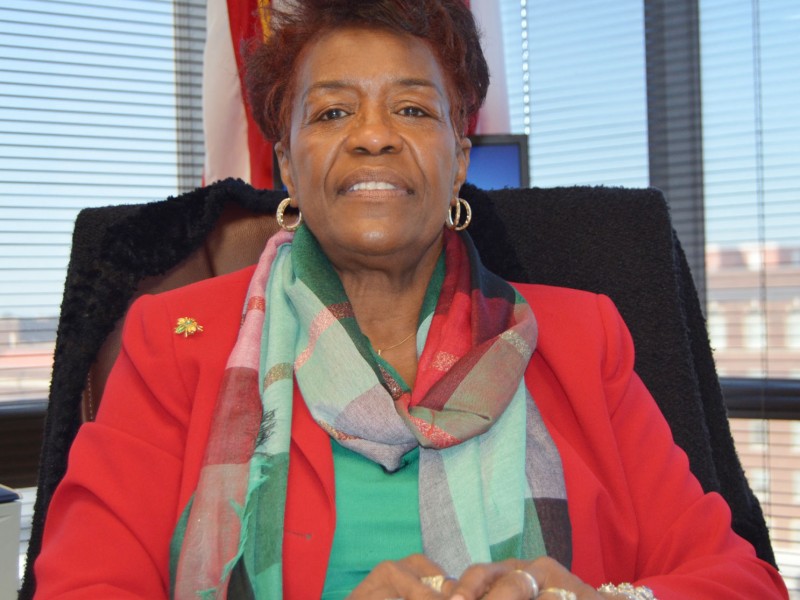
“When I talk to people about the benefits of a T-SPLOST, I just lay out the facts,” Hubbard said during a recent sit-down in her office. “No. 1 is that about 55 percent of the SPLOST (and any other subsequent special tax) that comes into our community is paid for by people coming here from out of the community. There’s also the fact that we would have to pay only 10 percent of the cost of a maintenance program utilizing our LMIG (local maintenance improvement grant) funding undertaken with the state Department of Transportation, while regions and counties that don’t pass referendums must come up with 30 percent of the cost.
“And I must note that T-SPLOSTs have passed in Lee County, in Columbus, in Valdosta, in communities all around us. What that means is that we aren’t collecting money for transportation projects, but when we go to those places, we’re paying for their projects.”
The Georgia General Assembly passed T-SPLOST legislation in 2010, the so-called Transportation Investment Act. The state was divided into 12 regions and referendums held in each region to determine if the special tax would be implemented. Most in the General Assembly and across the state expressed surprise when only three of the regions’ (Central Savannah River, Region 7; River Valley, Region 8; Heart of Georgia, Region 9) voters OK’d the tax.
“I think there were a lot of questions that went unanswered that first time around and people were skeptical,” Hubbard said. “My good friend Teresa Tomlinson, the mayor of Columbus, told me when they were first considering T-SPLOST that she hated the idea. Now that it’s been voted in and they’re doing all these transportation projects, she said she loves it.”
Indeed, Tomlinson has said the 2012 T-SPLOST debate was encumbered by uncertainty and skepticism due to self-taxing for transportation being a new notion. Now she notes 90 percent of her community’s T-SPLOST proceeds are “assigned to specific, transformative projects.” The projects include revamping the community’s public transportation system for the first time in 40 years, completing 16 miles of the Chattahoochee RiverWalk and launching several large economic development-assisting road projects.
“I don’t think the next regions to tee up this vote will encounter that level of skepticism,” she said. “Instead, they will be able to point to real-world examples and [the] process of how this works for the benefit of the community.”
Hubbard points ruefully to the numbers that bear out the largess that the three regions that approved T-SPLOSTs in 2010 are now enjoying. The Central Savannah River Region that includes Augusta is expected to realize $841 million in T-SPLOST collections during the five years of the tax. The River Valley Region (which includes Columbus) is projected to get $594 million and the Heart of Georgia Region $399 million.
“Yeah, that hurts to see those numbers,” the Albany mayor said. “People complain about things like potholes, alleys that need paving, road maintenance. Well, those things cost money. And money is limited. People want to ride on roads that don’t tear up their cars, but roads continue to wear the longer they go without maintenance. And the longer we wait to repair them, the worse they are and the more it costs.”
In 2015, stung by the refusal of state voters to approve T-SPLOST in nine regions, the state Legislature amended the law to allow for single-county transportation taxes. Regions will still be allowed to vote as a collective — in fact, the Southern Region that includes Atkinson, Bacon, Ben Hill, Berrien, Brantley, Brooks, Charlton, Clinch, Coffee, Cook, Echols, Irwin, Lanier, Lowndes, Pierce, Tift, Turner and Worth counties approved a regional T-SPLOST in 2018 that’s expected to bring $500 million to that region — but individual counties may now elect to go it alone.
That’s what happened in Lee County in the Nov. 6 general election. And that move alone is a motivator for Hubbard.
“I would think that we would want to move to keep up with other counties in our region,” she said. “That’s why I’m not going to say that there’s no hope for a T-SPLOST in the next election cycle. The county must present a referendum, and the word that came out of their (recent) meeting is that they don’t want to pursue it. But I hope they’ll change their minds.
“Chairman (Chris) Cohilas and I — because of all the things that have happened in the last several months — have not had an opportunity to sit down and talk about where we stand with this issue. I hope that we can discuss T-SPLOST and that he can discuss it with the county and take a closer look at the advantages. Yes, it’s another tax, but these special taxes are the best way I’ve seen to bring in revenue that doesn’t put a heavy burden on our citizens.”
Hubbard warns that Albany and Dougherty County may start to lag behind without serious consideration of the transportation tax.
“It’s happening all around us,” she said. “It’s been shown that the majority of the special tax money in a community like ours is paid by people who are not from the community.
“The City Commission has instructed our city manager to move forward with a list of potential transportation projects that could be funded through T-SPLOST. We call ourselves a hub … then we need to be a hub.”
Author

Related Articles
James Rubino installed in new role at Marine Corps Logistics Command in Albany
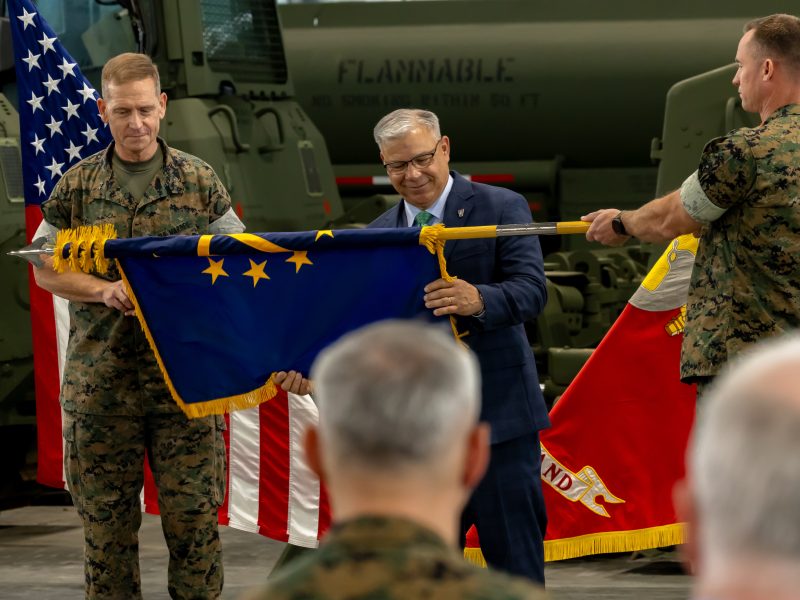
James L. Rubino recently assumed the role as executive deputy of Marine Corps Logistics Command in Albany. In his new role he will oversee integrated logistics support.

Rain depresses voter turnout in Dougherty County
“A lot of people don’t vote when it’s raining. People don’t do a lot of things when it’s raining.”
City of Albany faces shortfall for police, fire salaries
“We can’t tell staff to hire more police officers and then complain at what it costs.”
