
Putting on the Ritz: The rise, fall and renewal of Albany’s Harlem District
On July 7, the Albany City Commission unanimously approved final construction drawings for a comprehensive restoration of the Ritz Theatre and Cultural Center, clearing the way for the project to move into competitive bidding after years of planning and preservation efforts. The decision marks the latest chapter in a decades-long effort to preserve one of Southwest Georgia’s most significant African American landmarks.
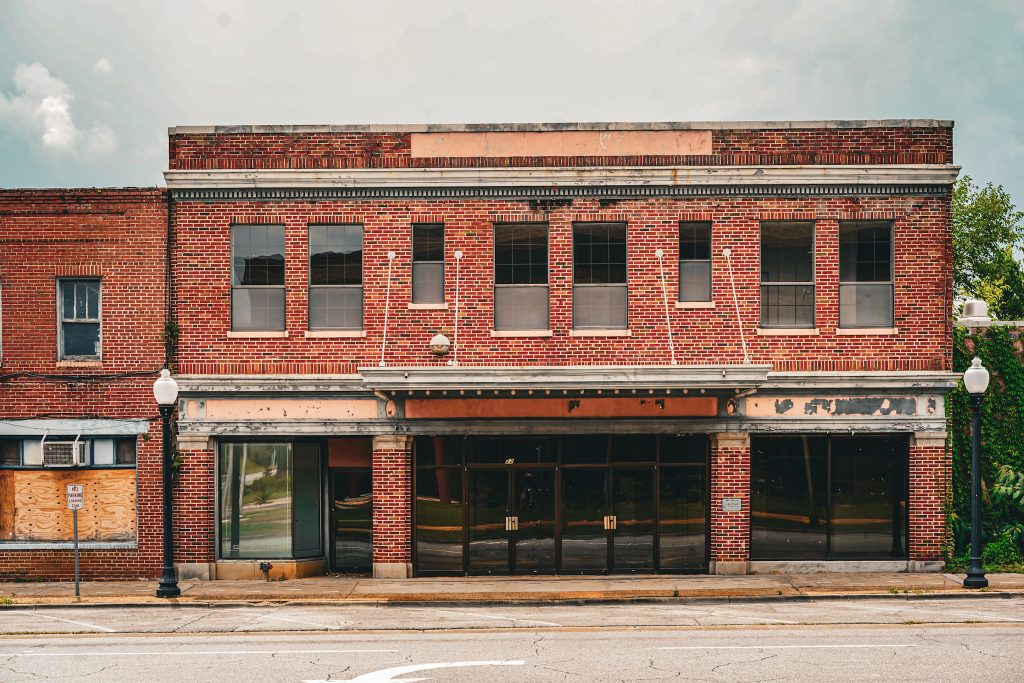
ALBANY — Long before Albany became known for the Albany Civil Rights Movement, before Martin Luther King Jr. preached from Harlem-district churches, and before the neighborhood’s bustling storefronts gave way to vacant lots, the lights of the Ritz Theatre drew crowds from across southwest Georgia.
For black families living under Jim Crow segregation, the Ritz was a place of dignity — a place where African Americans could walk through the front entrance, buy a ticket without humiliation and enjoy a movie or live performance in a theater built specifically for them.
Nearly a century after opening in 1930, city leaders believe the historic theater is poised for another curtain call.
On July 7, the Albany City Commission unanimously approved final construction drawings for a comprehensive restoration of the Ritz Theatre and Cultural Center, clearing the way for the project to move into competitive bidding after years of planning and preservation efforts. The decision marks the latest chapter in a decades-long effort to preserve one of southwest Georgia’s most significant African American landmarks.
Yet the story of the Ritz is about far more than restoring an old building. It is the story of the city’s Harlem District itself.
Following emancipation, formerly enslaved African Americans established communities throughout Dougherty County. In Albany, one neighborhood south of downtown gradually evolved into what became known simply as Harlem.
Like its famous namesake in New York City, Albany’s Harlem developed into a thriving center of black commerce, entrepreneurship and culture during the first half of the 20th century.
Centered around South Jackson Street and West Highland Avenue, the Harlem District flourished because segregation forced African Americans to build an independent economy.
Black-owned grocery stores, pharmacies, restaurants, barber shops, beauty salons, photography studios, hotels, physicians’ offices and newspapers lined its streets. Four tourist homes were listed in the Negro Motorist Green Book, the travel guide that helped African Americans safely navigate the segregated South.
For thousands of black residents across southwest Georgia, Harlem wasn’t simply another neighborhood. It was where they shopped, banked, gathered and built wealth.
The Ritz Theatre also reflects one of Albany’s lesser-known historical relationships between the city’s Jewish and black communities during segregation. One of the first major entertainment venues built specifically for African American audiences in southwest Georgia, the theater was developed in 1930 by brothers Adolph C. and Leon C. Gortatowsky, members of one of Albany’s most influential Jewish business families.
Their father, Morris Gortatowsky, immigrated from Prussia and settled in Albany during the late 19th century, laying the foundation for a family that became deeply involved in the city’s commercial, civic and cultural development.
While the Gortatowskys owned and operated theaters throughout Georgia — including Albany’s grand downtown Albany Theatre — they also recognized Harlem as a thriving center of black commerce and culture. At a time when segregation divided nearly every aspect of public life, the brothers invested in the Ritz, creating a first-class movie house and performing arts venue that seated 572 patrons and became the centerpiece of Albany’s Harlem District.
Although the Ritz was operated by the Bailey Theatre Chain for much of its early history, its construction represented a significant private investment in Harlem’s growing black business district.
At a time when most Southern theaters relegated African Americans to balconies or separate entrances, the Ritz offered something increasingly rare: a theater built expressly for the black community, where patrons entered through the front doors and enjoyed the same quality of entertainment found in downtown venues.
That simple act carried profound meaning during the Jim Crow era, and the theater quickly became Harlem’s social center. Notable performers, including Albany-born Ray Charles, whose early career included performances throughout south Georgia, appeared on its stage.
For decades, the Ritz stood as the crown jewel of Albany’s black business district, but its greatest legacy extended beyond entertainment. During the height of the Civil Rights Movement, the theater and the surrounding Harlem neighborhood became central to one of the nation’s earliest and most influential campaigns against segregation.
By the early 1960s, Harlem had emerged as the heart of the Albany Movement, a grassroots campaign that drew national attention and helped shape the broader Civil Rights Movement. While mass meetings were held just blocks away at Shiloh and Mount Zion Baptist churches, where Martin Luther King Jr. encouraged local activists, the streets surrounding the Ritz became gathering places for marches, demonstrations and strategy sessions. Local tradition also holds that King occasionally visited Dick Gay’s Pool Hall, located next door to the theater, where he met with local leaders during visits to Albany.
The neighborhood became the staging ground for pivotal events in the Albany Movement, including the boycott of Smith’s Grocery organized by the Albany Nine after the white-owned store refused to hire black employees and became involved in a controversial court case involving civil rights demonstrators. The boycott, along with the arrests of hundreds of protesters, brought national media attention to Albany and transformed Harlem from the economic heart of black southwest Georgia into one of the South’s most important centers of nonviolent resistance. Throughout those turbulent years, the Ritz remained a familiar landmark where culture and community events and the fight for equality existed side by side.
One of Harlem’s lesser-discussed ironies is that many victories won during the Civil Rights Movement also contributed to the neighborhood’s decline. As segregation ended, African Americans gained access to businesses throughout Albany.
Shopping patterns shifted. Customers followed new opportunities, and by the late 1960s, many family-owned businesses had closed.
The Ritz ceased operating as a first-run theater in 1969. Despite attempts to retain audiences by showing older films, the big screen eventually went dark.
Albany’s Harlem, once the economic heartbeat of the city’s black community, gradually became a landscape of fading signs, empty storefronts and vacant lots.
Renewed preservation efforts began in the late 1980s under former state Rep. Mary Young Cummings and other community advocates determined to preserve Harlem’s legacy. The Ritz underwent a partial restoration and re-opened in December 1991 alongside the newly constructed Ritz Cultural Center.
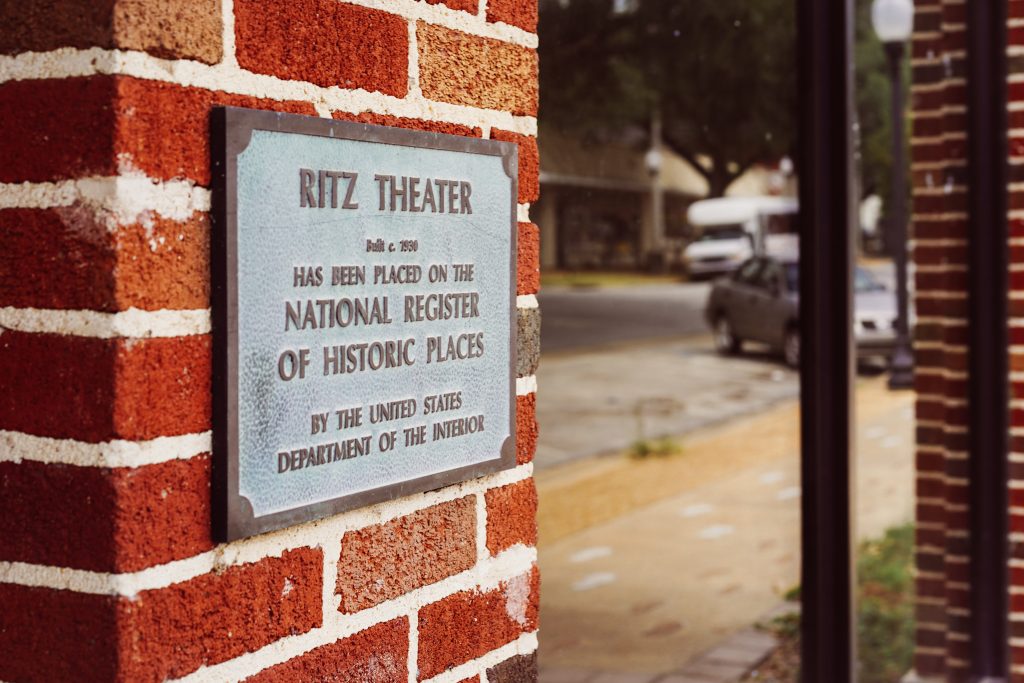
The project transformed the facility into a community arts center serving Albany’s youth while hosting cultural performances and educational programming. Although it represented renewed investment in Harlem, sustaining operations proved difficult.
Funding challenges forced the Cultural Center to close in 2006, and the facility has remained largely unused. The theater appeared destined to become another forgotten landmark.
Then, in 2018, a twist of fate once again placed the Ritz in the spotlight. Advocates learned a proposed transportation center would require demolition of surrounding properties, including the theater’s adjoining Cultural Center.
While the theater itself might have remained standing, supporters argued that losing the Cultural Center would effectively doom any future restoration because essential backstage and support spaces would disappear.
Community leaders mobilized quickly, and SOWEGA Rising launched its “Save the Ritz! Save Harlem!” campaign, collecting hundreds of petition signatures while organizing residents and preservation advocates.
Public pressure worked.
In January 2020, city officials agreed to redesign the transportation center to preserve both the theater and the Cultural Center. The decision ensured Harlem’s most recognizable landmark would survive long enough for another opportunity at restoration.
The architectural plans approved Tuesday represent the most ambitious restoration in the building’s history.
Rather than simply renovating the theater, architects hope to reverse many of the alterations made during the 1991 project and recover much of the building’s original appearance.
Project architect Bill Dunwoody told commissioners the goal is restoration, not renovation.
“We focus on the historic theater, trying to bring it back to its original glory,” Dunwoody said while presenting the final design.
Plans call for restoring decorative plasterwork, re-opening the balcony, replicating historic storefront windows, repairing the building envelope, modernizing electrical and fire protection systems, installing new theatrical lighting and sound equipment, and converting the balcony back into public seating.
“The balcony has really not been used,” Dunwoody told commissioners. “A really key part of the project was to put the balcony back as it used to be.”
The renovated theater will seat approximately 275 patrons while preserving as many historic architectural features as possible. The adjoining Cultural Center will receive accessibility improvements, renovated restrooms, updated finishes and a new concession area.
Commissioners acknowledged the temptation to reduce costs through value engineering but emphasized preserving the theater’s historic character.
“I think we need to realize this is a long-term investment and stick with what we have,” Mayor Bo Dorough said before the commission unanimously approved the design plans.
Organizations, including the Harlem Renaissance Corporation, Mt. Zion’s Community Reinvestment Corporation and numerous preservation advocates, envision the Ritz as the anchor of a broader Harlem Renaissance Project.
The initiative seeks not only to restore the theater but also to revive Harlem as a center for housing, entrepreneurship, cultural tourism, arts programming and black-owned business development.
Historic preservation experts often describe landmark buildings such as the Ritz Theatre as economic catalysts. In that vision, the Ritz once again becomes what it was nearly a century ago — not simply a theater, but the neighborhood’s front porch.
It welcomed moviegoers during segregation, stood near the center of a movement for civil rights, and survived urban decline, financial hardship and the threat of demolition.
Now, nearly 100 years after the Gortatowsky brothers first opened its doors, another generation is attempting what others before them believed possible: that restoring one historic theater might help restore an entire neighborhood defined by its cultural heritage and civil rights history.
If the current restoration succeeds, the next act may belong not only to the Ritz Theatre, but to Harlem itself.
Related Articles
Dawson City Council addresses budget, fire fee, wastewater spending
The City of Dawson will enter new fiscal year without adopted budget as council considers creating a new fire assessment and approves wastewater equipment, K-9 agreement

Dougherty County assistant county manager declines top position in Harris County
“It is a beautiful community. I was thankful that they thought of me. They offered, but it didn’t come through in the end.”

Helping Hands to serve 1,100 Dougherty families weekly with help from Paula Deen foundation
Paula Deen’s Bag Lady Foundation has donated money to Helping Hands Ending Hunger, providing enough funding for about 1,100 cooler bags as the Dougherty County School System program begins another year of getting unused school food into the homes of local families.
