
Albany State, Darton cut 110 faculty and staff positions
University officials cite falling enrollment numbers in cost-saving reductions
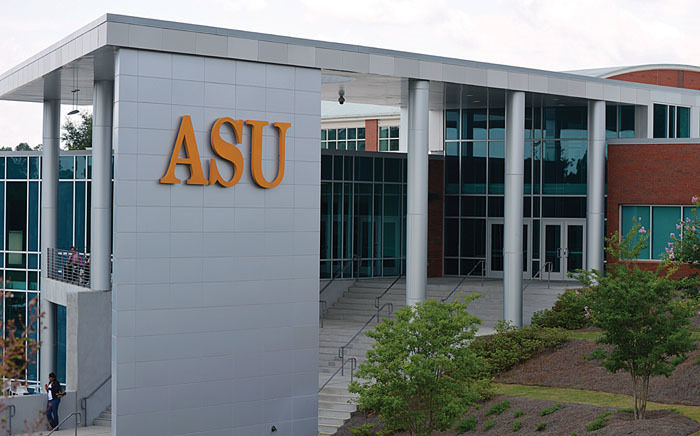
The University System Board of Regents is going to clearly spell out this week what types of degrees each of its 31 colleges, including Albany State University and Darton State College, should offer and how heavily they should focus on research versus teaching. (Herald File Photo)
By Terry Lewis
ALBANY — In a joint statement released Monday afternoon, Albany State University President Art Dunning and interim Darton State College President Richard Carvajal announced plans to reduce operating expenses for the Fiscal Year 2017 budget in response to a significant decrease in enrollment since 2011.
The reductions include eliminating some positions while leaving other slots unfilled.
Managers at both schools have informed employees whose positions will no longer exist after Sept. 30. ASU is reducing 80 positions, 48 of which are currently filled. DSC is reducing 30 positions, none of which are filled. Darton State had multiple reductions in force in 2015 that eliminated 20 filled positions and has maintained a hiring freeze which allowed only the most critical roles to be filled since early 2015.
From 2011 to 2015, ASU has experienced a 25 percent decline in enrollment, while Darton has experienced a 10 percent decline. The enrollment declines at ASU and DSC translate into a Fiscal Year 2017 state funds reduction of $980,202 for ASU and $851,962 for Darton. The loss of tuition income results in a further $1.5 million reduction at ASU and a $2 million reduction at DSC.
The latest enrollment numbers available from the University System of Georgia are from the fall of 2015. Those numbers show Albany State’s enrollment dropping from 3,910 students in 2014 to 3,492 last year. The 10.7 percent drop was the highest among 30 University System institutions.
Darton’s enrollment fell from 5,623 in 2014 to 5,471 last year — a decrease of 2.7 percent.
Enrollment numbers from the fall of 2016 are not yet available but are certain to show decreases from the previous year.
“Although we anticipate another decline in enrollment this fall, we will be working across our campuses to identify, encourage and develop solutions to increase retention and enrollment,” said Carvajal. “We are focused on making the new ASU the best higher educational opportunity for our students and this region.”
“As a direct result of these enrollment declines, revenue from state funding and tuition has decreased. Measures to right-size both institutions and create cost savings will include the reduction of faculty and staff positions, the restructuring of departments and elimination of low-producing academic programs,” the release stated.
“We are taking action now to right-size both of these institutions to make them stronger for the future, and ultimately for the long-term health and financial stability of the new university that will serve Albany, Southwest Georgia and the state,” said Dunning. “ASU has one of the lowest student-staff ratios within the University System of Georgia at 8 to 1, while the average ratio in the system is 15 students to 1 staff. A reduction in staffing is necessary in order to bring us closer to the appropriate staffing levels.
“We will continue to look for ways to increase efficiencies and effectiveness for the educational benefit of our students,” Dunning added. “We deeply regret that decisions had to be made that resulted in the reduction of faculty and staff. We appreciate the commitment and service of the people impacted, and we are grateful for their service to our students, institutions and the Albany community.”
Dunning also said transition assistance will be available to employees impacted by the reduction.
To assist the affected individuals, transition support will be provided, including a COBRA update regarding insurance, resume writing workshop and an Employee Assistance Program. Albany State will work with the local Department of Labor to provide employees with information resources, workshops and seminars on a variety of topics, including financial planning and work force readiness and preparedness.
Related Articles

Albany teen, 16, makes bodybuilding debut at Atlanta OCB Pro/Am
Crockett, an Albany resident and student at Albany Technical College Academy, placed second in the teen bikini division this weekend at the OCB Immortal Muscle Pro/Am Bodybuilding Competition in Atlanta, becoming the youngest competitor across all categories at the event.
Albany Technical College celebrates award winners
ALBANY – Albany Technical College has announced the names of students and educators representing our college at upcoming state-level competitions in 2025.
Georgia Southwestern earns SACSCOC reaffirmation accreditation
Georgia Southwestern State University received recognition of a 10-year reaffirmation of accreditation from the Southern …
