
Albany State President Art Dunning: ASU-Darton merger driven by data
ASU president says community is ‘in this together’
By Carlton Fletcher
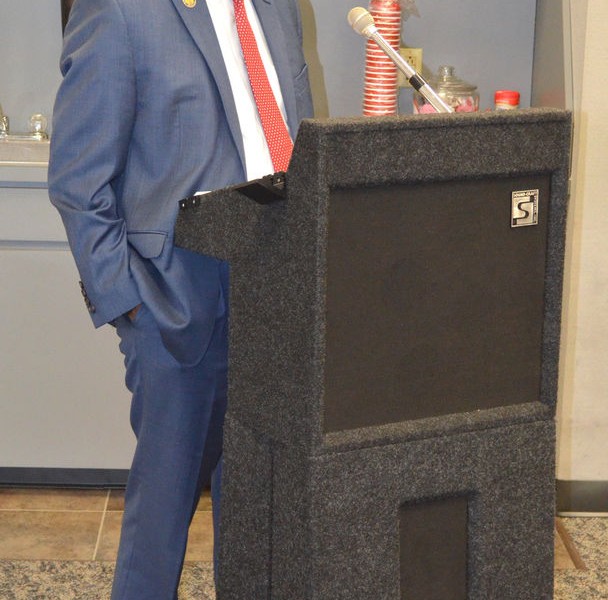
ALBANY — Calling it the friendliest group he’s discussed the topic with thus far, Albany State University President Art Dunning offered historical background and data on the future demographics of Southwest Georgia while talking about the pending merger of Albany State and Darton State College before the Albany City Commission Tuesday morning.
“We are a community; we are in this together,” Dunning said near the end of his talk with city leaders. “This is an ‘us’ conversation we all must have about what we can do to make our community attractive enough that people, once they get their education, want to stay here.”
Dunning said the Georgia Board of Regents’ decision to merge four-year Albany State, a historically black institution, with two-year Darton was “data-driven.”
“The Regents made this decision based on numbers and their heavy responsibility of fiscal stewardship,” the ASU president said. “With declining enrollment at both institutions and projections of continued declining population in the region, and with most of our transfers at Albany State already coming from Darton, the Regents felt this move was a fiscally responsible thing to do.
“There is a uniqueness to each campus, and we want to utilize those unique qualities to facilitate access to learning in our community. We have to look at what causes reverse migration into a community, and that is having the things here that make people want to stay.”
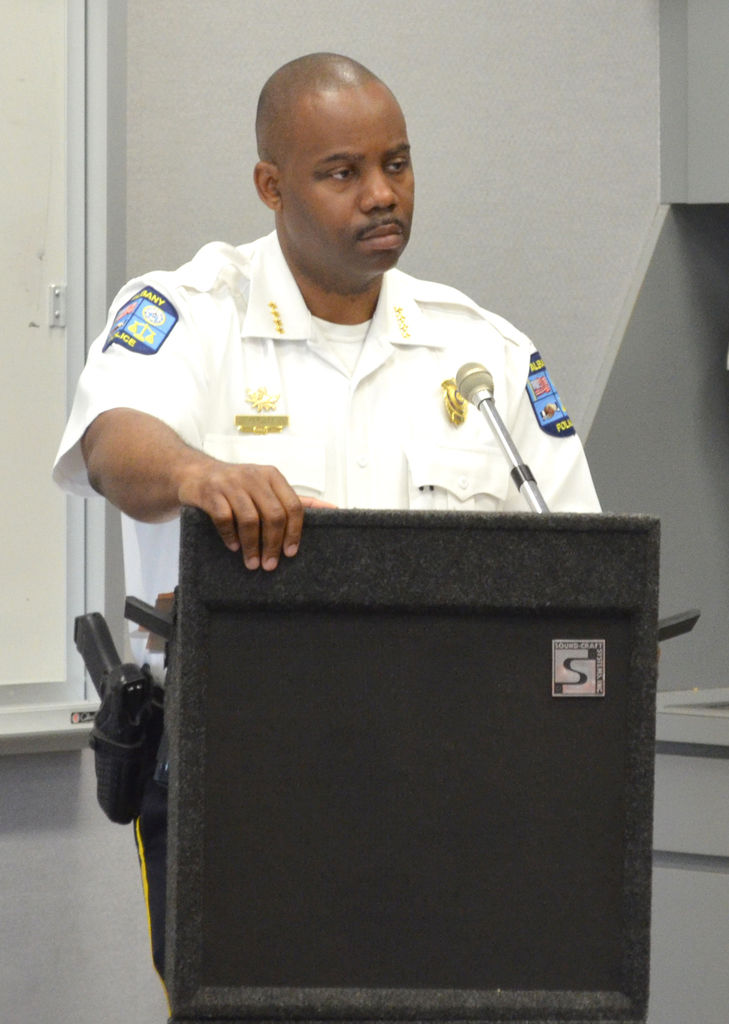
Albany Police Department Chief Michael Persley offered his department’s quarterly update at the commission meeting, noting that part of his strategy for combating crime in the city is to address less impactful “Part 2” crimes in an effort to “ward off” more serious “Part 1” crimes.
Persley said the department’s average response time for calls during the January-March quarter was “about 5 minutes” and officers’ on-scene time averaged “22 to 23 minutes.” He said all three homicide cases reported in the city during the quarter had been cleared.
“There are two significant things that we are doing that will have a positive impact on our crime statistics: the general training of our officers and the crisis intervention training,” Persley said.
Ward I Commissioner Jon Howard asked for a report on Albany-Dougherty Drug Unit efforts to combat the “epidemic of heroine that has made its way back into our community.” Howard said methamphetamine and the synthetic drug “flocka” also were having a major impact in area clubs.
Also at the meeting, college student David Diamond asked commissioners to reimburse his costs to repair damages to his vehicle after it was inundated with floodwater on Feb. 24. Diamond said his vehicle was parked at his Eighth Avenue residence when “sewers backed up and the water came up into my vehicle.”
City Manager Sharon Subadan told Diamond to file a claim with the city’s Risk Management department, which would determine if the city had any liability. But she noted that the city’s infrastructure was not solely the cause of the flooding in a “100-year rain event” like the one in late February.
“If our infrastructure was perfect, we would have had standing water,” she said. “No system is made to easily handle 5 to 9 inches of rain in an eight-hour period.”
Author

Related Articles
James Rubino installed in new role at Marine Corps Logistics Command in Albany
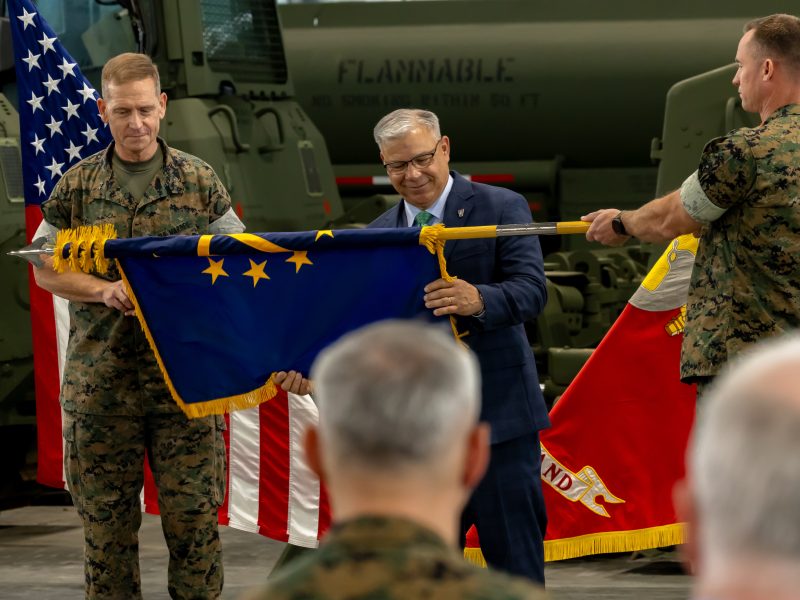
James L. Rubino recently assumed the role as executive deputy of Marine Corps Logistics Command in Albany. In his new role he will oversee integrated logistics support.

Rain depresses voter turnout in Dougherty County
“A lot of people don’t vote when it’s raining. People don’t do a lot of things when it’s raining.”
City of Albany faces shortfall for police, fire salaries
“We can’t tell staff to hire more police officers and then complain at what it costs.”
