
BARRY LEVINE: September blahs don’t dissuade pop songwriters
THE OLD ROCKER: Some of pops biggest hits written about ho-hum month

By Barry Levine
I’ll be alone each and every night, While you’re away, don’t forget to write.
The Happenings’ “See You in September,” 1962
September is kind of a blah month. Summer vacations are a memory. … Students have returned to school. … The only major holiday is Labor Day, and that’s lost some of its luster since the Muscular Dystrophy Association removed Jerry Lewis as host of its telethon. …. The one redeeming factor about September is it marks the return of football on the NFL and collegiate levels.
Yet some of the best songs from the 20th century have been written about September.
Here are some of them.
Harry Warren and Al Dubin composed “September in the Rain,” which was published in 1937. James Melton introduced the song in the 1937 movie “Melody for Two.” It has become a standard and was recorded by many artists.
Among the diverse talents who recorded “September in the Rain” were Albany’s Harry James, Bing Crosby, Frank Sinatra, Willie Nelson, Sarah Vaughan, Frankie Laine and Doris Day.
Among the earliest songs written about September was “September Song” from the Broadway play “Knickerbocker Holiday” which opened in October 1938 for a six-month run.
Written by Kurt Weil and Maxwell Anderson, Oscar-winner Walter Huston performed the song in the play.
Bing Crosby recorded the modern standard in 1943 and Frank Sinatra three years later.
Huston’s version was used in the 1950 movie “September Affair” and it quickly reached No. 1 on the Pop chart.
“It Might as Well Rain Until September” was written for Bobby Vee by the songwriting team of Carole King and Gerry Goffin.
Vee opted not to release the song as a single, instead using it on his album “The Night Has a Thousand Eyes.”
King, who recorded the demo for Vee, released the song as a single and it climbed to No. 22 of the charts in October 1962, becoming the singer/songwriter’s first commercial success as a performer.
Buoyed by the song’s success, King saw her career blossom as she had 12 Top 40 hits including “It’s Too Late” in 1971, her only No. 1 hit, and “Jazzman” in 1975, which peaked at No. 2.
The song “See You in September” made the Top 25 not once but twice and by different groups.
The Tempos, a Pittsburgh quartet, had the original hit in 1959 with the ballad climbing to No. 23. Interest in The Tempos resurfaced when “See You in September” was featured in the 1973 movie “American Graffiti.”
The Happenings had the bigger hit with “See You in September,” as their uptempo version peaked at No. 3 in September 1966 and sold more than 1 million copies.
While The Tempos were one-hit wonders, The Happenings, a Paterson, N.J., quartet, had three other Top 15 records. They scored with “Go Away Little Girl,” which reached No. 12 in 1966; “I Got Rhythm,” which climbed to No. 3, and “My Mammy,” which peaked at No. 13, both in 1967. “Go Away Little Girl” was a cover of Steve Lawrence’s 1962 chart topper.
Neil Diamond, who has been making hits for five decades, scored with “September Morn” in 1979. Co-written by Diamond, it peaked at No. 17 on the Hot 100.
Diamond has placed three dozen songs in the Top 40, 12 of which peaked in the Top 10. He has had three No.1 hits: “Cracklin’ Rosie” in 1970, “Song Sung Blue” in 1972 and “You Don’t Bring Me Flowers,” a 1978 duet with Barbra Streisand.
Formed in 1969 in Chicago, Earth, Wind and Fire had nine Top 10 hits, one of which was “September,” which peaked at No. 8 in 1979. It sold more than 1 million copies. The group had one No. 1 hit, “Shining Star” in 1975
Winners of six Grammy Awards, EWF were the first African-American act to sell out Madison Square Garden in New York.
One of the best September songs never was released as a single.
Four months before he celebrated his 50th birthday in December 1965, Frank Sinatra released “September of My Years,” a Grammy-winning album that climbed to No. 5 on the charts. The album’s lead song was “September of My Years,” which was written by Jimmy Van Heusen and Sammy Cahn.
The song captures how Sinatra felt as he approached his 50th birthday.
This week in rock history: Elvis Presley hosted The Beatles at his rented home in Bel Air, Calif., on Aug. 27, 1965. The meeting, which included an un-recorded jam session, lasted four hours. … Tamla Records released The Marvelettes’ first single, “Please Mr. Postman” on Aug. 28, 1961. The song sold more than 1 million copies and was the group’s biggest hit. … Bobby Darin’s “Mack the Knife” made its debut on the pop chart on Aug. 30, 1959. The song was Darin’s biggest hit, reaching No. 1 and winning a Grammy for Record of the Year. … Ricky Nelson began his musical concert career by appearing at Steel Pier in Atlantic City, N.J., on Aug. 31, 1958, where he set an all-time attendance record for the venue by performing in front of 44,221 fans, spread over two days. His fee was $10,000. … Atlanta’s Tommy Roe had his first No. 1 hit when “Sheila” reached the top of the Pop chart on Sept. 1, 1962. Roe’s recording success would continue until 1971, during which time he had five more Top 10 hits. … On Sept. 2, 1965, The Beatles released “Yesterday” on which only Paul McCartney actually played. More than 2,500 cover versions of the song exist, making it one of the most recorded songs in history.
Barry “The Old Rocker” Levine is an entertainment writer for The Albany Herald. He can be reached at [email protected].
Related Articles
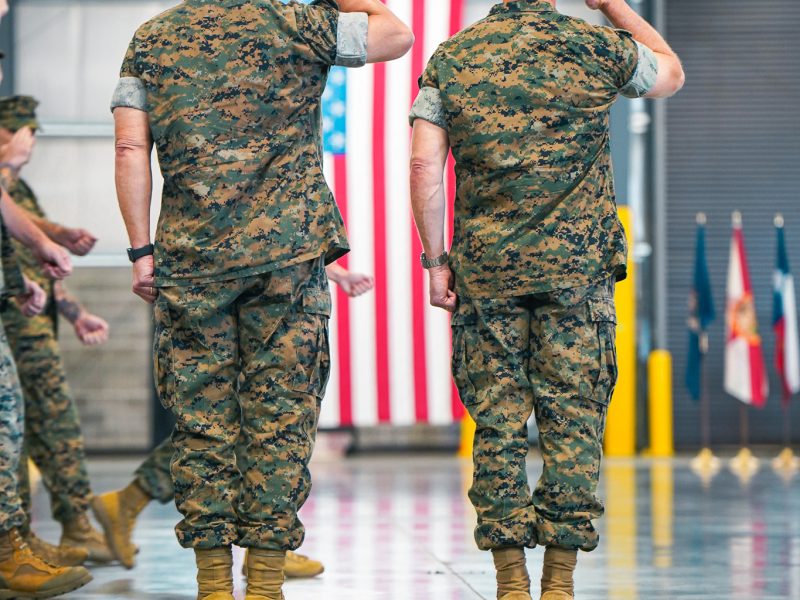
New commander takes helm as Marine Corps logistics adapts to evolving battlefield
Brig. Gen. Kevin G. Collins assumed command of Marine Corps Logistics Command during a change of command ceremony at Marine Corps Logistics Base Albany, succeeding Maj. Gen. Keith D. Reventlow after four years leading the organization responsible for sustaining Marine forces around the globe.

DOT says delay in Oglethorpe Bridge opening should be brief
“We know it’s not going to be July 22. We don’t think it’s going to be much later than that.”

City of Albany has big July 4 celebration planned for Saturday
“It’s going to be a lot of moving and shooting them off in a short time. It’s going to be a big show.”
