
Becoming the ‘Old Man’
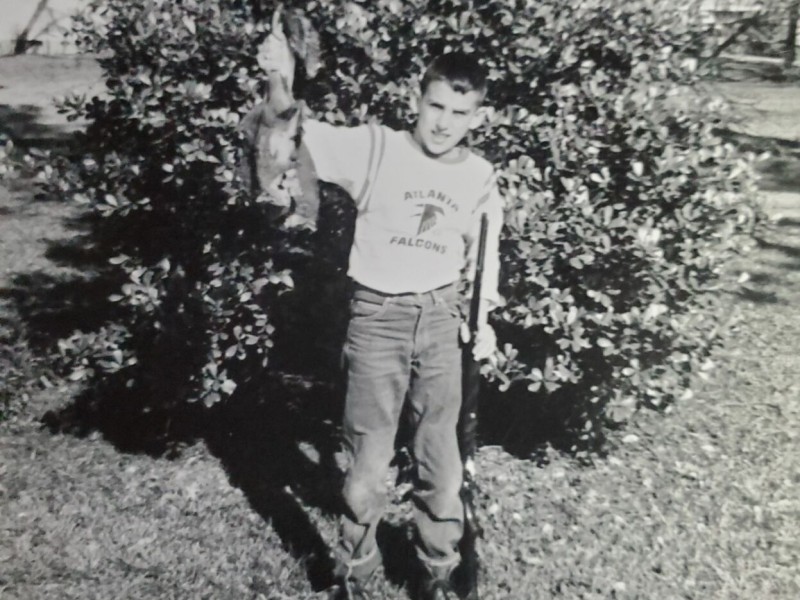
By Tom Seegmueller
[email protected]
Although it takes longer for some of us to acknowledge the arrival of that day than it does others, after almost seven decades I believe my day is finally here. I became aware of this after watching numerous social media posts during this past deer season highlighting young hunters still celebrating birthdays in the single digits posing with their first deer.
The following reflections are in no way meant to be critical of these young nimrods and their early accomplishments. I bring them up now to simply highlight the differences that have transpired during my 60 years afield and the path that led me to acknowledge I’m now the Old Man.
The first difference lies in the fact that I could not have legally killed a deer during the first decade of my life if I could have found one. Which was highly unlikely since the whitetail deer herd in Georgia had been exterminated by 1895. The herd would not reach a population that would support any significant hunting pressure until I was in my early 20s. Even then, the sight of a fresh deer track in the south Georgia clay was worthy of discussion.
Another significant difference is the fact that young hunters of my generation did not have countless YouTube videos, social media sites and TV shows serving as how-to guides for our adventures. The closest we came was the opportunity to read old copies of “Outdoor Life and Sports Afield” at the barbershop twice a month when we got our crew cuts. In the mid-’60s, we came close when we were able to watch Curt Gowdy and his guests hunting and fishing the world on “The American Sportsman.”
Although our first experiences afield were not focused on harvesting a trophy buck, our dreams were not diminished. They started early with simple anemic Daisy BB guns shooting pinecones and cans in our backyards. If you were lucky enough to have a pecan tree in the yard, you spent hours terrorizing squirrels that would nervously scatter at the sound of rattling BBs.
Early spring flights of starlings and robins became the targets of opportunity for those whose mothers and grandmothers were not bird lovers. For the rest of us, the admonition, “Only shoot what you will eat,” had significant meaning. Crossing that line could lead to corporal punishment or even worse, a loss of your shooting privileges.
Around the age of 10, if all the pets still had two eyes and your Daisy was well-oiled and put away properly, you might be lucky enough to find a long, thin box under the Christmas tree. If it didn’t hold a .22 rifle, it would likely contain a single-shot .410 or 20-gauge shotgun. Now squirrels truly had a reason to be afraid. Following a period of supervision and instruction in safety and accuracy, you knew your first hunt was close at hand.
I can still remember the first morning I sat with my back against an ancient oak waiting for the sun to light the eastern horizon and for the squirrels to begin their early-morning search for food. So meaningful and long-awaited was that moment that the details come flowing back to me now as if it were yesterday.
Growing up in The Pecan Capital of the World, where squirrels were considered a pestilence on the face of the earth, the opportunities to hunt them were almost unlimited. This was still an era when it was common practice to approach even an unknown landowner and be given permission to hunt.
Although squirrels might seem a quarry unworthy of today’s young deer hunter, there are many similarities. Both share the distinction with the buffalo of having rifles designed and named for them. Although the squirrel rifle did not lead to their namesakes’ eradication, it was not for lack of trying.
Today, squirrels are still a popular game animal requiring many of the same skills as those required to hunt deer: stealth; camouflage; marksmanship; an understanding of their life cycle, habitat and habits; along with the patience required to consistently harvest them.
Those first squirrels were my initiation as a hunter, and everything that goes with that, including the realization that you have the power to take the life of another living creature. And such power comes with a price not to be taken lightly. Just as significant is the realization that the success of a hunt is measured by far more than the size of a trophy or content of the game bag. And is far more enjoyable when shared with others.
Those recent posts on social media that I referred to show that these values are still being cultivated, cherished and shared. After accepting the fact that I’m now the Old Man, I look forward to sharing my future adventures with my grandchildren and their friends. As I said earlier, the hunt is better when it’s shared.
Author

Related Articles

James Rubino installed in new role at Marine Corps Logistics Command in Albany
James L. Rubino recently assumed the role as executive deputy of Marine Corps Logistics Command in Albany. In his new role he will oversee integrated logistics support.

Rain depresses voter turnout in Dougherty County
“A lot of people don’t vote when it’s raining. People don’t do a lot of things when it’s raining.”
City of Albany faces shortfall for police, fire salaries
“We can’t tell staff to hire more police officers and then complain at what it costs.”
