Statewide Farm-City Week will include activies in Albany showing importance of agriculture
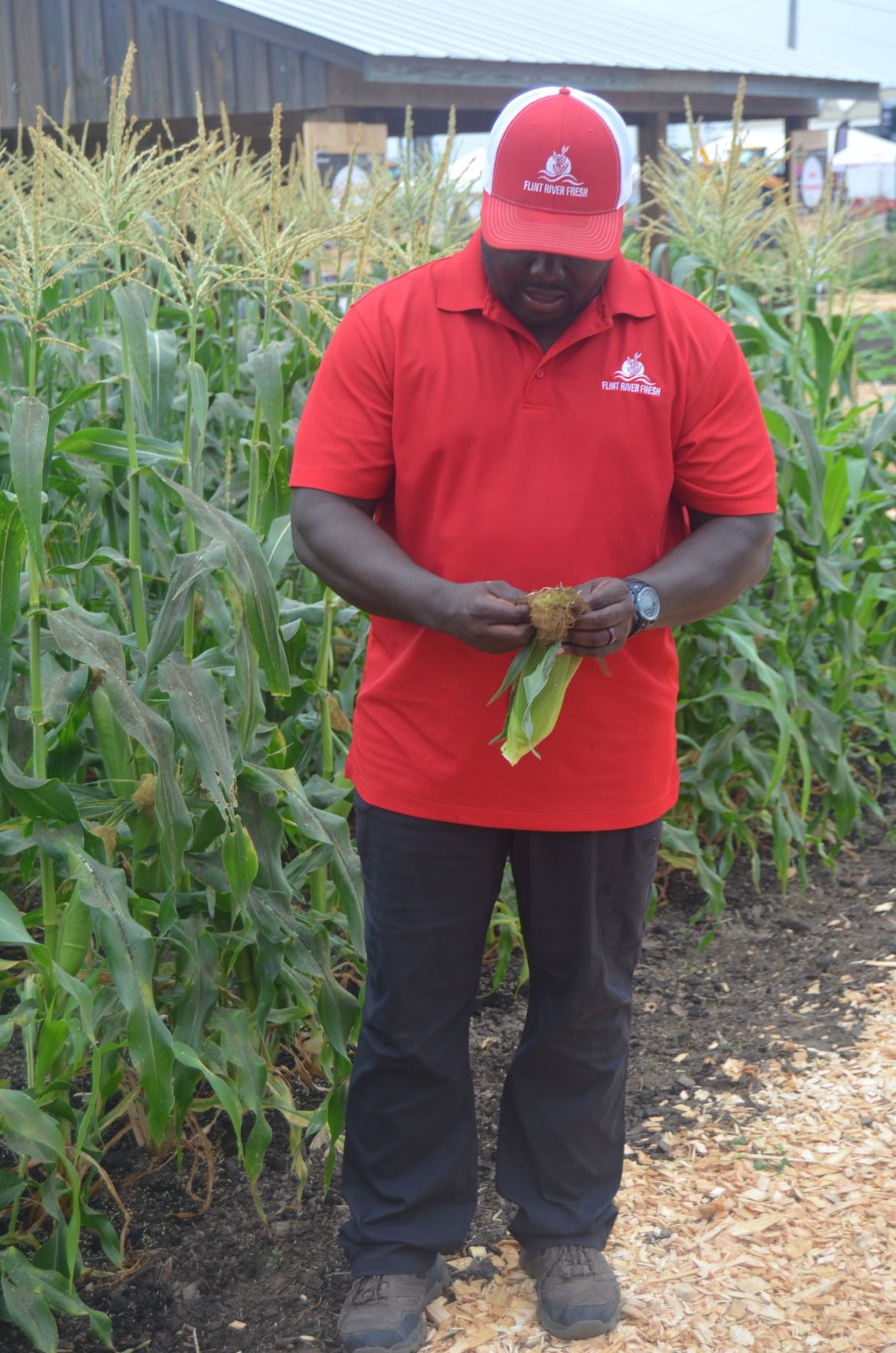
Fredando Jackson, executive director of Flint River Fresh, shucks an ear of corn grown at his garden plot at the Sunbelt Ag Expo in Moultrie. Flint River Fresh is partnering with the Albany Area YMCA for a demonstration during Farm-City Week.
File Photo: Alan MauldinFrom staff reports
ALBANY — Farmers and consumers depend on each other. People need food, clothing and shelter. Farmers grow our food, cotton and wool for our clothes and raise timber for our homes.
Farmers need the companies that buy their crops and turn them into nutritious food products or clothing. We all depend on truck drivers and railroad workers to get fresh milk, produce and meat and other food products to our grocery store shelves and clothes to our favorite boutiques.
As the holidays draw near, Dougherty County Farm Bureau invites you to celebrate this relationship by observing Farm-City Week Nov. 16-23.
Farm-City Week highlights the relationship between Georgia farmers and their partners in urban areas who prepare, transport, market, retail and serve the food and fiber farmers grow for consumers. Kiwanis International began Farm-City Week in 1955 to increase the understanding of the partnership between urban and rural residents.
Reading books about farming to students, working with teachers to have students send thank you letters to farmers and hosting meals that bring farmers and community leaders together are just a few of the activities county Farm Bureaus will hold in communities across Georgia, as their schedules allow, to mark this annual event.
To celebrate Farm-City Week, the Dougherty County Farm Bureau will partner with Flint River Fresh at the Albany Area YMCA for a cooking demonstration or samples of locally grown produce. An office display and information also will be available to clients.
“Farmers and our urban partners work together to feed, clothe and shelter residents of Georgia and beyond.” Dougherty County Farm Bureau President Laney Wooten said. “ As farmers, we appreciate the transportation workers who drive our crops from our farms to facilities where they’re turned into peanut butter, cheese or bread and the workers who process our crops to make the safe, nutritious food we find at the grocery store. Our state’s agribusinesses strive every day to produce food, clothing, shelter and other items necessary for American life.”
Agriculture is Georgia’s largest economic sector, and farmers depend on their partners in town such as bankers, Extension agents, equipment and supply salesmen, to keep the agricultural economy going.
In 2021, food and fiber production plus the related industries involved with processing and delivering products to consumers contributed $73.2 billion to Georgia’s economy according to the University of Georgia Center for Agribusiness and Economic Development (CAED). Agriculture and its related industries also contributed 340,827 jobs in Georgia in 2021.
According to the USDA’s National Agricultural Statistics Service, Georgia has about 41,300 farms producing food and fiber on an estimated 10.2 million acres.
In 2021, the top ten commodities Georgia farmers grew based on their production value were broilers (chickens grown for meat), cotton, peanuts, timber, beef, greenhouse plants, eggs, corn, pecans, and blueberries, according to the University of Georgia’s CAED. In 2021, Georgia led the U.S. in the production of broilers, peanuts and pecans, USDA reports show.
Georgia ranked second in the U.S. for the quantity of cotton, cotton seed and watermelons grown. Georgia farmers grew the third largest quantity nationwide of blueberries, cantaloupes and peaches in 2021.
Farm-City Week offers a time to discuss how the economy impacts farmers and consumers.
When considering the price of groceries, note that in 2021 farmers received an average of only 14.5 cents of every dollar spent on food at home and away from home, according to the USDA’s Economic Research Service. The rest of the dollar goes to wages and materials for food preparation, marketing, transportation and distribution, all of which have increased in price, too.
Founded in 1937, Georgia Farm Bureau is the state’s largest general farm organization. Its volunteer members actively participate in activities that promote agriculture awareness to their non-farming neighbors. For more information about agriculture, visit www.gfb.org, like Georgia Farm Bureau on Facebook or follow on Twitter at @GaFarmBureau.
Author

Related Articles
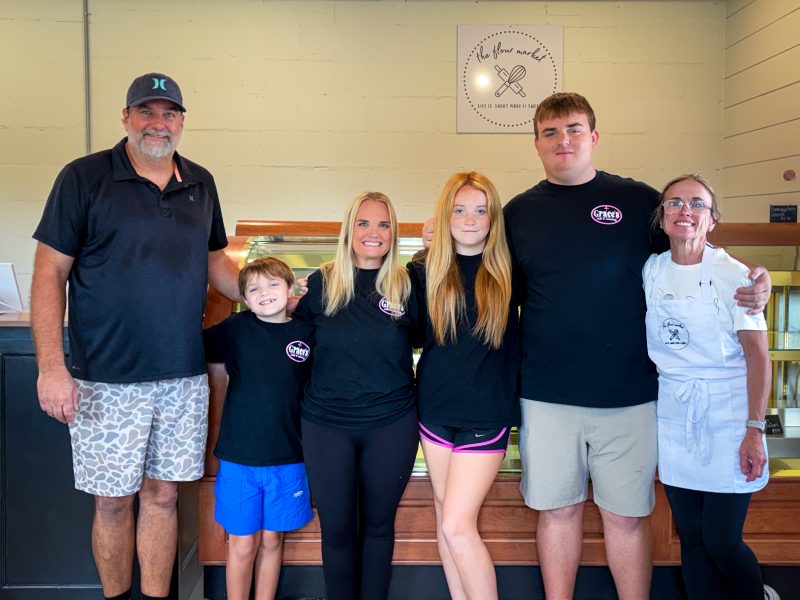
Regional catering business finds new home at Warrior Creek Mercantile
For months, Marchbanks said she had been asking God for an opportunity to serve others. “I just kept praying, ‘God, use me as a servant,'” she recalled. “I didn’t care what it was. I just wanted to be used to help people.”