Three in a row: State breaks economic development records
File Photo
From staff reports
ATLANTA — Gov. Brian Kemp, in conjunction with the Georgia Department of Economic Development, announced that for the third year in a row the state broke records for economic development during Fiscal Year 2023.
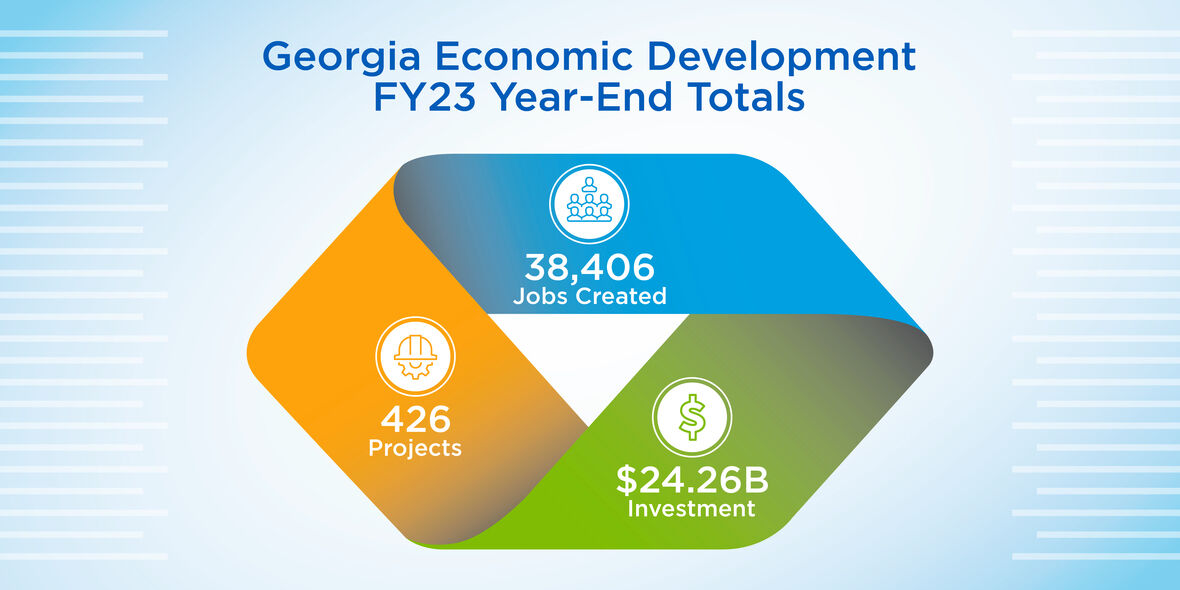
Between July 1, 2022, and June 30, total investments in facility expansions and new locations totaled more than $24 billion, resulting in 38,400 new jobs through 426 projects supported by GDEcD’s Global Commerce team. When excluding the two largest projects in state history — Rivian and Hyundai Motor Group — from the previous year’s job creation figures, total jobs as a result of FY ‘23 projects exceeded the previous record by more than 2,800 new positions. Annual investment totals have also increased by 131% over the last three years.
“The FY ‘23 numbers are just the latest confirmation that what we’re doing on the state and local level in Georgia works,” Kemp said in a news release. “Thanks to our partnership approach with community and economic development leaders and our pro-business approach, we’re seeing unprecedented opportunity come to communities all across Georgia.
“I want to congratulate the hard-working men and women of the Department of Economic Development and all those on the local level who made these record-breaking numbers possible. As the top state for business, we’ll continue to work together and build on the historic growth we’ve seen in the Peach State, especially in our rural areas.”
Eighty-two percent of new jobs created and more than $20 billion in investments are on their way to communities outside the 10-county Atlanta region. A magnet for industries like financial technology and life sciences, Metro Atlanta also continues to play a critical role in the state’s overall economy, attracting $3.6 billion in investment last fiscal year. Expansions account for 71% of total projects, and new locations for 65% of new jobs announced across the state.
“Economic development across Georgia is critical if we wish to remain the No. 1 state in which to do business and the best state to live, work and raise a family,” Lt. Gov. Burt Jones said. “The upward momentum over the last few years is part of a larger trend where Georgia has secured its role as an economic and business hub of the Southeast. We look forward to continuing to support cooperation and solutions-oriented initiatives.”
Under Kemp’s leadership, Georgia has remained on the cutting-edge of the future of mobility. Between July of 2018 and July of 2023, at least 40 e-mobility projects have been announced, committing more than 30,000 jobs and more than $25 billion in investment to the state. This past fiscal year, job creation in the automotive industry increased by 324% when compared to FY ‘21, and suppliers attracted by Georgia’s mobility original equipment manufacturers resulted in more than $2 billion in investment across the state in FY ‘23.
Mobility and cleantech projects alone delivered three investments of $1 billion or more and six of the largest projects by job creation — a result of fostering innovation in the state with the support of organizations like the Georgia Center of Innovation, which connects public and private partners in strategic ecosystems.
“Innovation drives a sustainable economy, whether that’s developing new techniques for existing industries like aerospace and agriculture or building an emerging ecosystem to support cleantech and mobility of the future,” GDEcD Commissioner Pat Wilson said. “The department’s mission is to identify opportunities, synergies, and solutions that will keep Georgia’s economy moving forward. By housing anything from film and the arts to trade and investment under one roof, we provide partners with a complete picture of what it takes to reach new heights.”
Another industry experiencing significant growth in Georgia is aerospace, with investments in related projects increasing by more than 1,000% since FY ‘21. The industry ecosystem, which overlaps with e-mobility through companies like Archer, includes top regional employers like Gulfstream. Georgia is also proud to be home to a large military presence, offering opportunities for defense contractors and a work force that includes the fifth-largest population of active and retired service members in the country.
Furthermore, partnerships with community and state partners on speed-to-market and work force solutions like the “Georgia Ready for Accelerated Development” certification and Georgia Quick Start programs spurred a 112% growth in advanced manufacturing investments since FY ‘21.
“We are proud to work alongside our local communities to fulfill their unique long-term strategies, and without their diligent efforts our broad success would not be possible,” GDEcD Deputy Commissioner for Global Commerce Kristi Brigman said. “We are also grateful for the many partners who support the state’s superior logistics and infrastructure, education opportunities, high quality of life, and other assets. By continuing to work together, we continue to deliver positive results for individual Georgians and Georgia businesses large and small, alike.”
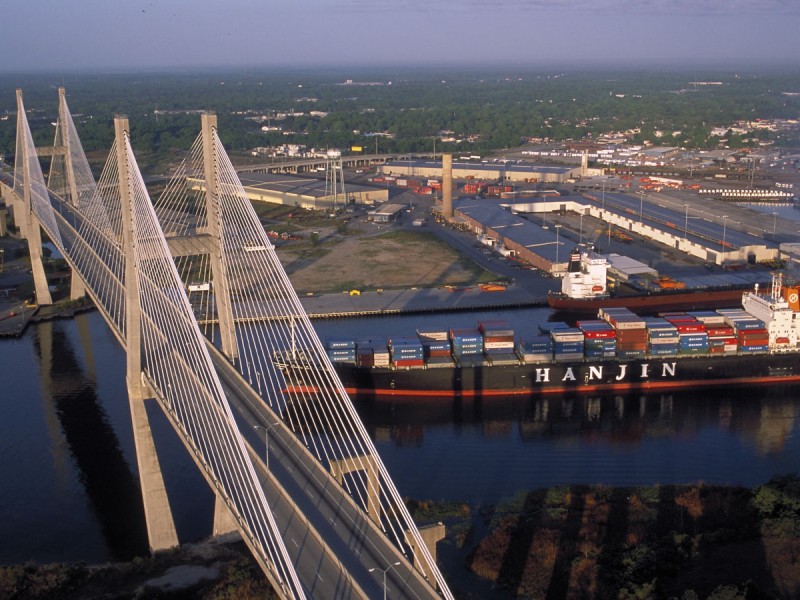
As a result of unparalleled assets like Hartsfield-Jackson International Airport, the busiest and most efficient airport in the world; the Port of Savannah, the single largest and fastest-growing container terminal in America; and the Port of Brunswick, one of the most utilized port terminals in the U.S. for roll-on, roll-off cargo; Georgia welcomed household name brands like Walmart-subsidiary Sam’s Club, work clothing retailer Duluth Trading Company, and another expansion by professional food service supplier WebstaurantStore.
Georgia also benefits from a reliable logistics industry that extends throughout the state along a robust network of top-ranked highways and accessible railways. With ample cold storage space, key sectors like agriculture — the state’s No. 1 industry — and food processing are able to safely transport products to local groceries and markets across the U.S. and abroad. Agribusiness-related job creation grew by 29% compared to FY ‘21.
Georgia’s position as a global gateway and partnership approach also led to greater direct foreign investments in FY ‘23. The top international sources of job creation were South Korea, Finland, Norway, Japan, Switzerland and the Netherlands. FY ‘23 also marked the return of important international economic development missions led by Kemp and First Lady Marty Kemp, following a pause on such travel due to the COVID-19 pandemic. These crucial, work-filled engagements result in short- and long-term economic opportunities.
In FY ‘23, the Kemps traveled to Switzerland, Germany, Israel, the country of Georgia and France. These missions included meetings with major companies, official diplomatic visits, and participation in the Paris Air Show. As a result of these and other engagements, international investments were responsible for 47% of expected jobs and 65% of the total investment this past fiscal year. Additional state missions focused on strengthening relationships were led by Wilson as well as Brigman and Deputy Commissioner for International Trade Mary Waters.
To view further details of state-announced economic development projects, visit www.georgia.org/newsroom.

Author

Related Articles

Regional catering business finds new home at Warrior Creek Mercantile
For months, Marchbanks said she had been asking God for an opportunity to serve others. “I just kept praying, ‘God, use me as a servant,'” she recalled. “I didn’t care what it was. I just wanted to be used to help people.”