
Carr warns consumers to be aware of holiday phone scams
Carr: We don’t want consumers to be duped by con artists
From Staff Reports
ATLANTA — Georgia Attorney General Chris Carr is urging consumers to be on guard this holiday season so that they don’t fall prey to telemarketing and imposter phone scams.
“During what should be an enjoyable time of the year, we don’t want consumers to be duped by con artists,” Carr said in a news release. “We want consumers to use good judgment and verify who they are dealing with before making an important decision. After all, a consumer’s best defense is to be prepared.”
Some of the common tactics that scammers are using this season include:
Court of Appeals Scam: Members of the public have received calls from individuals posing as “agents” working with the Eleventh Circuit Court of Appeals. The callers ask the recipient to pay a monetary fine. While the recipient’s caller ID may show that the call comes from a clerk’s office main phone number (404-335-6100), these calls are “spoofed” and are not from the Court of Appeals. The Eleventh Circuit Court of Appeals does not call members of the public and ask them to pay a fine over the phone.
Loan Scam: One scenario that has been reported to the attorney general’s office involves a call from a “lending club” offering a loan to pay off a consumer’s credit card balance. The consumer is encouraged to go to a nearby store and make a purchase in the same dollar amount of the loan. After the purchase is made, the consumer is told the full loan amount will be deposited into the consumer’s checking account. This is all a ruse to trick the consumer into providing personal financial information.
Utility Scam: Another scam making the rounds is the utility disconnection scam. Utility customers are being called and told they owe a past due bill and their service will be cut off if payment is not made immediately. The fraudsters then provide a toll-free number to call to set up the payment. When customers dial that number, they get a recording that mimics the power company phone system, increasing the effectiveness of this scam. The crooks also go so far as to send a professional-looking email to the customer that comes complete with the logo of the utility company.
Social Security Scam: Criminals are pretending to be employees of the Social Security Administration in an attempt to obtain personal information from citizens over the phone. The crooks even “spoof” the actual number of the SSA to give their call credibility. The SSA advises citizens to contact their local SSA office or call 1-800-772-1213 (TTY 1-800-325-0778) if there is any question about needed information.
Consumers should remember that when acting in response to a call from a scammer, they may find it very difficult, if not impossible, to recover lost money because the scammer is hard to trace. Georgia consumers should report the situation to the Consumer Protection Division of the attorney general’s office by calling (404) 651-8600 or visiting consumer.ga.gov.
The Consumer Protection Division offers additional precautions about phone scams:
• Fraudulent telemarketers understand human nature and prey on our vulnerability. We all want to believe that it’s our lucky day, that we can get a great deal, or that there is an easy way to solve our problems.
• Older people are disproportionately targeted by fraudulent telemarketers. That’s because they’re home to get the calls, they have money saved that can be robbed, and they’re too polite to hang up.
• It’s important to know whom you’re dealing with. If a company or charity is unfamiliar, check it out with the Better Business Bureau (bbb.org). Note that fraudulent operators open and close quickly, so the fact that no one has made a complaint yet doesn’t guarantee the company or charity is legitimate.
• Some telemarketing pitches are blatantly fraudulent, and you should know the signs. It’s illegal for telemarketers to ask for a fee up-front if they offer you a credit card, a loan or “repair” of your credit. It’s also illegal for any company to ask you to pay or buy something to win a prize, or to claim that paying will increase your chances of winning. And it’s illegal to buy and sell tickets to foreign lotteries by phone.
Related Articles

Federal agency to investigate Monday paragliding fatality
The death of a 63-year-old man who was killed in a paragliding accident on Monday is under investigation by the National Transportation Board, according to Dougherty County Coroner Michael Fowler.
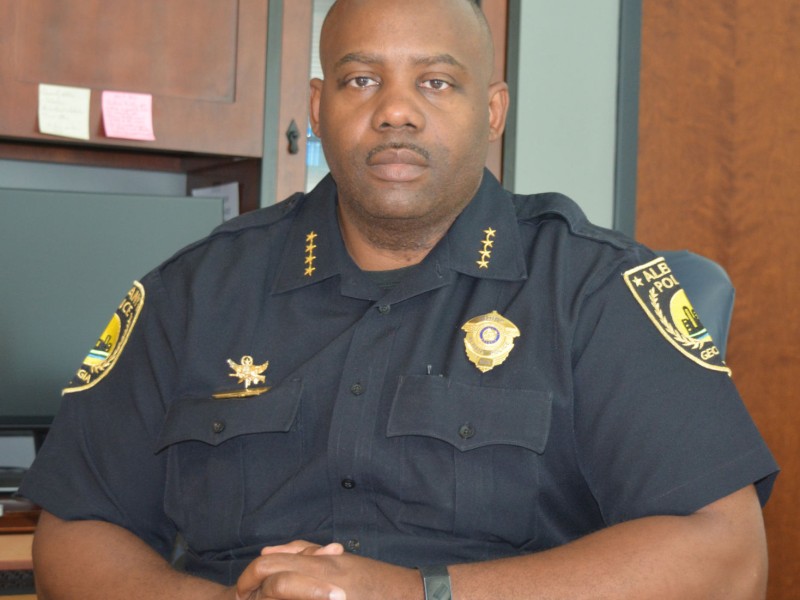
Audit of police surveillance cameras results in arrests of five former APD officers
“The bottom line is when we find people who have misused resources that they have, we’re going to hold them accountable. These resources help fight crime, but we will not tolerate when they are misused.”

New commander takes helm as Marine Corps logistics adapts to evolving battlefield
Brig. Gen. Kevin G. Collins assumed command of Marine Corps Logistics Command during a change of command ceremony at Marine Corps Logistics Base Albany, succeeding Maj. Gen. Keith D. Reventlow after four years leading the organization responsible for sustaining Marine forces around the globe.
